
Roasted Cauliflower & Lentil Bowl
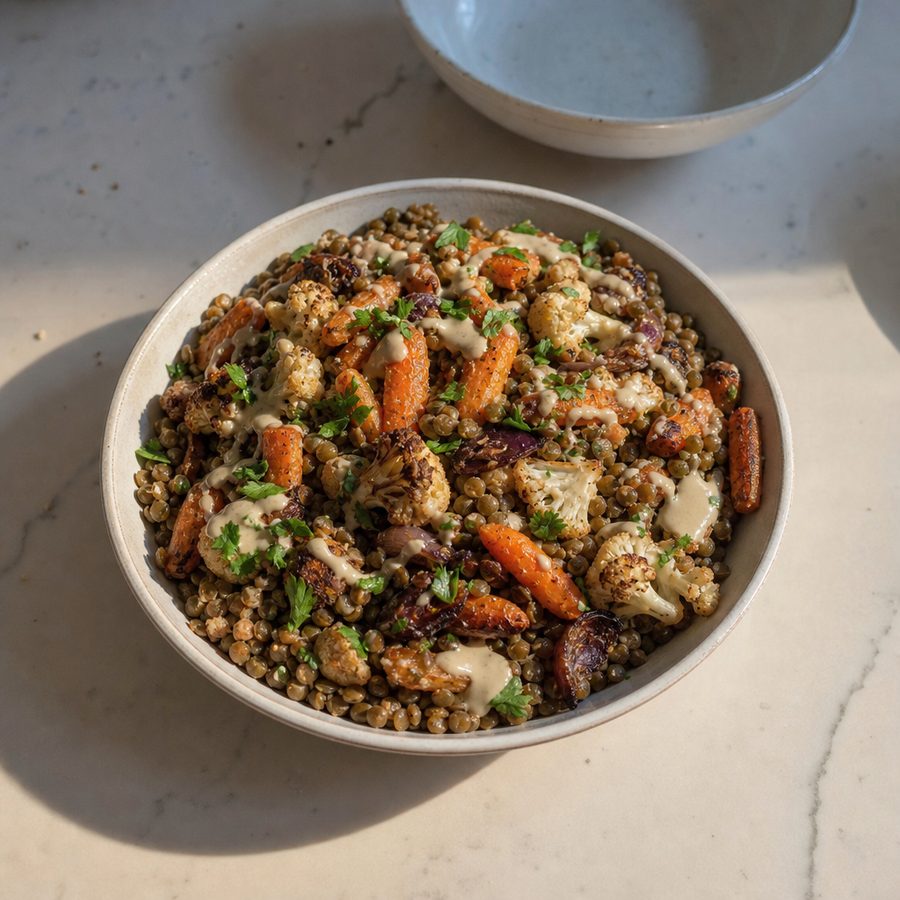
Warm green lentils piled with cumin-roasted cauliflower, carrots and red onion, finished with a bright lemon-tahini drizzle and a shower of fresh parsley.
Why You'll Love This Recipe
Substantial without any meat in it at all is the whole ambition here, and earthy lentils with deeply roasted vegetables are how it gets there. It leans on earthy lentils and deeply roasted vegetables, so it satisfies the way a heavier plate does, while staying light and clean-tasting. It suits busy weeknights, meal-prep lunches, and anyone cooking for a mix of eaters, since the components are simple and easy to like.
The magic here is contrast built through technique. Roasting the cauliflower, carrots and onion at high heat drives off moisture and lets their natural sugars caramelize, turning mild vegetables sweet and nutty with browned edges. The cumin blooms in the oven and clings to those crisped surfaces. Against all that warm, roasted depth, the lemon-tahini sauce brings acidity and a cool, sesame richness, and the raw parsley cuts through with a fresh, grassy snap. Warm lentils underneath tie it together with an earthy, savory base.
What makes it filling is the combination of lentils, vegetables and a real fat-based sauce working together. The lentils bring plant protein and a dense, chewy texture that keeps you full, while the vegetables add volume and fiber that slows the meal down. The tahini contributes a satisfying richness so the bowl tastes indulgent rather than spartan. It is the kind of dinner that leaves you comfortably satisfied rather than heavy, and it reheats well enough to look forward to the next day.
Ingredients
- 3 cups cooked green lentils
- 3 1/2 cups cauliflower florets
- 4 medium carrots, cut into sticks
- 1 large red onion, wedged
- 3 tbsp tahini
- 3 tbsp fresh lemon juice
- 2 tsp ground cumin
- 3 tbsp olive oil
- 1/2 cup chopped parsley
- 3/4 tsp sea salt
Instructions
- Cook the lentils: Rinse the green lentils under cold water and pick out any stray grit or shriveled ones. Simmer them in plenty of unsalted water until tender but still holding their shape, about 20 to 25 minutes, then drain. Leave the salt out of that water, since it firms the skins and the lentils will not soften evenly. Green lentils are done when you can crush one easily against the roof of your mouth but they have not turned to mush.
- Preheat and prep the vegetables: Preheat the oven to 425°F (220°C). Cut the cauliflower into bite-size florets, slice the carrots into sticks about the thickness of a finger, and cut the red onion through the root into thick wedges so the layers stay together while roasting.
- Roast the vegetables: Toss the cauliflower, carrots and onion wedges with olive oil, ground cumin and sea salt until evenly coated, then spread them in a single layer on a rimmed baking sheet. Roast for about 25 minutes, until the cauliflower edges are golden brown and a carrot pierces easily with a knife. Give the pan a shake or flip the pieces once halfway through, because the vegetables nearest the edge of the tray brown far faster than the ones in the middle.
- Make the lemon-tahini dressing: In a small bowl, whisk the tahini, fresh lemon juice and the remaining olive oil. The mixture will seize and thicken at first, which is what tahini always does when acid hits it, so whisk in a splash of water at a time until it loosens into a smooth, pourable sauce about the consistency of thin cream.
- Warm the lentils: Gently warm the drained lentils in a pot over low heat, or in the microwave, just until heated through, since cold lentils under hot roasted vegetables make the whole bowl lukewarm. Season with a little of the sea salt to taste.
- Assemble the bowls: Divide the warm lentils among the bowls, pile the roasted vegetables on top, drizzle generously with the lemon-tahini sauce, and garnish with the chopped parsley. Dress it at the table rather than in advance, because lentils keep drinking sauce and a bowl dressed early is dry by the time you sit down.
Variations
- Warm spice: Add a pinch of ground coriander, smoked paprika or a little cayenne to the vegetables before roasting for a smokier, warmer flavor.
- Roasted chickpeas: Toss drained chickpeas onto the sheet pan with the vegetables so they crisp in the oven, adding extra plant protein and crunch.
- Grain boost: Serve the bowl over cooked quinoa or brown rice for a more filling, carbohydrate-forward plate. Note this adds grains.
- Herb swap: Trade the parsley for chopped fresh cilantro or mint, or use a mix, for a different fresh, aromatic finish.
- Garlicky sauce: Grate a small clove of raw garlic into the tahini dressing for a sharper, more pungent drizzle.
Storage & Leftovers
Keep leftovers in an airtight container in the refrigerator for up to four days. Store the lemon-tahini sauce separately if you can, since the roasted vegetables and lentils hold their texture better when they are not sitting in dressing.
To reheat, warm the lentils and vegetables together in a skillet over medium heat or in the microwave until hot through. The tahini sauce thickens in the fridge, so whisk in a little water to loosen it back to a pourable consistency before drizzling, and add the parsley fresh so it stays bright.
For make-ahead, cook the lentils and roast the vegetables up to three days in advance and refrigerate them in separate containers. The dressing keeps well too; just re-whisk and thin it before serving. Assemble bowls the day you want to eat for the freshest result.
Notes & Tips
- Don't crowd the pan: Spread the cauliflower, carrots and onion in a single layer with space between pieces. Crowded vegetables steam and turn soft instead of browning, so use two sheet pans if you need to.
- Choose firm cauliflower: Pick a head that is tight, heavy and creamy white, with no soft gray spots. Firm, fresh cauliflower roasts up sweet and crisp-edged rather than watery.
- Fix a seized sauce: If the tahini clumps into a thick paste when you add the lemon juice, don't panic. Keep whisking in water a splash at a time and it will smooth out into a silky, pourable dressing.
- Taste for balance: Tahini sauces vary by brand. If yours tastes flat, add a little more lemon juice for brightness; if it is sharp, another spoonful of tahini rounds it out.
- Toast the cumin flavor: Tossing the ground cumin with the vegetables before roasting lets it bloom in the oven, which deepens its flavor far more than sprinkling it on at the end.
- Double the batch: The lentils and roasted vegetables keep beautifully, so make extra and portion them for lunches. Keep the sauce and parsley separate until you are ready to eat.
Nutrition & Mindful Eating
- Lentils, roasted cauliflower and tahini are what hold this bowl together. The lentils give it substance, the cauliflower gives it browned edges and toasted flavor, and the sauce pours over both, so protein, fiber and fat land in the same spoonful.
- Green lentils cook until they are tender but still hold their shape, which is what keeps the bowl from going soft all the way through. They carry plant protein and fiber together, and they soak up cumin beautifully.
- Cauliflower is the ingredient the oven changes most. Roasted rather than boiled it goes deeply browned and nutty at the florets and sweet in the stem, and it brings vitamin C and fiber with that toasted flavor.
- Tahini is ground sesame, thick and faintly bitter on its own. Loosened with lemon juice it becomes a pourable sauce with a savory edge, and it brings sesame's unsaturated fats and a little calcium into the bowl.
- Cumin toasted in olive oil smells warm and slightly smoky, carrots blister and go sweet at the tips, red onion softens beside them, and parsley scattered over at the end keeps the bowl from tasting only of the oven.
- As you eat, see how far the tahini has slipped down between the lentils and how the cauliflower edges still crackle a little, and stay with the bowl long enough to feel comfortably full.
Frequently Asked Questions
Can I use canned lentils instead of cooking them from dry?
Yes. Drain and rinse canned lentils well, then warm them gently. They are softer than home-cooked green lentils, so handle them lightly so they hold their shape in the bowl.
My tahini dressing turned out bitter. What happened?
Bitterness usually comes from the tahini itself, especially older jars or certain brands. Balance it with a little more lemon juice and salt, and be sure to whisk in enough water, since a thick, concentrated sauce tastes sharper than a properly loosened one.
Can I serve this cold or at room temperature?
Yes. It works well as a room-temperature or chilled bowl, which makes it a good packed lunch. The flavors are still lively, though the roasted vegetables are at their best texture when freshly warm from the oven.
How do I keep the vegetables from turning soggy?
Cut them into even, not-too-small pieces, dry them well, and roast at the full high heat on a single, uncrowded pan. Adding the tahini sauce only at serving time also keeps the roasted edges from going soft.