
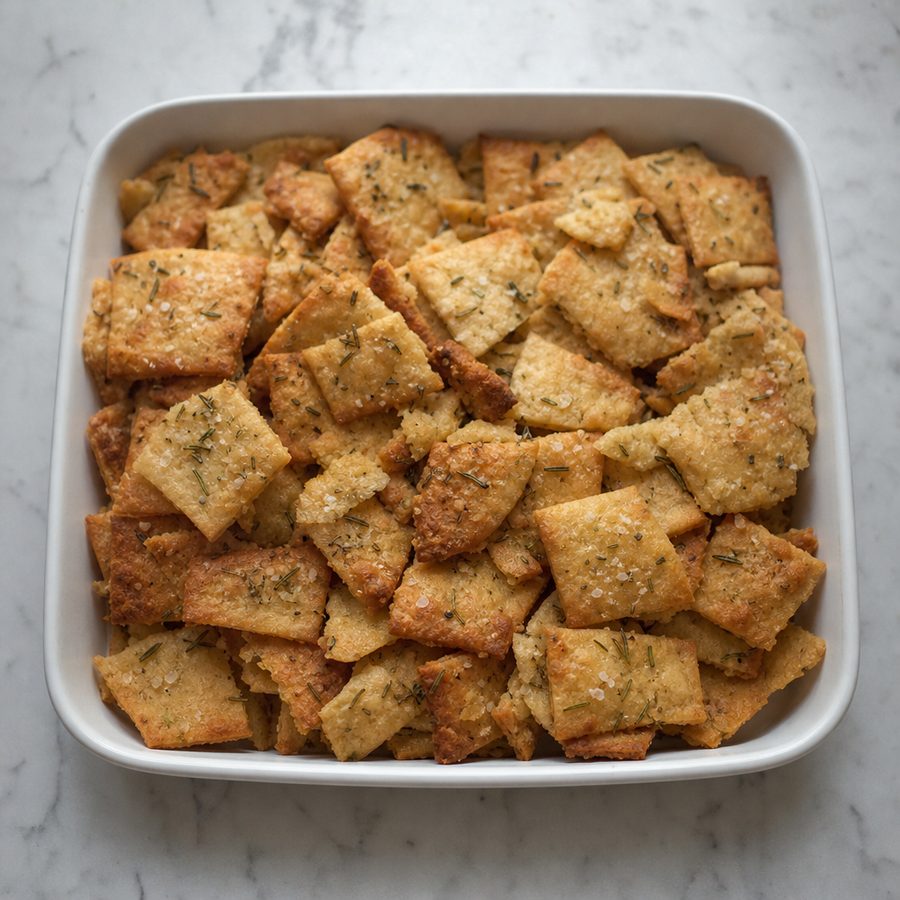
Rosemary Almond Flour Crackers
Thin, crisp grain-free crackers made from almond flour bound with egg and olive oil, flecked with fresh rosemary and a clean hit of salt for a savory, nutty snack.
Why You'll Love This Recipe
These crackers are for anyone who wants a crisp, savory snack without wheat flour, and for the cook who would rather make a clean five-ingredient batch than read a label full of gums and starches. They come together in one bowl, need no rising or chilling, and lean on pantry staples plus a sprig of fresh herb. They suit slow afternoon grazing, a cheese-and-olive board, or a lunchbox that needs something crunchy that holds up.
The magic is in how almond flour behaves. Because it is ground nuts rather than a starch, it carries its own fat, so a single egg and a little olive oil are all it takes to bind the dough. No water, no kneaded gluten. Rolling it thin between parchment is the technique that decides everything: a 1/8-inch sheet dries out and crisps in the oven, while anything thicker stays cakey in the middle. The fresh rosemary, chopped fine so no woody piece surprises you, releases its piney aroma as the crackers bake and perfumes the whole batch.
Crunch and staying power do not usually arrive together. The almond flour brings protein and fiber along with its richness, so a small handful actually holds you rather than leaving you reaching for more. The olive oil adds heart-friendly fats and a round, savory note, and the rosemary and salt keep each bite interesting. It is a snack that tastes like a treat but eats like real food.
Ingredients
- 2 cups almond flour
- 1 large egg
- 1 tbsp olive oil
- 1 tbsp fresh rosemary, chopped
- 1/2 tsp salt
Instructions
- Preheat and prep: Preheat the oven to 350°F (175°C) and line a baking sheet with parchment paper. Strip the fresh rosemary leaves from their woody stems and finely chop the leaves so they distribute evenly through the dough.
- Mix the dough: In a bowl, combine the almond flour, egg, olive oil, chopped rosemary, and salt. Stir, then work it with your hands until the mixture comes together into a cohesive, slightly oily dough that holds its shape when pressed. If it feels crumbly, keep kneading a few more times to bring it together.
- Roll thin: Place the dough between two sheets of parchment paper. Using a rolling pin, roll it out evenly to about 1/8 inch thick. A thin, uniform sheet is what gives you a snappy, crisp cracker rather than a soft one.
- Score into squares: Peel off the top sheet of parchment. With a knife or pizza cutter, score the dough into squares, pressing firmly enough to mark clear lines but without fully separating the pieces. Slide the bottom parchment with the dough onto the baking sheet.
- Bake: Bake for 12 to 15 minutes, until the edges are golden brown and the surface looks dry and set. The crackers around the outside will color first; if the center pieces still look pale, give them a couple more minutes, watching closely so they do not burn.
- Cool and snap: Let the crackers cool completely on the pan. They firm up and crisp as they cool, so this step matters. Once cool, break them apart along the scored lines.
Variations
- Everything-spice: Press sesame seeds, poppy seeds, dried garlic, and dried onion into the surface before baking for a bagel-shop flavor. This adds seeds.
- Rosemary and pepper: Add cracked black pepper to the dough alongside the rosemary for a sharper, warmer bite that pairs well with soft cheeses.
- Lemon-rosemary: Grate a little fresh lemon zest into the dough to brighten the herb and lift the richness of the almond flour.
- Parmesan crisp: Work finely grated hard cheese into the dough for a saltier, more savory cracker with extra browning. This adds dairy.
- Seeded olive oil top: Brush the rolled sheet with a little extra olive oil and sprinkle flaky salt and sunflower seeds before baking for more crunch and texture. This adds seeds.
Storage & Leftovers
Store the cooled crackers in an airtight container at room temperature, where they stay crisp for about a week. Keeping them fully sealed is what protects the snap. Almond flour draws in moisture, and even a little humidity will soften them.
If they lose their crunch, spread them on a baking sheet and warm them in a 300°F (150°C) oven for a few minutes, then let them cool again. They re-crisp as they cool, so resist tasting one straight from the hot pan to judge the texture.
To get ahead, you can mix the dough and press it into a disk, wrap it tightly, and refrigerate it for up to two days. Let it sit at room temperature until pliable before rolling, then bake as directed for fresh crackers on demand.
Notes & Tips
- Use blanched almond flour: Finely ground blanched almond flour, not coarser almond meal, gives the smoothest dough and the crispest, most even snap. Meal leaves a grittier, more fragile cracker.
- Roll it truly thin: The single biggest factor in crispness is thickness. If your first batch stays a little soft in the center, roll the next one thinner and they will shatter cleanly.
- Watch the edges as your timer: Almond flour goes from golden to burnt quickly. Pull the pan when the edges are deep golden and the tops look dry; carryover heat finishes them.
- Rosemary, fresh over dried: Fresh rosemary gives brighter aroma and better texture here. If you only have dried, use a lighter hand, since it is more concentrated and can turn bitter.
- Let them cool for the verdict: These crackers are still bendable when hot and only reach full crispness once cooled. Judge doneness and texture after they have cooled completely, not fresh from the oven.
- Serve with something creamy: Their nutty, herby profile shines next to soft cheese, a bean dip, or a bowl of olive oil for dipping. The sturdy squares hold up to a generous scoop.
Nutrition & Mindful Eating
- Almond flour, egg and olive oil are the whole dough. The flour gives it structure and a soft toasted flavor, the egg binds it tightly enough to roll thin, and the oil browns the edges, so a small handful carries protein and fat and genuinely satisfies.
- Almond flour is sandy and rich in the bowl and bakes into a cracker that snaps cleanly and tastes faintly of toasted nut, and it brings almond's vitamin E and magnesium along into the finished sheet.
- The egg is doing the structural work. It holds everything together well enough to roll the dough almost paper thin, which is the only way these get properly crisp, and it adds complete protein and choline while it is at it.
- Fresh rosemary chopped fine goes into the dough itself, so the flavor is baked in rather than sprinkled on. As the crackers bake its resinous oils come out and the whole kitchen smells like them.
- Flaky salt pressed into the surface before baking sits where your tongue meets it first, which is what makes each cracker taste seasoned the moment it goes in and keeps the almond flavor from going flat.
- As you eat, listen for the snap and let the rosemary come through before you reach for the next one, and put a small plate together so the eating stays something you notice rather than something automatic.
Frequently Asked Questions
Why are my crackers soft instead of crisp?
The two usual causes are rolling the dough too thick or pulling the pan too early. Roll to about 1/8 inch, bake until the edges are golden and the tops look dry, and let them cool fully on the pan, where they finish crisping.
Can I make these without egg?
The egg is what binds this fat-rich dough, so leaving it out entirely tends to give a crumbly sheet that will not hold squares. A flax-and-water gel can work as a substitute, though the crackers will be a bit more delicate.
Can I use almond meal instead of almond flour?
You can, but expect a coarser, grittier cracker that browns unevenly and breaks more easily. Finely ground blanched almond flour gives the cleanest snap and smoothest dough.
How do I know when the dough is mixed enough?
Keep working it until it stops looking crumbly and comes together into one cohesive, slightly oily mass that holds its shape when you press it. If it still falls apart, knead a few more times before rolling.