
Rosemary Parsnip Fries
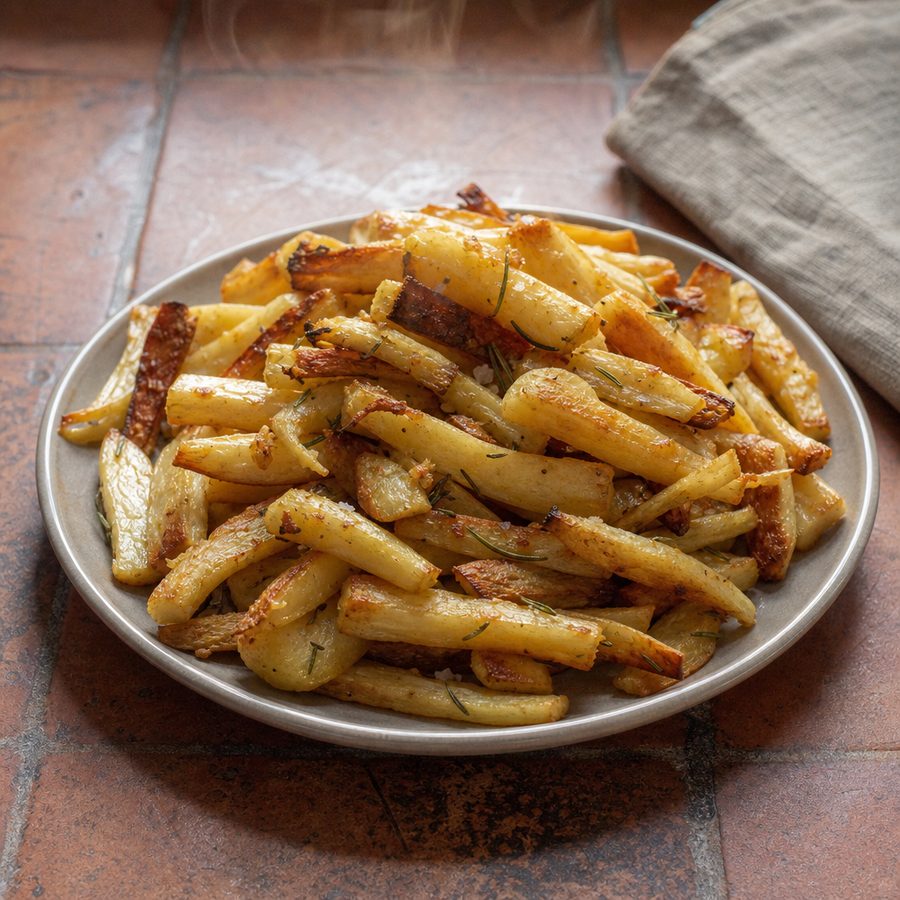
Sweet parsnips cut into batons, tossed with avocado oil, fresh rosemary, and sea salt, then roasted until the edges turn deep golden and crisp.
Why You'll Love This Recipe
These are oven fries made from parsnips, a cream-colored root with a natural sweetness that turns almost caramel-like under high heat. They come together with just a handful of ingredients and one sheet pan, which makes them an easy snack or side for anyone who wants something warm and crisp without a fryer or a long list of components. They are a good choice for a cozy afternoon bite or a plate alongside a simple roast.
High, dry heat, and room between the pieces. At 425°F (220°C) the natural sugars in the parsnips brown and concentrate while the surfaces dry and crisp, and a single uncrowded layer lets that happen instead of trapping steam. Cutting the batons to an even half inch means they all reach that golden stage at the same time, and the fresh rosemary, added before roasting, releases its piney oils into the avocado oil so its aroma carries through every fry.
They satisfy because they hit sweet, savory, and crisp all at once, with tender centers giving way under a browned edge. Parsnips bring plenty of fiber and a gentle earthy sweetness, the avocado oil adds richness that helps them brown and keeps them from tasting dry, and the rosemary and sea salt keep the whole thing savory rather than candy-sweet. It feels like a treat while leaning on a vegetable and a wholesome fat.
Ingredients
- 4 medium parsnips (about 450 g), peeled
- 2 tbsp avocado oil
- 1 tbsp fresh rosemary, chopped
- 1/2 tsp sea salt
Instructions
- Preheat and line the pan: Preheat the oven to 425°F (220°C). Line a large sheet pan with parchment, or leave it bare if it is well seasoned, and set it aside while you prep the parsnips.
- Peel and cut the parsnips: Peel the parsnips. Trim off both ends, then cut each one crosswise into sections roughly the length of a fry. Stand each section up and slice it into planks about half an inch thick, then cut the planks into half-inch batons so that all the fries are close to the same size and cook evenly. Large parsnips carry a woody core, so if the center feels tough or fibrous, cut around it and throw it out, since it will still be fibrous after half an hour in the oven.
- Chop the rosemary and season: Strip the rosemary leaves from their stems and chop them finely. Pile the parsnip batons on the sheet pan, drizzle with the avocado oil, sprinkle with the chopped rosemary and sea salt, and toss with your hands until every baton is lightly coated and glossy, because a dry patch is a patch that will not brown.
- Roast: Spread the batons in a single layer with space between them, cut sides down, and use a second pan if you need one, since a crowded tray traps the water coming off the parsnips and steams them instead of crisping them. Roast for 25 to 30 minutes, flipping once about halfway through, until the fries are deep golden brown with crisp edges and tender centers when pierced.
- Serve: Serve hot, straight from the oven, because parsnip fries hold their crisp for only a few minutes and go soft on a plate faster than a potato would.
Variations
- Garlic and rosemary: Toss the batons with a few smashed and minced garlic cloves along with the rosemary before roasting for a deeper, savory edge; scatter the garlic among the fries so it roasts rather than sits in one spot and burns.
- Lemon and thyme: Swap the rosemary for fresh thyme leaves and finish the hot fries with a little grated lemon zest for a brighter, lighter flavor.
- Warm and slightly sweet: Add a pinch of ground cinnamon to the oil before tossing to play up the parsnips' natural sweetness for a cozier, dessert-leaning snack.
- Balsamic finish: Drizzle the roasted fries with a little balsamic vinegar reduction just before serving for a tangy-sweet glaze; this adds a small amount of natural sugar from the vinegar.
- Creamy dipping side: Serve the fries with a quick mash of ripe avocado, lemon, and salt for dipping; this adds avocado for extra richness.
Storage & Leftovers
Store leftover fries in an airtight container in the refrigerator for up to four days. Let them cool fully before sealing them so trapped steam does not turn them soggy.
Reheat in a hot oven or toaster oven at around 400°F (200°C), spread in a single layer for five to ten minutes until they crisp back up and heat through. Skip the microwave, which leaves them limp; the dry heat of the oven is what brings the crisp edges back.
To get ahead, peel and cut the batons up to a day in advance and keep them submerged in cold water in the refrigerator so they do not brown. Drain and pat them very dry before tossing with oil and roasting, since surface water works against crisping.
Notes & Tips
- Choose smaller parsnips: Look for slim to medium parsnips that are firm and unblemished. Very large ones tend to have a tough, woody core you have to cut around, while smaller ones are sweeter and cut into fries with almost no waste.
- Dry them well: If you rinse the batons or soak them ahead, pat them thoroughly dry with a towel before oiling. Surface moisture turns to steam in the oven and keeps them from crisping.
- Use fresh rosemary, chopped fine: Fresh rosemary needles are needle-stiff, so chop them finely; large pieces can feel woody in the mouth. Dried rosemary works in a pinch but is sharper, so use a lighter hand.
- Don't crowd the pan: Give the batons space in a single layer. If they overlap, spread them across two pans instead; a crowded pan traps steam and you lose the crisp edges.
- Salt to taste at the end: Parsnip sweetness varies, so taste a fry after roasting and add a little more sea salt if they read too sweet. A final pinch on hot fries clings better than salt lost in the toss.
- Double the batch: These disappear quickly, so it is worth roasting extra. Use two pans on separate racks and rotate them halfway through so both brown evenly.
Nutrition & Mindful Eating
- Parsnip, oil, high heat, and rosemary. The oil gets the surfaces browning, the heat pulls the parsnips' sugars out to the edges, and the rosemary bakes into that crust, which is why these taste like far more than a roasted root.
- Parsnip is a sweet, faintly spiced root that tastes almost of nutmeg once the oven has had its way with it, going fluffy inside while the outside bronzes. It brings fiber and potassium in a form that eats like a fry.
- Cutting them into even batons matters more than it sounds like it should. Thin ends scorch and thick cores stay dense, so a pan of evenly cut parsnips is the difference between a few good fries and a whole tray of them.
- Avocado oil takes very high heat and stays steady there, which is what lets these roast long enough to actually crisp, and it brings monounsaturated fat and carries the rosemary flavor into the surface of every piece.
- Rosemary chopped fine and a scatter of salt go on while the fries are still hot, when the oil on the surface will still catch them. That is the moment the parsnip sweetness comes furthest forward.
- As you eat, follow how the crisp edge gives way to something soft and sweet in the middle, and slow down enough to enjoy the rosemary rather than working through the pan on your way somewhere else.
Frequently Asked Questions
Why are my parsnip fries soft instead of crisp?
The two usual causes are a crowded pan and wet parsnips. Spread the batons in a single layer with space between them so heat can dry the surfaces, and pat them dry if you soaked or rinsed them. Cutting them to an even half inch and roasting the full time until deep golden also helps them crisp rather than steam.
Do I have to peel the parsnips?
Peeling is best here. Parsnip skin can taste bitter and turns papery under high heat, so a quick pass with a peeler gives cleaner, sweeter fries. Trim the ends as well, and cut around the woody core if a large parsnip has one.
Can I use dried rosemary instead of fresh?
Yes, but use less because dried rosemary is more concentrated and sharper. Crush it between your fingers as you add it so it distributes evenly. Fresh rosemary gives a cleaner, more fragrant result, so use it when you can.
Why are parsnips sweeter than they look, and can I make these less sweet?
Parsnips have natural sugars that concentrate and caramelize as they roast, which is what gives these fries their golden edges. If you want them more savory, lean into the rosemary and add a little extra sea salt at the end, or finish them with a squeeze of lemon to balance the sweetness.