
Rosemary Roasted Almonds
Raw almonds roasted with olive oil, fresh rosemary, and garlic until fragrant and crisp, a warm savory snack that keeps well on the counter all week.
Why You'll Love This Recipe
These are for the person who keeps grabbing a handful of nuts and wishes they tasted like something you actually chose to make. If you want a savory snack that lives on the counter and travels in a bag to work, warm almonds with rosemary and garlic give you exactly that. They suit anyone who wants something crunchy and filling that does not need refrigeration, and they turn a plain pantry staple into a snack you look forward to reaching for.
Roasting is where the flavor happens. A light coat of olive oil helps the rosemary and grated garlic cling to each almond and carries their aroma into the nut as it heats. Twelve minutes at a moderate temperature toasts the almonds through without scorching the garlic, and stirring once keeps the color even. The salt draws everything together on the surface, so each almond tastes seasoned rather than just salted on the outside.
Almonds satisfy because they are mostly fat, fiber, and protein, the three things that keep a snack from disappearing without a trace. The crunch alone makes a quarter cup feel like enough, and the savory garlic-rosemary coating keeps you from mindlessly emptying the bowl. Because there is real fiber and fat in every handful, these hold you through a long stretch between meals far better than anything crisp and starchy would.
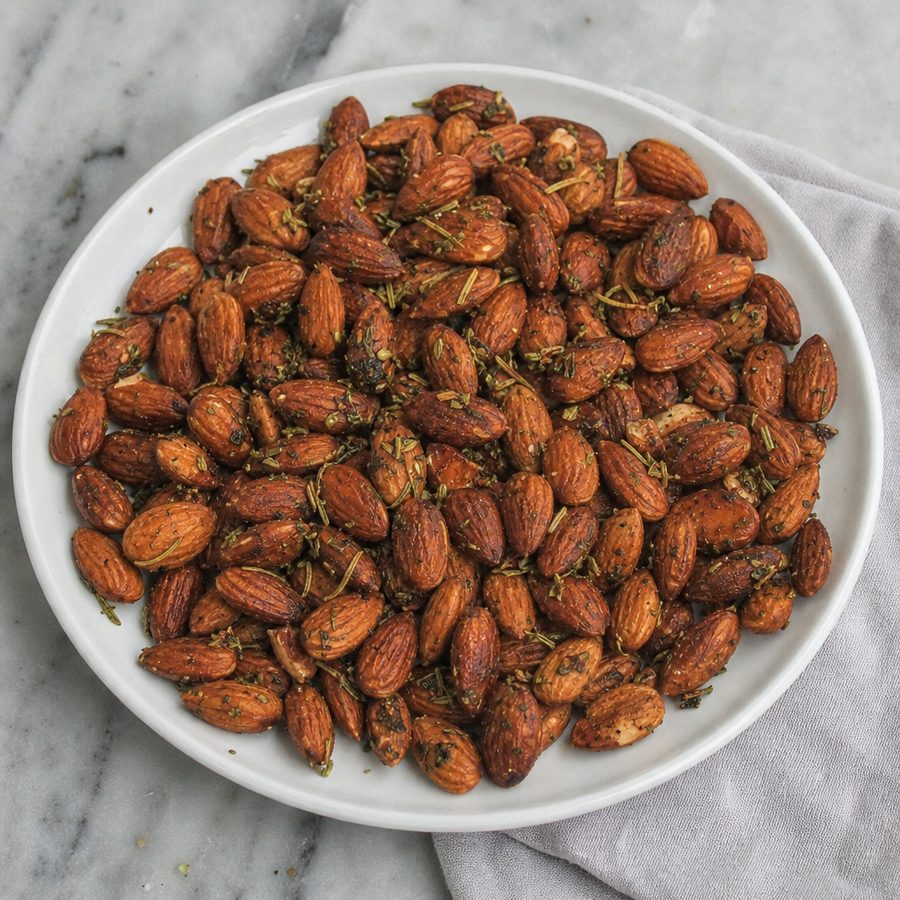
Ingredients
- 2 cups raw almonds
- 1 1/2 tbsp olive oil
- 2 tbsp chopped fresh rosemary
- 2 cloves garlic, grated
- 1/2 tsp sea salt
Instructions
- Heat the oven and line the pan: Heat the oven to 350°F (175°C) and line a rimmed baking sheet with parchment. The parchment is not only for washing up: nuts sitting directly on hot metal color much faster underneath than on top, and a sheet of paper between them evens that out. Use a rimmed pan rather than a flat one, since almonds roll and a tray of them on the oven floor is a bad end to a five-minute recipe.
- Steep the rosemary and garlic in the oil first: Stir the chopped rosemary and the grated garlic into the olive oil in a small bowl and leave it for 10 minutes while the oven heats. Both are things that burn long before an almond is toasted, and dispersing them through the oil rather than leaving them sitting in dry clumps against the nuts is what keeps them from catching. The oil takes on the rosemary in that time as well, so every almond gets some of it.
- Toss the almonds until every one is glossy: Tip the 2 cups of almonds into the bowl with the infused oil, add the salt, and stir until each nut looks wet and slightly shiny rather than dusty in patches. Dry almonds do not take seasoning and the salt slides straight off them onto the pan. Scrape every bit of rosemary and garlic out of the bowl with a spatula, since that is where most of the flavor is sitting.
- Roast 12 minutes and watch the garlic: Spread the almonds in a single layer and roast for about 12 minutes, stirring once at the halfway mark to move the outside ones in. They are ready when they smell toasted and have darkened a shade. Watch the garlic rather than the nuts for the last few minutes: it colors first, and once it goes past golden it turns bitter and takes the whole tray with it.
- Cool them completely before you judge them: Slide the parchment onto a rack and leave the almonds alone until they are properly cool, which takes about 20 minutes. A hot almond is disappointingly soft and tastes underdone, and the crunch everybody wants arrives only as it cools. Taste one before then and you will be tempted to put the tray back in the oven, which is how a good batch becomes a burnt one.
Variations
- Smoky version: Add a half teaspoon of smoked paprika to the toss for a deeper, slightly smoky edge.
- Sweet and salty: Finish the warm almonds with a light drizzle of maple syrup and a bit more salt for a savory-sweet contrast. The syrup is an added sugar, so this takes them off keto and Whole30.
- Citrus and herb: Grate a little orange or lemon zest over the almonds right out of the oven to lift the rosemary.
- Mixed nuts: Swap in walnuts or pecans for part of the almonds, watching them closely since they toast faster.
- Spiced heat: Toss in a pinch of cayenne or chili flakes before roasting for a slow, warming kick.
Storage & Leftovers
Once fully cooled, store the almonds in an airtight jar or container at room temperature for up to two weeks. Cooling completely before you seal them is the key step, since any trapped warmth turns to moisture and softens the crunch you worked for.
If they ever lose their crispness, spread them on a sheet and warm them in a low oven for a few minutes, then cool again. That quick reset brings back the snap and wakes up the rosemary and garlic aroma without any extra oil or seasoning needed.
These are made for getting ahead of the week. Roast a batch on the weekend and portion them into small containers or bags so a serving is ready to grab. They also freeze well for a couple of months if you want to keep a larger batch on hand.
Notes & Tips
- Start with raw: Use raw almonds, not roasted, so they take on the oil and seasoning as they cook rather than just heating through.
- Grate the garlic: Grating the garlic spreads it evenly and thin across the nuts so no single almond gets a harsh bite.
- Single layer only: Spread the almonds in one layer with space between them so they toast instead of steaming into softness.
- Stir halfway: Give the pan a stir at the six-minute mark to even out the color and keep the edges from darkening too fast.
- Trust your nose: Pull them when they smell toasty and look a shade darker, since they keep cooking a little on the hot pan.
- Cool before tasting: Let them cool all the way; the crunch only sets as they cool, so an early taste feels disappointingly soft.
Nutrition & Mindful Eating
- Olive oil, rosemary and garlic all need something to cling to, and the almonds' rough skins are it. The oil carries the herb and the garlic onto every nut, and what you end up with is a handful that is savory and crunchy and holds fat, fiber, and protein together.
- Almonds change in the oven. The skins tighten and darken, the inside dries out and goes properly snappy, and the toasted flavor deepens, all while the nut carries its vitamin E and magnesium along.
- Fresh rosemary roasted alongside the almonds turns brittle and its oils go everywhere. Some needles crisp into the mix, so you get little bursts of pine flavor between plainer bites.
- Garlic grated fine roasts to gold in the same oil and turns sweet and mellow, and the bits of it that cling to the almonds are the best things in the bowl.
- A small handful of these holds you longer than its size suggests. The fat and protein in the almonds do most of that work, and the rosemary and garlic mean they land like something you sat down with.
- As you eat, warm one in your hand and take in the rosemary before you bite, then let the crunch set the pace so a handful lasts longer than a mouthful.
Frequently Asked Questions
Can I use dried rosemary instead of fresh?
You can, though fresh gives a brighter, more fragrant result. If you only have dried, use about a third of the amount since it is more concentrated, and crush it a little so it distributes evenly. Add it with the oil so it softens as the almonds roast.
How long do these keep, and can I make them ahead?
They keep in an airtight container at room temperature for up to two weeks, which makes them a great weekend project. If they soften, a few minutes in a low oven crisps them right back up. They also freeze well for a couple of months.
What is a reasonable portion?
A serving is a quarter cup, and the recipe makes eight of them. That amount is filling on its own thanks to the fat and fiber, so you rarely need more than one portion to feel satisfied between meals.
How much starch do these carry?
Almost none. Almonds, olive oil, rosemary, and garlic are Mediterranean staples, and what makes these filling is the fat and protein in the nuts rather than anything starchy.