
Sage and Apple Pork Breakfast Patties
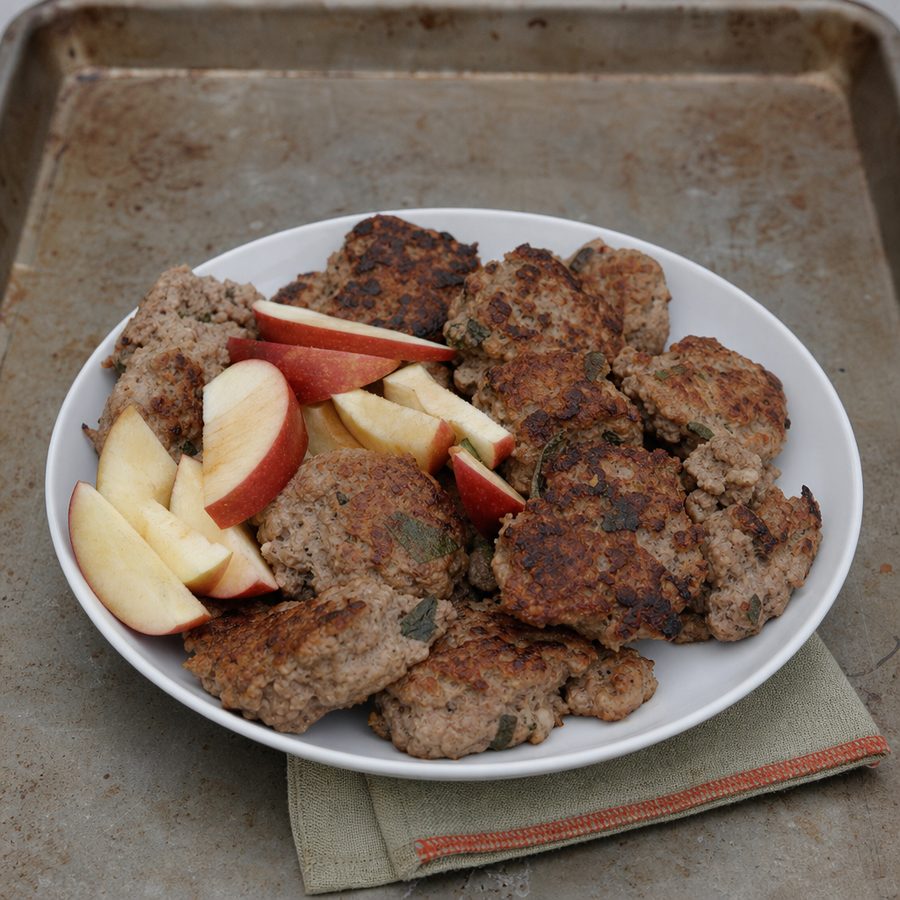
Savory ground-pork breakfast patties folded with grated apple, onion, garlic, dried sage, and fresh thyme, then seared in olive oil until golden and crisp at the edges.
Why You'll Love This Recipe
These are savory breakfast patties for anyone who wants a hearty, protein-forward morning without eggs or a skillet full of dairy. They come together from a short list of whole ingredients, cook in minutes on the stovetop, and hold up well as a make-ahead protein you can lean on through a busy week. They suit cooks who are steering clear of common irritant ingredients but still want breakfast to taste like breakfast.
Fat, moisture, and aromatics, all in proportion. Ground pork brings enough fat to stay juicy and to brown deeply, while the grated apple and onion melt into the meat and keep it from drying out over the direct heat of the pan. Dried sage carries the classic warm, slightly piney note you expect from a breakfast sausage, and fresh thyme and garlic round it out. Searing over medium heat gives the outside a golden crust with real flavor and texture; the dimple you press into each patty keeps them flat so that crust forms evenly.
Rich in protein and genuinely filling, these are the kind of breakfast that carries you to the next meal. The grated apple adds a whisper of natural sweetness against the salt and sage, and it is doing something practical as well: the moisture it releases as it cooks is what keeps a pork patty tender rather than dense. That is the whole trick behind breakfast sausage, and here it comes from fruit rather than from a list of ingredients you cannot pronounce.
Ingredients
- 1 1/2 lb ground pork
- 1 small apple, peeled and grated
- 1/2 small onion, grated
- 2 tsp dried sage
- 1 tsp fresh thyme leaves
- 3 cloves garlic, minced
- 3 tbsp olive oil, for the pan
- 1 tsp salt
Instructions
- Grate the apple and onion on the large holes: Peel the apple and grate it on the large holes of a box grater until you have a loose, wet pile, then grate the onion the same way, mince the garlic, and strip the thyme leaves from their woody stems. Grated rather than chopped is deliberate for both: they melt into the meat and season it from the inside, where diced pieces stay separate and turn up as chunks in a patty.
- Mix gently and stop early: Combine the pork, grated apple, grated onion, sage, thyme, garlic, and salt in a large bowl and fold gently with your hands or a fork for about 30 seconds, stopping as soon as the seasonings are evenly distributed. Ground pork worked any harder turns springy and dense, which is the difference between a tender patty and a rubbery one.
- Shape them half an inch thick and dimple them: Divide the mixture and form round patties about half an inch thick, then press a slight dimple into the center of each with your thumb. Wet your hands when the mixture starts sticking to them. A patty puffs from the middle as it cooks, and the dimple is what keeps it flat enough to brown evenly across the whole face.
- Sear 4 to 5 minutes a side, to 160°F: Warm the olive oil in a skillet over medium heat until it shimmers, add the patties without crowding the pan, and cook 4 to 5 minutes a side, until deeply browned on both faces and reading 160°F (71°C) at the center, the safe temperature for ground pork. The grated apple releases moisture as it cooks, so let each side develop real color before turning or they will steam rather than brown.
- Rest them a couple of minutes: Move the patties to a plate and let them rest for 2 minutes so that the juices settle back into the meat rather than running out at the first cut, then serve them warm.
Variations
- Fresh sage: Swap the dried sage for finely chopped fresh sage leaves for a brighter, greener herb flavor. Use a little more than you would dried, since fresh herbs are milder by volume.
- Pear instead of apple: Grate a firm pear in place of the apple for a softer, more floral sweetness. Choose one that is ripe but still firm so it grates cleanly rather than turning to mush.
- Maple-kissed: Brush the patties with a little maple syrup in the last minute of searing for a sweet-savory glaze that caramelizes against the crust. This adds sugar.
- Poultry patties: Use ground chicken or ground turkey in place of the pork for a milder patty. Poultry renders less into the pan, so add a bit more olive oil to keep them from drying out and cook just to done.
- Rosemary and fennel: Add finely chopped fresh rosemary and a little grated fresh fennel bulb along with the thyme for a more aromatic, sausage-shop flavor.
Storage & Leftovers
Let the patties cool, then store them in an airtight container in the refrigerator, where they keep well for up to four days. Stack them with a small piece of parchment between layers so they do not stick together.
To reheat, warm them in a dry or lightly oiled skillet over medium-low heat for a few minutes per side until heated through; this refreshes the crust far better than a microwave, which can steam them soft. If you are short on time, a covered plate in the microwave in short bursts works too.
For make-ahead ease, mix and shape the raw patties, layer them between parchment, and freeze them flat on a tray before transferring to a freezer bag. Cook them straight from frozen over slightly lower heat, adding a couple of minutes per side, or thaw overnight in the refrigerator and cook as usual.
Notes & Tips
- Squeeze the apple and onion: After grating, give the apple and onion a gentle squeeze over the sink to shed some of their liquid. Too much moisture makes the mixture loose and harder to brown; a quick squeeze keeps the patties from steaming in the pan.
- Choose the right pork: A standard ground pork with some visible fat gives the juiciest, best-browning result. Pork ground from loin can turn dry over direct heat, so if that is all you have, work in a little extra olive oil when mixing.
- Cook a test patty first: Since the raw mix has salt and herbs you cannot taste safely, pinch off a small piece, cook it through, and taste before shaping the rest. That is your chance to adjust the salt or sage to your liking.
- Know when they are done: Ground pork is fully cooked at 160°F (71°C) in the center. An instant-read thermometer takes the guesswork out; otherwise, cut into one and look for meat that is no longer pink with clear juices.
- Double the batch: These freeze beautifully raw and reheat cleanly cooked, so it is worth making a large batch at once. A tray of shaped patties in the freezer means a hot, high-protein breakfast on the busiest mornings.
- Serve them with something bright: The warm, savory herbs pair well with something fresh and slightly tart alongside, such as sliced apple or a simple pile of greens, to balance the richness of the pork.
Nutrition & Mindful Eating
- Pork, apple and sage are an old combination for good reason. The meat brings savory fat, the apple brings moisture and a little sweetness, and the sage sits between them, so the patties come out juicy with protein enough to carry the morning.
- Ground pork has enough fat to stay tender through a hard sear, which is what lets the outside crust while the middle stays soft, and it brings complete protein and B12 to a breakfast that has to last.
- Grated apple more or less vanishes into the mix, but its moisture and pectin keep the patties from tightening in the pan, and it leaves a faint sweetness against the sage along with a little soluble fiber.
- Sage is what makes a patty taste like breakfast sausage, dusty and slightly peppery, and fresh thyme underneath it adds a lemony note. Both open up the moment they meet hot fat with the onion and garlic.
- Two of these hold you well into the morning. The protein in the pork does most of that work, and the apple and onion folded through keep every bite tasting fresh while it happens.
- As you eat, catch the sage in the steam coming off the first patty and find the crisp edge against the soft center, then sit with breakfast long enough for it to land.
Frequently Asked Questions
Why do my patties fall apart in the pan?
Usually it is excess moisture or flipping too soon. Squeeze some liquid from the grated apple and onion before mixing, and let each side form a firm, browned crust before you turn it. Handling them gently and not moving them around while they sear keeps them intact.
Can I make these without a thermometer?
Yes, though a thermometer is the surest way to reach 160°F (71°C) in the center of ground pork. Without one, cut into the thickest patty and look for meat that is uniformly pale with clear, not pink, juices.
What kind of apple works best?
A firm, slightly tart-to-sweet apple grates well and holds its texture. Avoid very soft or mealy apples, which turn watery and can make the mixture loose.
Can I bake these instead of searing them?
You can bake them on a lined sheet in a hot oven until they reach 160°F (71°C) in the center, though you will miss the crisp, deeply browned crust that the skillet gives. If you bake, a quick pass under the broiler at the end helps with color.