
Salmon and Arugula Breakfast Salad
Flaked salmon piled over peppery arugula with creamy avocado, crisp cucumber, and radish, all brightened by a lemon, olive oil and fresh dill dressing.
Why You'll Love This Recipe
This is a cold, fork-and-plate breakfast for anyone who wants something savory and protein-forward first thing instead of a sweet bowl or a pastry. It comes together in the time it takes to poach a fillet, and it is a good option for people who feel steadier through the morning when they start the day with fish and healthy fat rather than fast carbohydrates. It is light enough to eat before a busy day yet substantial enough that you are not hungry an hour later.
Textures balance out, and the dressing is never cooked. Gently poaching the salmon keeps it moist and tender so it flakes into soft pieces rather than drying out, and dressing the peppery arugula with just lemon and olive oil lets the fish and the green stand out instead of being buried. The acid from the lemon cuts the richness of the salmon and avocado, the radish and cucumber add cool crunch, and the dill ties the whole plate together with a clean, grassy note.
Protein from the salmon and monounsaturated fat from both the avocado and the olive oil together make a combination that tends to feel filling and keep your energy even through the morning. The arugula, cucumber and radish add volume, water and fiber so the plate eats big without feeling heavy, and the omega-3 fats in the salmon make this a nourishing way to open the day.
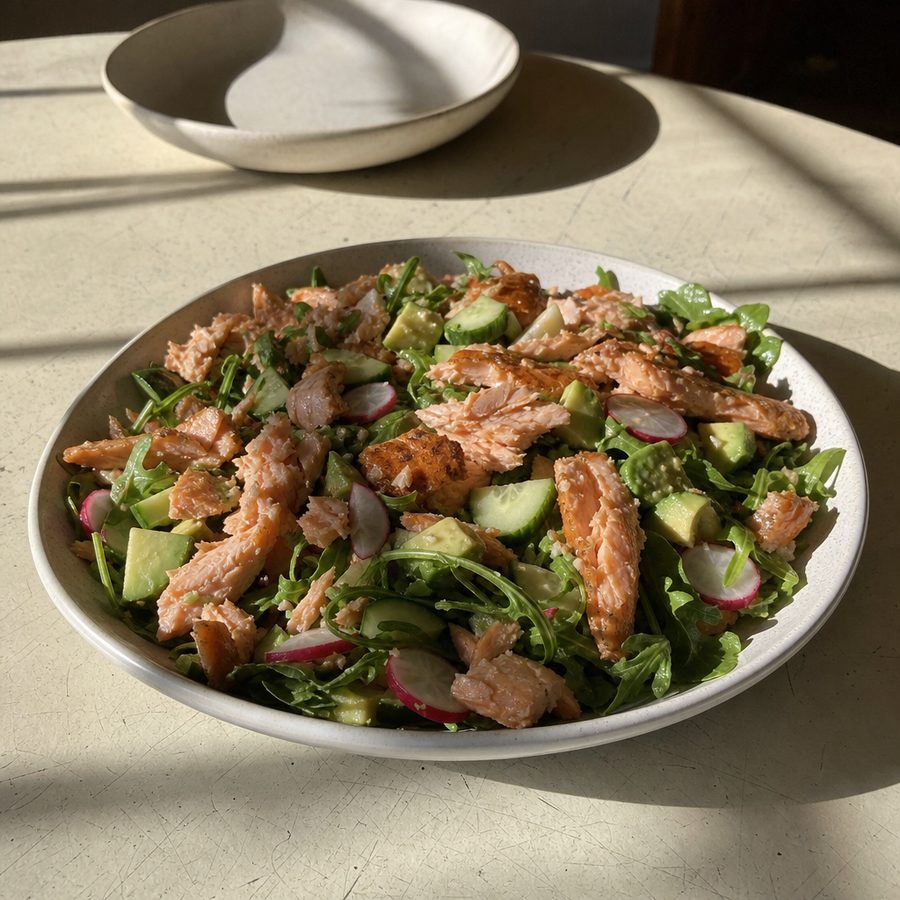
Ingredients
- 360 g cooked salmon, flaked
- 5 cups baby arugula
- 1 1/2 avocados, diced
- 1 cucumber, sliced
- 5 radishes, thinly sliced
- 2 tbsp extra-virgin olive oil
- 2 tbsp lemon juice
- 2 tbsp fresh dill, chopped
- 1/4 tsp salt
Instructions
- Cook the salmon: Bring a wide pan of salted water to a bare simmer. Slip in the salmon fillet, skin-side down, and poach gently until the flesh turns opaque and flakes easily with a fork, about 8 to 10 minutes depending on thickness (145°F (63°C) at the center). Lift it out and let it cool a few minutes, since hot salmon shreds where cooled salmon flakes, then peel off the skin, break the flesh into large pieces with a fork, and set it aside.
- Prep the vegetables: While the salmon cools, slice the cucumber into thin rounds and slice the radishes as thinly as you can, ideally on a mandoline, because a thick radish reads as hot and peppery where a thin one reads as crisp. Halve the avocado, remove the pit, scoop out the flesh, and dice it. Finely chop the fresh dill.
- Make the dressing: In a large bowl, whisk together the extra-virgin olive oil, lemon juice, chopped dill and the salt until it looks slightly thickened and combined, so that the lemon is carried through the leaves rather than landing on two of them.
- Dress the greens: Add the baby arugula, cucumber rounds and radish slices to the bowl. Toss lightly with your hands or tongs just until every leaf is lightly coated, since arugula is thin enough to collapse under too much handling and there is no reviving it once it has.
- Plate and finish: Divide the dressed greens among plates. Top each with the flaked salmon and diced avocado rather than tossing them through, because both fall apart in a salad bowl and the plate wants them whole. Serve right away, while the greens are still crisp.
Variations
- Smoked salmon: Swap the poached fillet for cold-smoked salmon, torn into ribbons, for a saltier, silkier plate with no cooking required. This adds more sodium, so hold back the pinch of salt in the dressing.
- Herb swap: Trade the dill for fresh chives, tarragon, or flat-leaf parsley. Tarragon leans anise and sweet, while chives bring a mild onion note that plays well with the radish.
- Citrus change: Use lime or orange juice in place of the lemon. Orange softens the acidity and adds a faint sweetness that pairs nicely with the avocado.
- Add fennel: Shave a little raw fennel bulb into the greens for extra crunch and a light, clean anise flavor that echoes the dill.
- Roasted beet: Fold in cooled roasted beet wedges for earthy sweetness and color. Roast whole beets at 400°F (200°C) until tender, then peel and cut before adding.
Storage & Leftovers
Store the components rather than the finished salad. Flaked salmon keeps in an airtight container in the refrigerator for up to three days, and cut cucumber and radish hold for two to three days; dressed arugula wilts within a few hours, so only dress what you will eat.
This dish is meant to be eaten cold, so there is no reheating step. If the salmon has been chilled and you prefer it closer to room temperature, let it sit out for ten to fifteen minutes before flaking it over the greens; do not microwave it, which turns it dry and rubbery.
To get ahead, poach and flake the salmon, slice the cucumber and radish, and whisk the dressing up to a day in advance and refrigerate each separately. Keep the avocado whole and uncut until serving so it does not brown, then dice it and assemble the plates in a couple of minutes when you are ready to eat.
Notes & Tips
- Buy salmon by the fillet: A center-cut fillet of even thickness poaches more uniformly than a thin tail piece, so it will not overcook at the edges before the middle is done. A skin-on piece holds together better in the water and the skin peels away cleanly once cooked.
- Slice the radish paper-thin: Radish can be sharp and woody in thick slabs. Cutting it into thin coins, ideally on a mandoline, keeps its bite gentle and crisp so it reads as fresh crunch rather than heat.
- Dress at the last minute: Arugula is delicate and collapses quickly once the acid and oil hit it. Toss and plate right before eating so the leaves stay lofty and the salad does not turn watery.
- Pick a just-ripe avocado: Choose one that yields slightly to gentle pressure but is not mushy. Too firm and it will not be creamy; too soft and it turns to paste when you toss it. Dice it last so the cut surfaces do not brown.
- Season the dressing to taste: Lemons vary in sourness, so taste the dressing before adding the greens. If it puckers, add a little more olive oil; if it falls flat, a bit more lemon and salt will lift it.
- Double the poached salmon: Poach a larger piece while you have the pan going and keep the extra flaked salmon in the refrigerator. It makes reassembling this plate on a weekday a five-minute job.
Nutrition & Mindful Eating
- Warm salmon on cold greens is the whole idea. The fish is rich and just cooked, the arugula is sharp and raw, the avocado sits between them, and the plate ends up substantial enough for morning while still tasting fresh, with protein and fat arriving together.
- Salmon cooked gently enough to still flake in large pieces is what the plate is built on. It is rich and slightly sweet, and it brings omega-3 fats along with protein, which is why a salad at breakfast still eats like breakfast.
- Arugula has a genuine peppery bite and it stands up to the salmon rather than wilting under it, and it carries folate and vitamin K in leaves sharp enough to wake you up.
- Radish and cucumber are the crunch. The radish is hot and crisp at the edge of each bite and the cucumber is cool and watery, and between them the plate keeps a snap running through the fish and avocado.
- Lemon squeezed over everything and fresh dill torn on top are what make this read as morning food. The acid lifts the fish, the dill is grassy and faintly aniseed, and olive oil pulls the two together.
- As you eat, pause on the way the cool cucumber changes each forkful of warm salmon, and let breakfast be something you sit down for rather than the first thing you finish today.
Frequently Asked Questions
Can I use canned salmon instead of poaching a fillet?
Yes. Drain a can of salmon well and flake it straight over the greens; it skips the poaching step entirely. The texture is softer and the flavor a bit more concentrated, and you may want a little extra lemon to freshen it.
Is this really filling enough for breakfast?
For most people, yes. The protein in the salmon along with the fat from the avocado and olive oil is what makes it satisfying, and that combination tends to hold you longer than a carbohydrate-based breakfast of similar size.
How do I keep the avocado from browning if I prep ahead?
Leave the avocado whole and uncut until you are ready to plate. Once you dice it, a squeeze of the lemon juice over the pieces slows browning, but it is always best cut fresh at serving time.
My salmon came out dry. What happened?
It was likely cooked too long or at too hard a boil. Keep the water at a bare simmer and pull the fish as soon as it turns opaque and flakes, around 145°F (63°C) at the center; carryover heat finishes it as it rests.