
Salmon and Egg Scramble
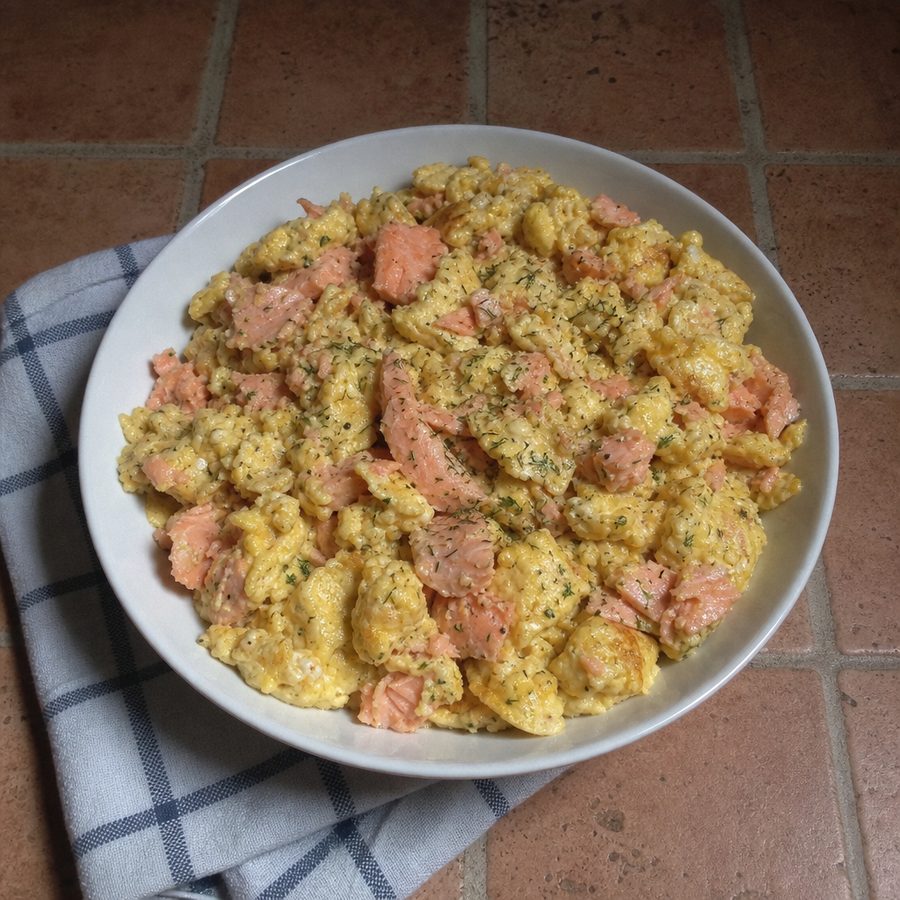
Soft, slow-scrambled eggs folded around buttery flakes of salmon and finished with a pinch of salt, served warm from the skillet.
Why You'll Love This Recipe
This is a quiet, protein-rich breakfast for anyone who wants something warm and filling without fuss or a long list of ingredients. It leans on just four things you likely already have, and it comes together in the time it takes coffee to brew. It suits people who want to start the day on savory food rather than sweet, and it scales cleanly for a household because the method stays the same whether you are cooking for one plate or several.
The heart of this dish is restraint with heat. Salmon is already cooked and only needs to be warmed, so everything happens over medium-low: the butter melts without browning, the salmon takes on its richness, and the eggs are coaxed into soft curds instead of being driven into dry, rubbery bits. Folding rather than stirring keeps the flakes of salmon intact and distributes them through pillowy egg, so each bite carries both. Pulling the pan while the eggs still look a touch underdone is what leaves them glossy and tender once they settle on the plate.
Two complete proteins, with real fat behind them. The eggs bring a soft, creamy body, the salmon adds a savory, buttery depth and a pleasant flake, and the butter ties them together and carries flavor across the whole plate. It is rich enough to keep you full through a busy morning, gentle on the palate, and free of anything sharp or acidic, so it reads as comfort food while still being nourishing.
Ingredients
- 10 oz cooked salmon, flaked
- 10 large eggs
- 3 tbsp butter
- 1/2 tsp salt
Instructions
- Flake the salmon and bring it to the stove: Break the cooked salmon into coarse flakes with a fork, discarding any skin and feeling through the flesh for pin bones as you go. Leave it on the counter rather than taking it straight from the refrigerator, because cold fish dropped into warm butter cools the pan and the eggs then need longer over the heat than soft curds can survive. If your salmon is raw, bake it skin-side down at 400°F (200°C) until it flakes easily and reads 145°F (63°C), about 12 to 15 minutes, and let it cool before you break it up.
- Beat the eggs: Crack the eggs into a bowl, add the remaining salt, and whisk until the yolks and whites are fully blended and slightly frothy with no streaks.
- Warm the salmon in butter: Melt the butter in a nonstick skillet over medium-low heat until it stops foaming. Add the flaked salmon and warm it gently, stirring once or twice, for about a minute so it takes on the butter without browning.
- Add the eggs: Pour the beaten eggs over the salmon and let them sit undisturbed for a few seconds until they just begin to set at the edges.
- Scramble softly and serve: Using a silicone spatula, push the eggs slowly from the edges toward the center, folding the salmon through as you go. Keep the heat low and lift and fold in large, gentle strokes until the eggs form soft, glossy curds that are just barely set and still look moist. Take the skillet off the heat while they look slightly underdone, since they finish cooking from residual warmth, and serve right away.
Variations
- Cheesy scramble: Fold a handful of grated hard cheese into the eggs during the last few seconds of cooking so it melts into the curds. This adds dairy.
- Bacon and egg version: Cook strips of bacon until crisp, crumble them, and fold them in with the salmon for a smoky, salty edge. This adds pork.
- Smoked salmon: Skip the cooking step and fold in cold-smoked salmon at the very end, off the heat, so it stays silky rather than firming up. This swaps in cured fish and adds more salt.
- Another oily fish: Trade the salmon for cooked, flaked trout or mackerel, prepared and boned the same way, for a similar rich, buttery character.
- Cooked in bacon fat: Use rendered bacon fat in place of the butter to scramble the eggs for a deeper, savory flavor. This swaps dairy for pork fat.
Storage & Leftovers
Cooked scrambled eggs are best the moment they are made, but leftovers keep in an airtight container in the refrigerator for up to three days. Cool them quickly and refrigerate within a couple of hours of cooking.
Reheat gently, since high heat turns leftover eggs tough and weepy. Warm them in a nonstick skillet over low heat with a small piece of butter, folding just until heated through, or microwave in short bursts at reduced power, stirring between each, and stop while they still look slightly moist.
To get ahead, cook and flake the salmon up to two days in advance and keep it covered in the refrigerator; let it lose its chill on the counter while you whisk the eggs, then warm it in the butter as written. The scramble itself takes only minutes once the salmon is ready.
Notes & Tips
- Buy salmon with cooking in mind: A center-cut fillet cooks more evenly than a thin tail piece, and skin-on holds together better on the sheet pan. If you would rather not cook fish at all, a good canned or pouched salmon works well; drain it and pick out any large bones before flaking.
- Feel for pin bones: Even a well-trimmed fillet often hides a row of thin pin bones down the center. Run a finger along the flesh after flaking and pull any you find with your fingers or tweezers so no one bites into a bone.
- Use a nonstick pan and a soft spatula: A nonstick skillet and a silicone or wooden spatula let you fold the eggs without tearing them or leaving cooked bits stuck to the metal, which is what keeps the curds large and tender.
- Judge doneness by the shine: Perfectly soft scrambled eggs still look glossy and slightly wet when you pull the pan. If they look matte and dry in the skillet, they will be overcooked on the plate. Trust the residual heat to finish them.
- Salt lightly if using cured or canned fish: Cooked fresh salmon needs the full pinch of salt, but smoked or canned salmon already carries salt of its own, so taste and hold back before adding more.
- Make a double batch of salmon: Since you are heating the oven anyway, cook extra salmon and keep the flaked surplus in the refrigerator. It makes the next morning's scramble a five-minute job.
Nutrition & Mindful Eating
- Eggs, salmon and butter, and very little happens to them beyond low heat. The eggs go creamy, the butter keeps them that way, and the salmon folded in at the end runs savory flakes through the soft curds, with protein enough to carry the morning.
- Eggs cooked slowly over low heat set into small soft curds and stay glossy, which is a completely different thing from eggs cooked fast and firm. The yolks are where the choline and the lutein are, and where the richness comes from too.
- Salmon warms gently in the butter before the eggs go in, so it stays in tender flakes rather than tightening up, and its richness sits naturally against the eggs. Omega-3 fats and vitamin D come along with its color.
- Butter is the cooking medium and the flavor at once. Kept just below sizzling it coats the eggs as they set and gives the scramble its gloss, and it carries vitamins A and D along with it.
- Salt goes on at the end, once the pan is off the heat, where it stays bright on the surface and draws the sweetness out of both the eggs and the fish.
- As you eat, note how loosely the curds hold together and how the salmon breaks apart in the middle of them, and give the plate a few unhurried minutes before the day starts.
Frequently Asked Questions
Can I use leftover salmon instead of cooking a fresh fillet?
Yes. Any fully cooked salmon works well here; just flake it, check for bones, and let it lose its chill before warming it in the butter. Since the scramble depends on gentle heat, cold fish straight from the refrigerator can slow things down and cool the pan.
Why are my eggs coming out dry and rubbery?
Almost always the heat is too high or the eggs stayed in the pan too long. Keep the burner at medium-low, fold slowly, and take the skillet off the heat while the eggs still look glossy and a little underdone. They finish cooking from their own warmth on the plate.
Can I make this without a nonstick pan?
You can, but a well-seasoned or nonstick surface makes soft scrambling far easier. In a stainless pan, be generous with the butter and keep the eggs moving so they do not grip the metal and tear.
Is this filling enough for a full meal?
Yes. Between the eggs and the salmon it carries a lot of protein and fat, which tends to keep people satisfied for hours. If you want a larger plate, cook a bit more salmon and fold it through.