
Baked Salmon Cakes Over Lemon Greens
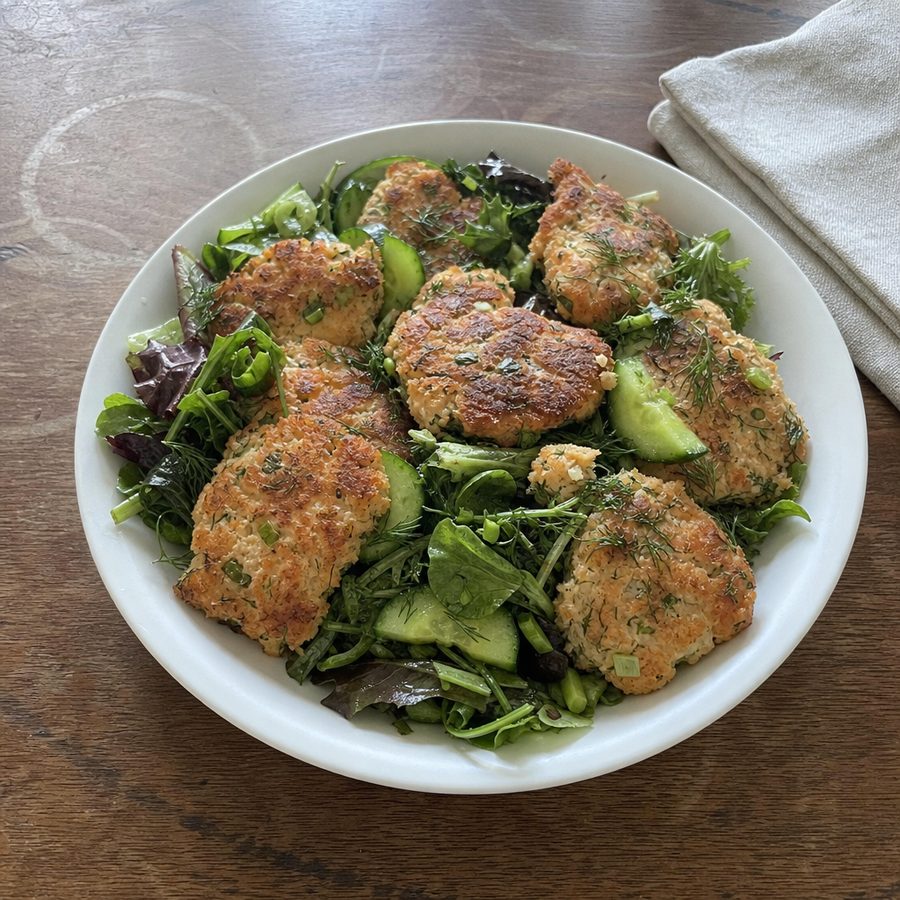
Flaky salmon cakes bound with egg, quinoa, scallions, dijon, and dill, baked until golden and served over arugula and cucumber dressed with olive oil and lemon.
Why You'll Love This Recipe
This is a protein-forward lunch for anyone who wants something light on the plate but filling, and who would rather bake than stand over a spattering skillet. Chopped fresh salmon is bound with egg and quinoa into tender cakes, then set over a quick salad of peppery arugula and cool cucumber. It comes together on a single sheet pan, and because it holds well, it is a strong candidate for a lunch you make ahead and look forward to.
Chop the salmon by hand and refuse to mash it to paste. Leaving some small distinct pieces gives the cakes a real flaky bite instead of a dense, rubbery one, while the egg and quinoa act as the binder that holds everything together in the oven. Baking on oiled parchment at a hot temperature browns both sides, and the single flip gives you color and firmness all the way around without deep frying. The dijon and dill season the interior, and the lemon dressing on the greens brightens each bite so the richness of the salmon never feels heavy.
Salmon and egg supply the steady protein, the quinoa adds whole-grain substance and a little bit of chew, and the raw greens underneath bring volume, crunch, and freshness to the plate as a whole. The olive oil and lemon carry flavor and healthy fat while keeping the meal clean-tasting. You finish feeling fed rather than weighed down, which is exactly what a good midday meal should do.
Ingredients
- 4 salmon fillets (about 520g), skin removed
- 2 eggs
- 1 1/4 cups cooked quinoa
- 4 scallions, sliced
- 3 tbsp chopped dill
- 1 tbsp dijon mustard
- 5 cups arugula
- 1 large cucumber, sliced
- 3 tbsp olive oil
- 2 tbsp lemon juice
- 1/2 tsp salt
Instructions
- Cook the quinoa: Rinse the quinoa under cold water in a fine-mesh strainer to wash off its bitter coating, then simmer in water until the grains are tender and the little curled germ ring pops loose, about 15 minutes. Drain off any extra water, fluff with a fork, and spread it out to cool. Warm quinoa will start to cook the egg, so let it come down to at least room temperature before mixing.
- Preheat the oven: Preheat the oven to 425°F (220°C). Line a sheet pan with parchment and brush the parchment with olive oil so the cakes release cleanly and pick up color on the bottom.
- Prep the aromatics and salmon: Thinly slice the scallions and finely chop the dill. Remove any skin from the salmon fillets, then finely chop the raw salmon with a sharp knife until it looks coarsely minced with some small pieces remaining for texture.
- Mix the cakes: In a bowl, combine the chopped salmon, eggs, cooled quinoa, scallions, dill, dijon mustard, and salt. Fold together gently with a fork until evenly bound. The mixture will feel soft and a little wet, which is correct; it firms up as it bakes.
- Form and bake: With damp hands, shape the mixture into evenly sized patties about three-quarters of an inch thick and arrange them on the oiled parchment with space between each. Bake for 16 to 18 minutes, carefully flipping each cake once at the halfway point with a thin spatula, until they are golden on both sides, firm to the touch, and reach an internal temperature of 145°F (63°C).
- Dress the greens and plate: While the cakes bake, slice the cucumber. In a large bowl, toss the arugula and cucumber with the remaining olive oil and the lemon juice just before serving so the greens stay crisp. Spread the dressed greens on plates and set the warm salmon cakes on top.
Variations
- Canned salmon shortcut: Swap the fresh fillets for well-drained canned salmon to skip the knife work. Flake it apart, pick out any large bones, and mix as usual; the cakes will be a touch softer, so chill the batter before shaping.
- Herb swap: Trade the dill for chopped parsley, chives, or cilantro depending on what you have. Each shifts the flavor while keeping the fresh, green backbone of the cakes intact.
- Brighter and briny: Fold chopped capers and a little lemon zest into the batter for a sharper, more savory cake that plays well against the lemon-dressed greens.
- Crumb-bound cakes: Replace the quinoa with breadcrumbs for a more classic, lighter-textured cake; note this adds gluten unless you use a gluten-free crumb.
- Greens upgrade: Add sliced avocado or halved cherry tomatoes to the salad, or swap the arugula for baby spinach for a milder base under the cakes.
Storage & Leftovers
Store leftover salmon cakes and the undressed greens separately in airtight containers in the refrigerator. The cakes keep well for up to three days; the arugula and cucumber are best dressed fresh, so hold the olive oil and lemon until you are ready to eat.
To reheat, warm the cakes in a 350°F (175°C) oven or toaster oven on a small tray for about eight to ten minutes until heated through. This keeps the outside crisp; the microwave works in a pinch but softens the crust and can make them a little rubbery.
To get ahead, cook and cool the quinoa and mix the full salmon batter up to a day in advance, keeping it covered in the refrigerator. You can also shape the raw patties and refrigerate them on the lined pan, then bake straight from cold, adding a minute or two to the time.
Notes & Tips
- Chill for cleaner shaping: If the batter feels too loose to shape, refrigerate it for 15 to 20 minutes. The egg and quinoa firm up when cold and the patties hold their edges far better on the pan.
- Pick the right salmon: A center-cut fillet chops more evenly than a thin tail piece. If your fish smells strongly fishy rather than clean and briny, it is past its prime; ask the counter for the freshest cut.
- Wet hands, neat cakes: The mixture is sticky, so keep a small bowl of water nearby and dampen your palms between each patty. It stops the batter from clinging to your hands and keeps the shapes uniform.
- Judge doneness by feel and temp: A finished cake springs back when pressed and is opaque through the center. If you are unsure, a thermometer reading of 145°F (63°C) in the middle is your surest cue.
- Dress at the last minute: Arugula wilts fast once it meets acid and oil, so toss the greens only when the cakes are out of the oven. Undressed greens also store better for next-day leftovers.
- Double the batch: These freeze well after baking. Cool completely, freeze in a single layer, then bag them; reheat from frozen in a hot oven for an easy lunch on a busy day.
Nutrition & Mindful Eating
- Salmon, quinoa and egg are what hold these cakes together and what make them worth eating. The fish brings flavor and richness, the quinoa brings structure and a little chew, and the egg binds it all, so each cake carries protein and fiber at once.
- Cooked quinoa folded into the mix keeps the cakes from turning dense, because the grains stay separate and slightly springy through the bake. It brings plant protein, fiber and magnesium into something that would otherwise be all fish.
- Salmon flaked coarsely rather than minced leaves visible pieces in the finished cake, which is what keeps the texture interesting bite to bite. Its omega-3 fats and protein are much of why these hold you well past the meal.
- Dijon mustard is the small thing that changes these. It sharpens the fish from the inside and gives the cakes a tang you notice on the second bite, while scallions and dill scattered through leave green flecks and a fresh, oniony lift.
- The arugula and cucumber underneath are dressed with lemon and olive oil and they are meant to be eaten with the cakes, not around them. Peppery leaves and cold cucumber against a hot savory cake is the point of the plate.
- As you eat, break a cake open and watch the steam come off the flakes, then take a bite with the cold greens underneath and let that contrast slow you down through the plate.
Frequently Asked Questions
Why are my salmon cakes falling apart?
Usually the mixture was too warm or too wet when shaped. Make sure the quinoa is fully cooled before mixing, and chill the batter for a bit if it feels loose. A gentle flip with a thin spatula halfway through baking also protects the cakes while they set.
Can I use frozen salmon?
Yes. Thaw it fully in the refrigerator and pat it very dry before chopping, since excess water makes the batter loose and harder to shape into firm cakes.
How do I know the cakes are cooked through?
They should be golden on both sides, firm when pressed, and opaque in the center. For certainty, aim for an internal temperature of 145°F (63°C) at the thickest point.
Can I pan-fry these instead of baking?
You can. Cook them in a lightly oiled nonstick skillet over medium heat for a few minutes per side until golden and firm, lowering the heat if they brown before the centers set.