
Salmon and Cheddar Melt Bites
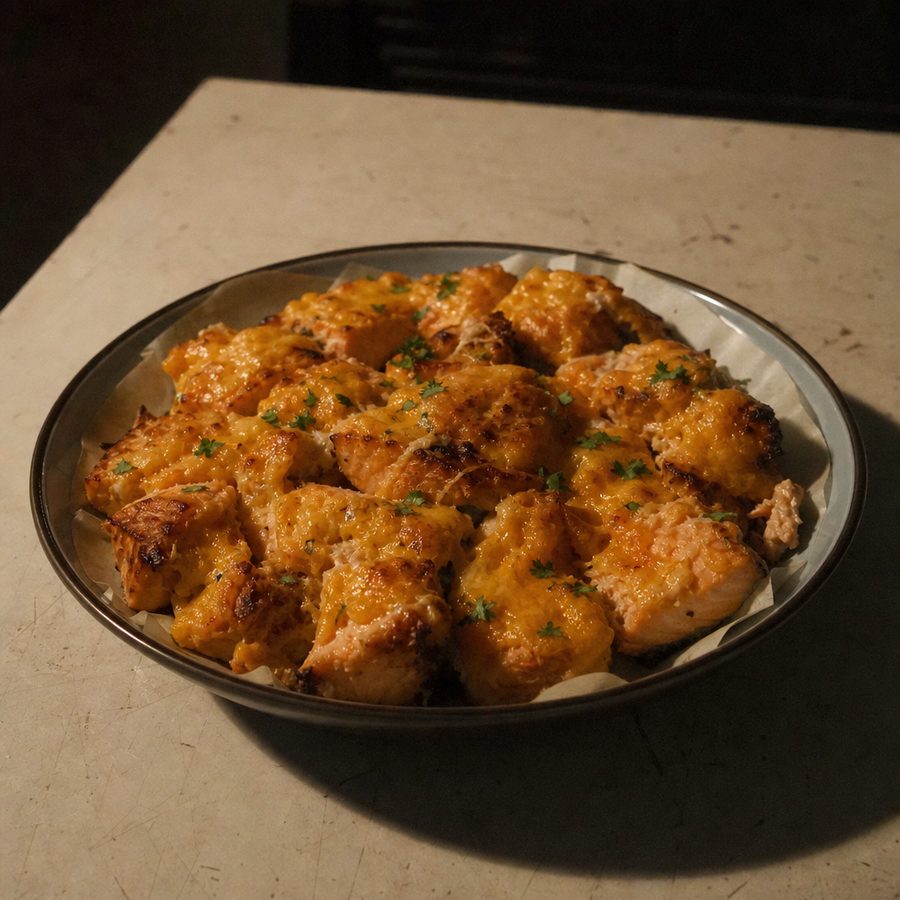
Tender flaked salmon folded with sharp cheddar and egg, then baked in a mini muffin tin into rich little bites with a golden, cheesy top.
Why You'll Love This Recipe
These are a warm, savory bite built for anyone who wants something rich and protein-forward without a lot of fuss or a pile of ingredients. Salmon, cheddar, egg, and salt are all it takes, and the mini muffin tin turns them into tidy, poppable portions that hold together in the hand. They suit a mid-afternoon snack, an easy addition to a plate at breakfast, or something to keep in the fridge for when you want a few bites of real food rather than a wrapper.
The egg binds, and the cheese is doing two jobs at once. Folding half the cheddar into the mixture melts through the salmon and glues the flakes together from the inside, while the cheese sprinkled on top browns in the oven's dry heat and gives each bite a crisp, golden lid. Keeping the salmon in coarse flakes rather than mashing it means you still taste distinct pieces of fish instead of a uniform paste, and the short bake sets the egg just enough to hold without drying the salmon out.
Rich fish, melted cheese, and egg together deliver a lot of protein and staying power in a small package. Salmon brings its own natural oils and a deep, savory flavor, the cheddar adds sharpness and a browned, crackly top, and the egg ties it all into something tender and substantial. A couple of these bites feel like a real meal's worth of nourishment even though they are small enough to eat with your fingers.
Ingredients
- 12 oz cooked salmon, flaked
- 2/3 cup shredded cheddar
- 1 large egg
- 1/4 tsp salt
Instructions
- Flake the salmon: Break the cooked salmon into coarse flakes with a fork, pulling away any skin still attached and running your fingers through the pieces to find stray pin bones. Keep the flakes chunky rather than working them fine, because those visible pieces are what you feel in a finished bite and salmon worked to a paste bakes dense. If you are starting from a raw fillet, roast it on a lined sheet at 400°F (200°C) until the flesh turns opaque and flakes easily, about 12 to 15 minutes or 145°F (63°C) at the thickest part, then let it cool before you flake it.
- Prepare the tin: Keep the oven at 400°F (200°C). Grease every cup of a mini muffin tin thoroughly, working the fat up the sides so the melts release cleanly.
- Shred and mix: Shred the cheddar from a block if it is not already shredded. In a bowl, gently fold the flaked salmon together with the egg, half of the shredded cheddar, and the salt until the mixture holds together and the egg coats everything evenly. Handle it lightly so the salmon stays in visible flakes rather than turning to paste.
- Fill the cups: Spoon the mixture into the greased cups, mounding each one slightly and pressing down just enough to compact it so the bites hold their shape. Sprinkle the remaining shredded cheddar over the tops.
- Bake: Bake for 14 to 16 minutes, until the centers are set and no longer wet-looking and the cheese on top is melted and golden brown at the edges. Let the melts rest in the tin for a few minutes so they firm up, then run a small knife around each one and lift them out.
Variations
- Sharper, crispier top: Sprinkle a little grated parmesan over the cheddar before baking for a sharper flavor and a crustier, more browned lid. This adds dairy.
- Swap the cheese: Trade the cheddar for another firm melting cheese such as gruyère or aged gouda to shift the flavor from tangy to nutty. This keeps it dairy-based.
- Add crisp bacon: Fold in cooked, crumbled bacon for a smoky, salty edge that plays off the salmon. This adds pork.
- Canned salmon version: Use well-drained canned salmon in place of the roasted fillet for a faster, softer bite; because canned salmon runs saltier, hold back on the added salt.
- Richer, more custardy bite: Fold an extra egg yolk into the mixture for a softer, more tender center that sets up almost custardy. This adds egg.
Storage & Leftovers
Store the cooled melts in an airtight container in the refrigerator, where they keep well for up to three to four days. Let them come down to room temperature before you seal the container so condensation does not soften the crisp tops.
To reheat, warm them in a 350°F (175°C) oven or toaster oven for about five to eight minutes until heated through and the tops crisp up again. A skillet over low heat also works and revives the golden crust; avoid the microwave if you can, since it turns the cheese rubbery and steams away the crispness.
To make ahead, you can mix the salmon, egg, and cheddar and spoon it into the greased tin, then cover and refrigerate the filled tin for up to a day before baking. Add the cheese topping and bake straight from the fridge, giving it an extra minute or two in the oven. Baked melts also freeze well; freeze them in a single layer, then transfer to a bag and reheat from frozen in the oven.
Notes & Tips
- Choose the right salmon: A center-cut fillet flakes into the most even pieces, but tail pieces or canned salmon work too. Whatever you use, run your fingers over the flesh and pull out any pin bones before mixing.
- Shred your own cheese: Cheese shredded fresh from a block melts smoother and browns better than the pre-shredded kind, which is dusted with anti-caking starch that can leave the tops grainy.
- Adjust the salt to your salmon: Fresh roasted salmon needs the full amount of salt, but if you switch to smoked or canned salmon, taste the mixture and add salt sparingly, since those are already salty.
- Grease generously or go silicone: The melted cheese wants to stick, so coat every cup well, or use a silicone mini muffin tin, which lets the bites pop out with almost no effort.
- Know when they are done: The centers should look set and dry rather than glossy or wet, and the cheese on top should be golden at the edges. Pulling them a minute early keeps the salmon moist.
- Make a big batch: These reheat and freeze well, so it is worth filling the whole tin at once and stashing extras for quick snacks through the week.
Nutrition & Mindful Eating
- Salmon, cheddar and egg are the whole recipe, and they lock together in the oven. The fish keeps everything moist, the cheese browns at the edges, and the egg sets around both so each bite holds its shape.
- Salmon is the reason these eat like a real snack. Its fat keeps the inside soft while the outside colors and firms, and that fat is where the omega-3s and the vitamin D the fish carries sit.
- Sharp cheddar does two jobs. It seasons the mixture from the inside, and the bits that touch the hot pan turn into a lacy brown crust, bringing along the calcium that aged cheese holds.
- Egg is the binder, and it is also what makes the texture tender rather than dense. It sets gently around the salmon and cheese, adding its own protein and the choline that lives in the yolk.
- Salt goes in before baking so it has time to draw the flavor out of the fish and pull the tang of the cheddar forward. A few of these bites hold you longer than their size suggests.
- As you eat, notice the crisp brown edge giving way to the soft warm center, and let a couple of these be a real pause rather than something you finish standing over the sink.
Frequently Asked Questions
Can I use canned salmon instead of roasting a fillet?
Yes. Drain it well and flake it as you would the roasted fish. It makes a softer bite and runs saltier, so cut back on the added salt and taste the mixture before filling the cups.
Why did mine turn out dry?
Dryness almost always comes from overcooked salmon or too long in the oven. Roast the fillet just to 145°F (63°C), and pull the bites as soon as the centers are set and the tops are golden rather than waiting for them to feel firm.
Can I bake these in a regular-size muffin tin?
You can. Fill standard cups and extend the bake time by several minutes, checking that the centers are set and the tops are golden before you take them out.
Are they good cold, or do they need reheating?
They taste fine cold straight from the fridge as a quick snack, but a few minutes in the oven or a skillet brings back the crisp, golden top and the melted cheese, which is when they are at their best.