
Salmon en Papillote with Lemon Butter
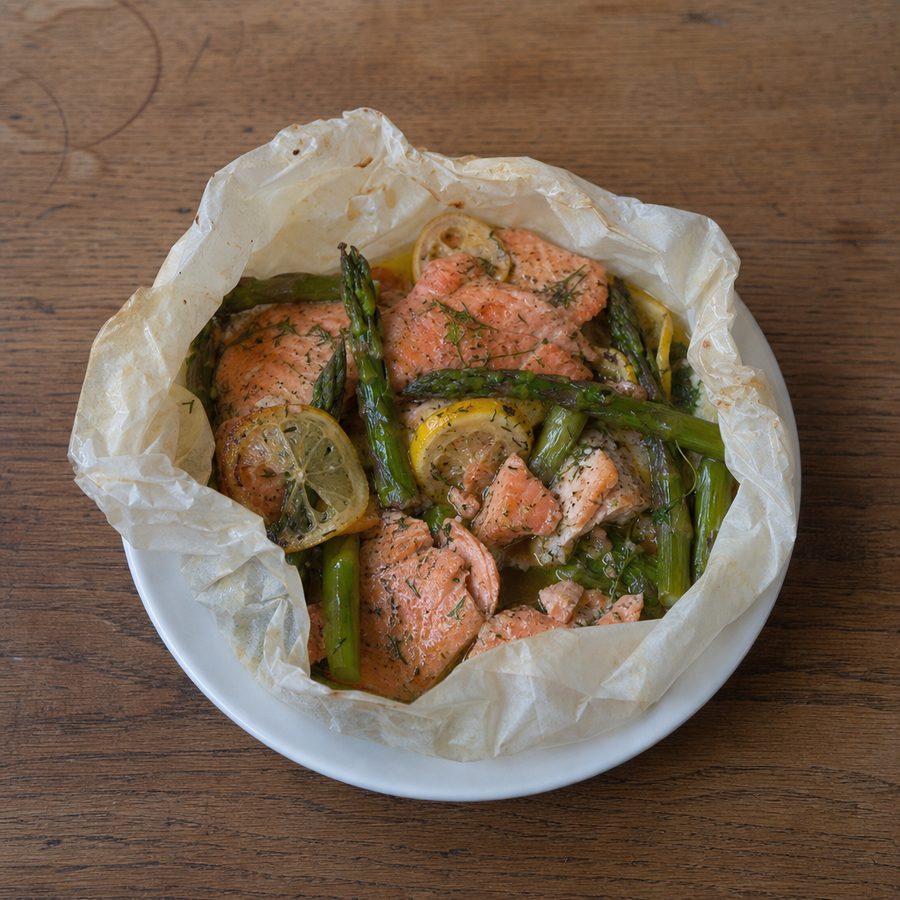
Salmon fillets steamed in parchment with butter, garlic, fresh dill, tender asparagus, cherry tomatoes, and bright lemon, finished with a drizzle of olive oil.
Why You'll Love This Recipe
This is a gentle, hands-off dinner for anyone who wants something that feels a little special without much cleanup. Each fillet cooks inside its own sealed parchment pouch alongside asparagus and tomatoes, so a single packet is a whole plated meal. It suits weeknights when you want real food fast, and it holds up well enough to plate for company since each pouch is opened at the table.
The technique doing the work here is steaming in parchment. As the packet heats, the butter, lemon juice, and the moisture from the tomatoes and asparagus turn to steam that has nowhere to escape, so it bastes the fish from all sides. That moist, enclosed heat cooks the salmon gently and evenly, which is why it stays tender and silky rather than drying out the way an exposed fillet can. The garlic, dill, and lemon perfume the trapped steam and settle into the fish and vegetables.
Rich without being heavy: the salmon and butter give it a full, savory quality that keeps you full, while the asparagus, tomatoes, and lemon keep every bite bright. Salmon brings quality protein and the omega-3 fats it is known for, the vegetables add color and freshness, and because everything steams in its own juices you get a real sauce with nothing added but a finishing drizzle of olive oil.
Ingredients
- 4 salmon fillets (about 5.5 oz each)
- 4 tbsp butter
- 1 1/2 tbsp olive oil
- 1 bunch asparagus, trimmed
- 1 cup cherry tomatoes, halved
- 1 1/2 tbsp lemon juice, plus slices
- 3 cloves garlic, minced
- 1 tbsp fresh dill
- 1/2 tsp salt
Instructions
- Tear parchment squares big enough to seal: Heat the oven to 400°F (200°C) and tear off a large square of parchment for each fillet, each one big enough to enclose the fish and its vegetables with room to fold. Err large, because a packet that will not seal lets the steam escape and steam is the entire cooking method here.
- Prep the aromatics and vegetables: Mince the garlic, finely chop the dill, snap the woody ends off the asparagus, and halve the cherry tomatoes. Cut a few thin slices from a lemon and juice the rest until you have a couple of tablespoons. Everything goes into the packets raw, so this is all the knife work there is.
- Build each packet with the butter on the fish: Set a fillet skin side down in the center of each square, top it with a pat of butter, the garlic, the dill, and a pinch of salt, then lay the asparagus alongside and add the tomatoes, drizzling with lemon juice and laying a lemon slice or two over the top. The butter sits on the fish rather than under it so it melts down through everything as the packet heats.
- Fold and seal, leaving air inside: Bring the two opposite sides of the parchment up over the salmon so they meet, fold them down together in tight creases toward the fish, then roll and twist the two open ends underneath to seal, leaving a little air space inside. That space matters, because the packet cooks by trapped steam and a parcel wrapped tight against the fish has nowhere for it to circulate.
- Bake 15 to 18 minutes, until the packets puff: Arrange the sealed packets on a baking sheet and bake 15 to 18 minutes. They will puff as steam builds inside, which is the sign the seal is holding. The salmon is done when it flakes easily and reads 145°F (63°C) at the thickest part, and the asparagus is bright green and tender.
- Open them away from your face: Move each packet to a plate and open it carefully, cutting or tearing the top and standing back from the burst of hot steam, which is hotter than the oven air and will scald. Drizzle with olive oil and serve in the parchment, or slide the contents onto the plate along with all the juices.
Variations
- Change the herb: Swap the dill for tarragon, basil, chives, or flat-leaf parsley. Tarragon leans anise and elegant, basil turns it summery, and chives keep it mild and oniony.
- Add a little heat: Sprinkle a pinch of red pepper flakes or a few thin slices of fresh chili into each packet before sealing for a warm background heat that plays off the lemon.
- Use a different fish: Cod, halibut, trout, or arctic char all work in place of salmon. White fish like cod cooks a touch faster, so check it a few minutes early for flaking.
- Swap the green vegetable: Trade the asparagus for green beans, thinly sliced zucchini, or shaved fennel. Cut them thin so they turn tender in the same steaming time as the fish.
- Add a briny bite: Tuck in a few capers or sliced olives with the tomatoes for a salty, savory edge; taste before adding extra salt since both bring their own.
Storage & Leftovers
Refrigerate leftover salmon and vegetables in an airtight container for up to three days. If you can, lift the fish and vegetables out of the parchment first and store them with their juices, since sitting in the cooling packet can steam them a little further.
Reheat gently to protect the texture. Warm the salmon in a covered dish in a low oven, around 275°F (135°C), just until heated through, or use short bursts in the microwave at reduced power with the plate covered. Salmon reheats best barely warmed rather than hot, so stop while it still looks moist. A fresh squeeze of lemon revives the flavor.
To get ahead, build the packets completely, then refrigerate them sealed and unbaked for up to a day. Bake straight from the fridge, adding a couple of extra minutes since they start cold. You can also trim the asparagus, mince the garlic, chop the dill, and halve the tomatoes a day in advance and keep them in the fridge so assembly takes minutes.
Notes & Tips
- Choose even fillets: Ask for center-cut fillets of similar thickness so they finish at the same time. A thin tail-end piece cooks faster and can overcook while a thick fillet is still setting up.
- Match the asparagus to the timing: Thin, pencil asparagus steams tender in the packet's cooking time; if you only have thick spears, halve them lengthwise or shave them with a peeler so they cook through with the fish.
- The tomatoes are your sauce: The cherry tomatoes are not just for color; as they burst they release juice that mixes with the butter and lemon to make the built-in sauce, so do not skip them if you want that pan liquid.
- Check doneness without unwrapping: A packet puffs and firms as it cooks. To check, open one carefully; the salmon should flake at a gentle press and read 145°F (63°C) at its thickest point. It keeps cooking briefly from residual heat once out of the oven.
- Season the fish directly: Salt the salmon itself, not just the vegetables, and add the garlic and dill right on top of the fillet so their flavor steams into the fish rather than pooling at the bottom.
- Round out the plate: A packet stands on its own, but a handful of peppery greens, cauliflower rice, or a spoon of the packet juices poured over the top makes it feel like a fuller meal.
Nutrition & Mindful Eating
- The salmon, the butter and the lemon do most of the work together. The fish releases its juices, the butter melts into them, and the lemon keeps a sauce this rich from ever tasting flat, all inside a sealed packet.
- Salmon suits this method because the trapped steam keeps it moist rather than firming it up, and the fat that makes it taste that way is the same fat carrying its omega-3s and vitamin D.
- Butter is doing more than richness here. It pools under the fish and picks up the garlic and the juices around it, and that fat helps the vitamins that only dissolve in fat travel out of the vegetables and into the sauce.
- Cherry tomatoes collapse in the closed packet and give up their juice, going sweeter and deeper than they are raw, and cooking them in fat this way makes their lycopene easier to take up.
- Asparagus steams to the point where it still snaps, and the garlic and dill perfume the whole parcel as it bakes, so when you tear the paper open at the table the smell arrives before the food does.
- As you eat, tear the packet open slowly and let the citrus and herb steam reach you first, then take the fish apart in soft pieces and keep to the pace that steam sets.
Frequently Asked Questions
Can I use foil instead of parchment?
Yes. Foil seals tightly and steams the fish the same way, and it is sturdier for the grill. Parchment lets you see the packet puff and is nicer to serve in, but foil is a fine swap if that is what you have.
My salmon still has skin on. Do I remove it?
Leave it on. Place the fillet skin-side down; the skin protects the flesh from the hot baking sheet and lifts away easily after cooking if you would rather not eat it. The flesh takes on all the flavor either way.
Can I cook these from frozen?
It is best to thaw the salmon first so it cooks evenly and the vegetables do not overcook while the center catches up. Thaw overnight in the fridge, pat the fillets dry, then assemble and bake as written.
The fish released a lot of liquid. Did I do something wrong?
No, that liquid is expected and it is the point. The tomatoes, lemon, butter, and fish all give off moisture as they steam, and that pooled juice is your sauce. Spoon it back over the salmon and vegetables when you serve.