
Salmon and Farro Herb Salad
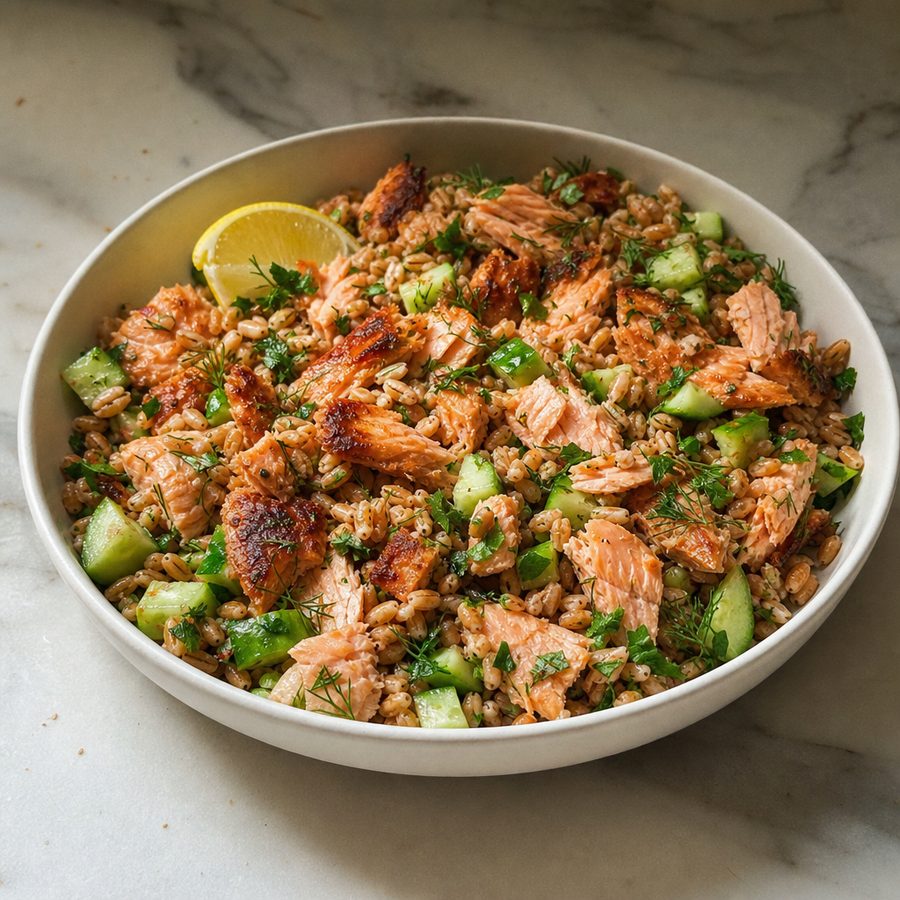
Flaky roasted salmon over nutty farro tossed with cucumber, scallion, fresh dill, parsley, garlic, lemon, and olive oil for a bright, herb-forward salad.
Why You'll Love This Recipe
This is a cool-weather-proof lunch that eats well warm or at room temperature, which makes it a good fit for anyone packing a midday meal or feeding a family that grazes at different times. It pairs a tender piece of roasted salmon with a chewy grain salad, so it feels like a full plate rather than a light bite, and it leans on fresh herbs and lemon instead of heavy sauces.
The farro gets dressed while it is still warm. Warm grains drink up the lemon, olive oil, and garlic far better than cold ones, so the seasoning reaches the center of each kernel instead of sitting on the surface. Roasting the salmon at a moderate temperature keeps it just to the point of flaking, and folding the cucumber, scallion, and herbs in at the end keeps them crisp and green rather than wilted.
It satisfies on several fronts at once: the salmon brings rich, savory protein and healthy fats, the farro adds nutty chew and fiber that keeps you full, and the cucumber and herbs keep every bite bright and fresh. Because the flavor comes from lemon, garlic, and a generous handful of dill and parsley, the dish tastes vivid without relying on much salt. It also holds its shape in a container in a way a leafy salad cannot, since farro and cucumber both stay themselves overnight while lettuce would have collapsed under the same dressing.
Ingredients
- 4 salmon fillets (about 135g each)
- 3 cups cooked farro
- 1 large cucumber, diced
- 4 scallions, thinly sliced
- 3 tbsp olive oil
- 3 tbsp lemon juice
- 1/3 cup fresh dill, chopped
- 1/3 cup parsley, chopped
- 2 cloves garlic, minced
- 3/4 tsp sea salt
Instructions
- Start with warm farro: This wants three cups of cooked farro, which is about a cup of dry grain simmered in plenty of salted water for 25 to 30 minutes, until the kernels are tender but still push back in the middle. If it was cooked earlier in the week, tip it into a colander and run hot water over it for 30 seconds, or warm it in a covered pan with a splash of water. Warm is the point, for the reason two steps down.
- Roast the salmon and stop at 145°F: Heat the oven to 400°F (200°C). Pat the fillets dry, set them on a lined sheet, and rub the tops with a little of the olive oil. Roast for 12 to 14 minutes, until the flesh has turned opaque and separates into flakes under gentle pressure from a fork and the thickest part reads 145°F (63°C) on an instant-read thermometer. Drying the surface first is not fussiness: a wet fillet steams in its own moisture and the top stays pale and slack instead of firming up.
- Whisk the dressing while it roasts: In a small bowl, whisk the remaining olive oil, the lemon juice, the minced garlic, and the sea salt for about 20 seconds, until the mixture looks cloudy rather than separated into layers. Whisking the garlic and the salt into the acid before the oil goes in is what keeps them suspended through the bowl, so the last forkful is seasoned like the first.
- Dress the farro while it is still warm: Pour the dressing over the warm grains and toss until every kernel is glossy. Warm farro opens up and drinks the lemon, oil, and garlic into itself, while cold farro only wears them and leaves the seasoning sitting in the bottom of the bowl. Give it 5 minutes to take it all in before anything else goes near it.
- Cut the vegetables while it sits: Dice the cucumber small, slice the scallions thin on an angle, and chop the dill and parsley coarse rather than fine, until the leaves are broken up but still recognizable. A coarse chop keeps the oils inside the leaf until you bite one, which is why herbs cut this way taste greener than herbs pulverized on the board.
- Fold the fresh things in at the end: Fold the cucumber, scallions, dill, and parsley through the farro, turning it over four or five times until the green looks evenly spread through the grain. Doing this last is what keeps the cucumber crisp and the herbs bright; added while the farro was still hot they would go dull and limp within a few minutes.
- Flake the salmon over the top: Break the fillets into large flakes with a fork, keeping the pieces big enough to sit on the surface rather than disappear into the grain, and lay them over the salad. Finish each plate with a squeeze of lemon, because the acid is what makes roasted salmon taste of fish rather than of oil.
Variations
- Swap the grain: Trade the farro for cooked barley, wheat berries, or brown rice; each brings its own chew, and barley or wheat berries keep the same wheaty backbone.
- Add a briny bite: Fold in a handful of chopped kalamata olives or thin slices of radish for a sharper, saltier edge alongside the herbs.
- Creamy finish: Stir a spoonful of plain yogurt into the lemon dressing for a tangier, creamier coating on the farro; this adds dairy.
- More green: Toss in a couple of handfuls of baby arugula or chopped baby spinach just before serving to bulk up the salad with leafy greens.
- Different herbs: Replace some of the dill and parsley with chopped mint or fresh basil for a change in the herb profile while keeping it fresh and bright.
Storage & Leftovers
Store leftovers in an airtight container in the refrigerator, keeping the salmon and farro salad together or separate, for up to three days. The herbs will soften over time but the flavor holds well.
This dish is at its best cool or at room temperature, so it rarely needs reheating; if you prefer it warm, take it out of the fridge and let it sit on the counter for a few minutes, or warm the salmon gently in a low oven just until heated through so it does not dry out.
To get ahead, cook the farro and whisk the dressing up to a day in advance and refrigerate them separately. Roast the salmon and chop the cucumber and herbs the day you plan to eat, then toss everything together so the vegetables stay crisp.
Notes & Tips
- Choose even fillets: Pick salmon fillets of similar thickness so they finish roasting at the same time; a thick center-cut piece will need the longer end of the roasting window.
- Seed a watery cucumber: If your cucumber is very seedy, halve it lengthwise and scrape out the seeds with a spoon before dicing, so the salad does not turn watery as it sits.
- Dry the herbs well: Spin or pat the dill and parsley completely dry after washing; wet herbs clump and dilute the dressing instead of clinging to the farro.
- Taste before serving: Farro can vary in how much lemon and salt it wants once cooled, so taste the dressed salad and adjust with an extra squeeze of lemon or a small pinch of salt at the end.
- Cook the grain ahead: Farro keeps beautifully, so make a larger batch when you have the pot going and refrigerate the extra for a quick salad later in the week.
- Serve it alongside: This rounds out nicely with a simple cup of soup or a wedge of crusty bread if you want a heartier midday meal.
Nutrition & Mindful Eating
- Warm farro, cool cucumber and flaked salmon are the three textures this salad runs on. The grain gives it chew and staying power, the cucumber keeps it refreshing, and the fish makes it a meal rather than a side.
- Farro is a whole grain that keeps its shape and its chew even after it sits in dressing, which is why this holds up in a container until lunchtime, and each grain brings fiber along with it.
- Salmon flakes into the grain in large soft pieces so you get some in nearly every forkful, and its protein is a good part of why a salad like this actually carries you through an afternoon.
- Dill and parsley go in by the handful rather than the pinch, which is the difference between a grain salad and a good one. They keep the whole bowl smelling green and they cut straight through the oil.
- Lemon juice and a little raw garlic go into the dressing while the farro is still warm, so the grain drinks them in as it cools, and the salt draws the cucumber and scallions into the same flavor.
- As you eat, pay attention to the chew of the farro against the soft fish, and let the herbs and the lemon slow you down enough to notice when you have had enough.
Frequently Asked Questions
How do I know the salmon is done?
The flesh should turn from translucent to opaque and flake easily when you press it with a fork; at the thickest part it reaches 145°F (63°C). Pull it right at that point so it stays moist.
Can I use skin-on salmon?
Yes. Roast it as written, and once it is cooked the flakes lift cleanly away from the skin with a fork, so you can simply leave the skin behind on the pan when you flake it over the farro.
Can I make this fully ahead for meal prep?
It works well. Cook the farro and whisk the dressing ahead, and this salad actually tastes good cold straight from the fridge, so you can assemble the whole thing and portion it out for the next few days.
What can I use if I cannot find farro?
Cooked barley, wheat berries, or brown rice all stand in nicely. Cook them until tender with a bit of chew and dress them while still warm so they soak up the lemon and garlic the same way.