
Salmon and Parmesan Egg-Bound Cakes
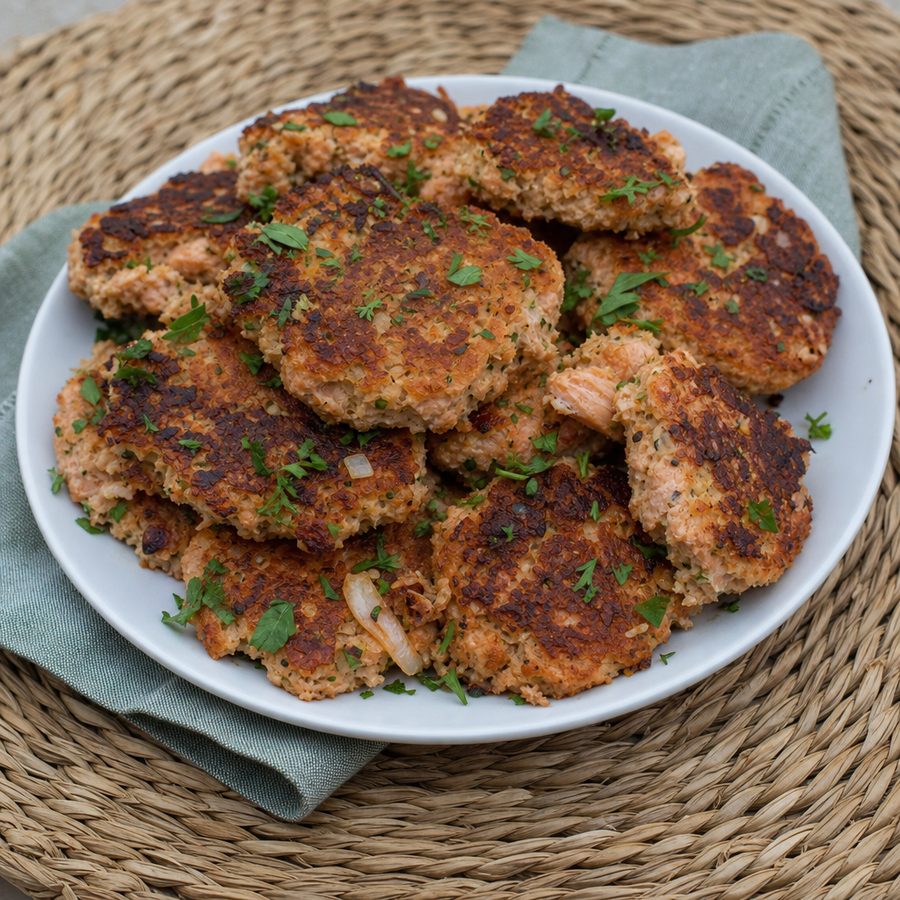
Flaked cooked salmon folded with egg and grated parmesan, shaped into little patties and pan-seared in butter until deeply golden and crisp at the edges.
Why You'll Love This Recipe
This is what to do with the salmon fillet nobody finished last night. Cooked salmon that has spent a night in the refrigerator is firmer and drier than it was the first time around, which happens to be exactly what these want: flake it fine, bind it with beaten egg and a lot of grated parmesan, and press each patty tight before it meets the butter. Four things in total, and the cheese does nearly all of the seasoning. They suit anyone who likes a short ingredient list, and they work as a quick savory bite between meals, a light plate next to eggs, or something waiting in the refrigerator for when you want protein without cooking anything.
What makes them hold together is the way egg and hard cheese behave under heat. The beaten egg sets as it cooks and acts as the glue that binds the salmon flakes, while the parmesan crisps and browns against the hot butter to build a golden, savory crust. Because the egg and cheese are doing all of the binding, finely flaking the salmon and pressing each patty firmly is what keeps them from falling apart. The tighter the pack, the cleaner the sear.
They land as satisfying because fat and protein together are filling and slow to move through the body, so a couple of cakes take the edge off hunger without a crash afterward. The salmon brings rich, savory flavor and its own natural oils, the parmesan adds a salty, nutty depth, and the butter carries the browned, toasty notes across the surface. It is a small snack that eats like real food.
Ingredients
- 14 oz cooked salmon, flaked
- 1 large egg
- 1/3 cup grated parmesan
- 1 tbsp butter
- 1/4 tsp salt
Instructions
- Cook the salmon: If you are starting with a raw fillet, season it with a little of the salt, place it skin-side down in a dry or lightly buttered skillet over medium heat, and cook until the flesh turns opaque and flakes easily with a fork, about 4 to 5 minutes per side, or to an internal temperature of 145°F (63°C). Let it cool, then peel off and discard the skin.
- Flake: Using two forks or your fingers, break the cooled salmon into fine flakes, checking for and removing any small pin bones as you go. You want an even, shreddy texture with no large chunks so the cakes hold together.
- Mix: In a bowl, crack the egg and beat it lightly, then add the flaked salmon, grated parmesan, and salt. Fold everything together gently with a fork until the mixture is evenly moistened and just holds together when pressed. Do not overwork it or the cakes turn dense.
- Shape: Scoop up portions of the mixture and press each firmly between your palms into a small, compact patty, packing the edges so they do not crumble. Set the shaped cakes on a plate as you go.
- Sear: Melt the butter in a skillet over medium heat until it foams and the foam begins to subside. Lay the cakes in without crowding and cook undisturbed for about 3 minutes, until the underside is golden brown. Flip carefully with a thin spatula and cook the second side another 3 minutes, until golden and heated through.
- Rest: Transfer the cakes to a wire rack set over a plate and let them sit for about 3 minutes. Resting on the rack lets steam escape from the bottom so they firm up and stay crisp rather than going soggy.
Variations
- Extra-crisp cheese crust: Press a little more grated parmesan onto the outside of each shaped patty before searing so it melts into a lacy, browned shell. This leans further into the dairy in the dish.
- Canned salmon shortcut: Swap the fresh fillet for well-drained canned salmon and flake it the same way; it saves the cooking step and gives a slightly softer, more tender cake.
- Smoked salmon depth: Fold in some finely chopped smoked salmon along with the cooked flakes for a saltier, smokier flavor. This adds cured fish, so taste before adding the full amount of salt.
- Richer with yolk: Use an extra egg yolk in place of some of the whole egg for a richer, more custardy bind and a softer interior. This adds a bit more egg and fat.
- Aged hard cheese: Trade the parmesan for another finely grated aged hard cheese to shift the flavor sharper or nuttier while keeping the same binding and browning. This keeps the dish dairy-based.
Storage & Leftovers
Refrigerate the cooled cakes in an airtight container and eat them within three to four days. Keep them in a single layer, or separate stacked layers with parchment, so the crisp exterior does not get pressed and go soft.
To reheat and bring back the crust, warm them in a dry or lightly buttered skillet over medium heat for a couple of minutes per side until hot through. The microwave works if you are in a hurry, but it softens the exterior, so the skillet is worth it if you want that golden edge again.
For make-ahead, you can mix and shape the patties, then hold them raw in the fridge on a covered plate for up to a day before searing. They firm up as they chill and hold their shape even better in the pan.
Notes & Tips
- Chill before searing: If the mixture feels loose or sticky, refrigerate the shaped patties for fifteen to twenty minutes before they hit the pan. Cold cakes hold their shape and are far less likely to break when you flip them.
- Flake, do not chop: Pull the salmon apart into fine, feathery flakes rather than cutting it into cubes. Small flakes knit together with the egg and cheese, while chunks leave gaps that make the cakes crumble.
- Watch the butter, not the clock: Let the butter foam and then just start to settle before adding the cakes. That is your cue the pan is hot enough to brown rather than steam. If the butter is threatening to brown too fast, nudge the heat down a touch.
- Salt to the cheese: Parmesan is already salty, so taste a pinch of your cheese before you add the full amount of salt and hold back if it is a sharp, aged one. You can always finish a cooked cake with a little more.
- Double the batch: These reheat well, so it is worth searing a larger batch at once. Cook them in batches without crowding the pan, since a packed skillet drops the heat and you lose the crust.
- Serve them simply: They are good warm straight from the rack, but also fine at room temperature, which makes them handy to pack. A soft-cooked or fried egg on the side turns two cakes into a fuller plate.
Nutrition & Mindful Eating
- Salmon, egg and parmesan are the entire mixture, and each has a job. The fish is the substance, the egg sets around it in the pan so the cakes hold, and the parmesan seasons everything from the inside.
- Parmesan aged a year or more tastes savory in a way young cheese does not, so a small handful flavors the whole batch, and the shreds that hit the hot butter fry into crisp golden lace at the edges.
- Egg is what turns a pile of flaked fish into something you can pick up. It sets softly rather than rubbery if the heat stays moderate, and the yolk brings choline and the pigments lutein and zeaxanthin.
- Butter is the frying fat for a reason. Its milk solids brown as the cakes cook and give the crust its nutty color and smell, and that fat helps the fat-soluble vitamins in the salmon and yolk come along.
- Salmon keeps the middle moist while the outside crisps, and it is dense enough with protein that two small cakes hold you well past what a snack usually manages, with the vitamin D and B12 of the fish riding along.
- As you eat, listen for the crackle of the crisp edge and taste how the warm cheese runs into the fish, and let two cakes and a moment of quiet be the whole of it.
Frequently Asked Questions
Why are my cakes falling apart in the pan?
Usually it is one of three things: the salmon was left in large chunks instead of fine flakes, the patties were not pressed firmly enough, or they were flipped too soon. Flake finely, pack each cake tight, and let the first side brown undisturbed for the full three minutes before turning so a crust forms to hold it together. Chilling the shaped patties first helps too.
Can I bake these instead of pan-searing?
You can. Arrange the shaped cakes on a lined sheet, dot the tops with a little of the butter, and bake in a hot oven until set and golden, flipping once partway through. They will be a little less crisp than the skillet version, which gets its browned crust directly from the butter.
Do I have to cook the salmon first?
Yes, this uses cooked, flaked salmon. If you are starting from a raw fillet, cook it until it flakes easily and reaches 145°F (63°C), then cool and flake it before mixing. Raw salmon will not bind properly and the cakes will not hold their shape or cook through evenly.
Can I make them ahead for the week?
They keep three to four days in the fridge and reheat best in a skillet to bring back the crust. You can also mix and shape the raw patties a day ahead and sear them fresh when you want them, which actually improves how well they hold together.