
Salmon and Plantain Snack Bites
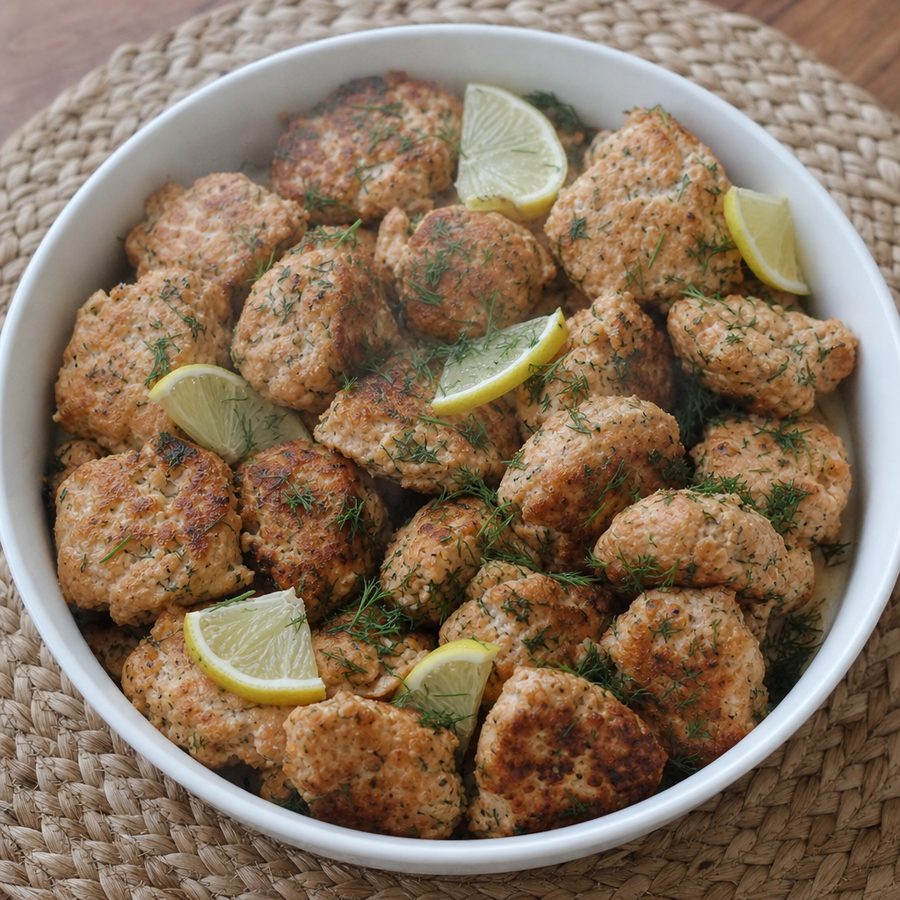
Tender flakes of salmon folded into mashed green plantain with fresh dill, minced scallion, and a squeeze of lemon, formed into small bites and baked until golden at the edges.
Why You'll Love This Recipe
Nearly every snack designed to hold its shape leans on egg or breadcrumbs. This one leans on a boiled green plantain instead, so there is no egg, no wheat, and no nut flour anywhere in it. Eighteen minutes in a hot oven sets the bites through and colors the edges, and once they have cooled they are sturdy enough to pack the next morning without breaking apart in a lunchbox. They suit anyone working around a short list of safe ingredients who is tired of sweet snacks and wants something savory that eats more like a small meal.
Green plantain holds the bites together, in place of a starch or an egg. Green plantain is picked before it sweetens, so it mashes into a dense, mild, almost potato-like paste that grips the flaked fish and firms up further as it bakes. Brushing the outside with avocado oil lets the surface dry out and turn golden in the oven rather than staying pale and soft, which gives each bite a little contrast between its crisp edge and its tender center. The dill, scallion, and lemon keep the flavor bright so the fish tastes clean rather than heavy.
A substantial protein and a filling starch meet in one compact bite. The salmon brings richness and staying power, the plantain adds gentle body and a slow-burning starchiness, and the herbs and lemon keep the whole thing from feeling dense or one-note. They are warm, savory, and filling, the kind of snack that holds you over between meals instead of leaving you hungry again in twenty minutes.
Ingredients
- 2 cups cooked flaked salmon
- 1 cup mashed cooked green plantain
- 2 scallions, minced
- 2 tbsp chopped fresh dill
- 1 tbsp lemon juice
- 1 tbsp avocado oil
- 1/2 tsp salt
Instructions
- Preheat and line: Preheat the oven to 400°F (200°C) and line a baking sheet with parchment paper so the bites release cleanly.
- Cook and flake the salmon: If starting from a raw fillet, place it skin-side down on a lightly oiled pan and bake or poach until the flesh turns opaque and flakes easily with a fork, about 12 to 15 minutes, or until it reaches an internal temperature of 145°F (63°C). Let it cool enough to handle, then peel off the skin, feel for and discard any pin bones, and flake the flesh into coarse pieces with a fork.
- Cook and mash the green plantain: Trim both ends of the green plantain and score the thick skin lengthwise with a knife to help it peel. Cut the peeled plantain into thick chunks and boil in salted water until fork-tender, about 15 to 20 minutes. Drain well, then mash smooth with a potato masher or fork and let it cool slightly.
- Prep the aromatics: While the plantain cools, thinly mince the scallions and finely chop the fresh dill.
- Fold the mixture together: In a bowl, fold the flaked salmon into the mashed plantain along with the minced scallion, chopped dill, lemon juice, and salt. Mix gently until evenly combined but still slightly textured, not pasty.
- Shape and oil the bites: With clean, lightly moistened hands, form the mixture into small, evenly sized bites and set them on the lined baking sheet, spaced slightly apart. Brush each bite all over with avocado oil so the surface can crisp and color.
- Bake until golden: Bake for 16 to 18 minutes, until the bites are set through and golden at the edges. Let them cool briefly on the pan to firm up before serving.
Variations
- Herb swap: Trade the dill for chopped fresh parsley, chives, or tarragon for a different aromatic lean while keeping the bright, garden-fresh character.
- Citrus lift: Fold in a little grated lemon zest along with the juice for a more pronounced citrus perfume that plays well against the rich fish.
- Crab bites: Replace the salmon with cooked, picked crab meat for a sweeter, more delicate filling; this adds shellfish.
- Oil change: Brush the bites with extra-virgin olive oil instead of avocado oil for a more peppery, fruity finish on the crust.
- Alliums up: Work a little finely grated garlic or minced sweet onion into the mix for a deeper, more savory background note.
Storage & Leftovers
Store the cooled bites in an airtight container in the refrigerator, where they keep well for up to three days. Let them cool completely before sealing so trapped steam does not soften the edges.
To reheat, warm them in a 350°F (175°C) oven or toaster oven for a few minutes until heated through and the edges re-crisp. Skip the microwave if you can, since it tends to make the plantain gummy and softens the golden crust you worked to build.
For make-ahead, you can shape the raw bites, arrange them on a tray, and refrigerate them uncovered for a few hours before baking, which helps them hold their shape even better in the oven. You can also freeze the baked, fully cooled bites in a single layer, then transfer to a bag and reheat straight from frozen in the oven.
Notes & Tips
- Choose the greenest plantain: Pick plantains that are firm and fully green with no yellow patches; the greener they are, the starchier and more neutral they mash, which is exactly what binds these bites. A yellowing plantain will taste sweet and turn soft.
- Peel it the easy way: Green plantain skin clings tightly, so cut off the ends and run a knife shallowly down the length of the skin before prying it off in sections. Trying to peel it like a banana rarely works.
- Don't overmix: Fold just until the salmon and plantain come together. Overworking the mixture makes it pasty and heavy, and you lose the pleasant, slightly flaky texture inside each bite.
- Use canned salmon in a pinch: Well-drained canned salmon works when you don't want to cook a fillet; flake it and pick out any large bones, though the flavor will be a touch more assertive than fresh.
- Judge doneness by the edges: These are already made from cooked fish and plantain, so you are really baking to set the shape and color the outside. Pull them when the edges are golden and the surface feels firm to a light touch.
- Double the batch: The mixture scales easily and the baked bites freeze well, so it is worth making extra and stashing a tray for quick snacks later in the week.
Nutrition & Mindful Eating
- Plantain and salmon make an unusual pair that works because they are so unalike. The plantain is starchy and firm and holds the shape, the fish is soft and rich, and together they eat far more substantially than a snack usually does.
- Green plantain is starchy rather than sweet and firm enough to grate or mash, and it holds a resistant starch that passes through to the bacteria in the gut, along with a good amount of potassium.
- Salmon keeps the inside of these bites moist while the outsides crisp in the pan, and the fat that does that is the same fat carrying the long-chain omega-3s the fish is known for.
- Scallions and dill go in raw and stay bright green through the cooking, giving a mild onion snap and a grassy lift that a starchy bite genuinely needs.
- Avocado oil holds a high heat calmly, so the bites color deeply in the pan before they go into the oven, and lemon squeezed over them while they are hot is what wakes the whole plate up.
- As you eat, follow the firm starchy chew as it gives way to the soft fish inside, and let a few bites be a proper pause in the afternoon rather than something handled on the way past.
Frequently Asked Questions
Can I use canned salmon instead of cooking a fillet?
Yes. Drain it well and flake it, picking out any large bones. The bites will taste a little more robust, but they hold together the same way.
Why does my plantain taste sweet or turn mushy?
That usually means the plantain had started to ripen. For firm, savory bites use plantains that are fully green and hard; the yellow ones have converted their starch to sugar.
My bites fell apart in the oven. What went wrong?
Two common causes are plantain that was too wet after boiling, or a mixture that was too loose. Drain and mash the plantain well, keep the mix on the thicker side, and chill the shaped bites for a bit before baking to help them set.
Can I fry these instead of baking them?
You can pan-fry them in a film of avocado oil over medium heat, turning gently, until golden on both sides. Baking is simpler and more hands-off, but frying gives a crisper crust.