
Salmon Poke-Style Cauliflower Rice Bowl
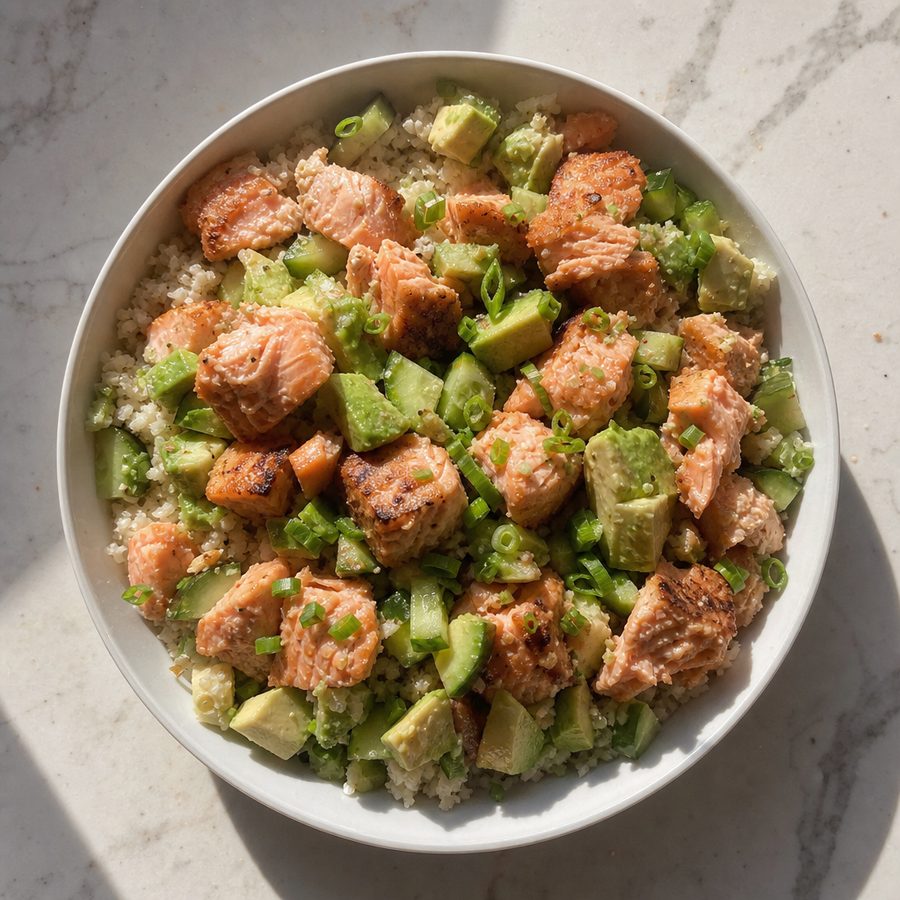
Cubes of seared salmon glazed in coconut aminos, ginger, and lime pile onto warm cauliflower rice with sliced avocado, diced cucumber, and scallion for a bright, savory bowl.
Why You'll Love This Recipe
This is a fresh, protein-forward bowl for anyone who wants the flavors of a poke shop without soy, grains, or a raw-fish counter. The salmon is cubed and quickly seared rather than served raw, so you get the same bright, gingery, citrus-glazed bite from fish you cooked yourself, over cauliflower rice instead of white rice. It comes together in about the time it takes to cook the salmon, which makes it a realistic weekday lunch you can also pack ahead.
A short marinade, then a hot and fast sear. Ten minutes in coconut aminos, ginger, and lime lets the surface of the salmon take on flavor without the acid turning the flesh mushy, and a hot skillet with the cubes spread out gives them a browned, glazed exterior while the centers stay just cooked and tender. Cooking the cauliflower rice in a single layer over medium heat is the other quiet trick: crowd it and it steams into something wet, but give it room and it turns tender with a little dryness that stands in convincingly for grain.
Four things, four different mouthfeels. The salmon brings rich, omega-3-heavy protein that keeps you full; the avocado adds creaminess and monounsaturated fat; the cucumber and scallion keep everything crisp and cool; and the coconut aminos and lime tie it together with a savory-sweet, tangy glaze. Cauliflower rice keeps the base light and adds fiber and vitamin C, so the bowl feels like a full meal without sitting heavy.
Ingredients
- 4 salmon fillets (about 540g), cubed
- 5 cups riced cauliflower
- 1 large avocado, sliced
- 1 medium cucumber, diced
- 4 scallions, sliced
- 3 tbsp coconut aminos
- 3 tbsp avocado oil
- 2 tbsp lime juice
- 1 tbsp grated ginger
- 1/4 tsp salt
Instructions
- Prep the vegetables: Dice the cucumber into small cubes and slice the scallions thin, keeping the pale and green parts. Halve the avocado, remove the pit, and slice the flesh; toss the slices with a little of the lime juice so they hold their color. Peel the ginger with the edge of a spoon and grate it fine on a rasp grater.
- Marinate the salmon: Pull off the salmon skin if it is still attached and run your fingers over the flesh to feel for pin bones, tweezing out any you find. Cut the fillets into even bite-size cubes. Toss the cubes with most of the coconut aminos, the grated ginger, and the lime juice, and let them rest at room temperature for 10 minutes.
- Cook the cauliflower rice: Warm some of the avocado oil in a large skillet over medium heat. Add the riced cauliflower and the salt, spread it into a single layer so it does not steam, and saute, stirring now and then, until it is tender and just starting to look dry, about 5 minutes. Scrape it out onto a plate and set aside.
- Sear the salmon: Wipe the skillet and add the rest of the avocado oil over medium-high heat. Lift the salmon from the marinade and lay the cubes in a single layer, letting the excess drip off. Sear undisturbed for about 1 minute, then turn the cubes and cook 1 to 2 minutes more, until the outsides are glazed and browned and the flesh is opaque and flakes easily, about 125 to 130°F (52 to 54°C) at the center for moist salmon or 145°F (63°C) for fully firm.
- Assemble the bowls: Divide the cauliflower rice among bowls. Top each with the seared salmon, the avocado slices, the diced cucumber, and the sliced scallion, arranging them in sections so each shows.
- Finish: Drizzle the remaining coconut aminos over the top and serve while the salmon is still warm.
Variations
- Swap the protein: Trade the salmon for peeled shrimp or cubed tuna, marinating and searing the same way until just opaque. This changes which seafood you are eating but keeps the method identical.
- Add fruit: Fold in diced mango or pineapple for a sweet-tart contrast against the savory glaze. This adds fruit sugar.
- Sea vegetable: Garnish with thin strips of nori or a pinch of crumbled dulse for a briny, ocean note that leans the bowl further toward its poke inspiration.
- Creamy drizzle: Whisk a spoonful of coconut cream with lime juice and a little grated ginger and drizzle it over the top for richness. This adds coconut.
- Quick-pickled cucumber: Toss the diced cucumber with a splash of coconut aminos and lime juice and let it sit while you cook, so it turns tangy and slightly softened before it goes on the bowl.
Storage & Leftovers
Store leftovers in an airtight container in the refrigerator for up to two days. The salmon is best within the first day; keep the avocado separate and slice it fresh, since it browns and softens once cut.
This bowl is good cold straight from the fridge, which makes it easy to pack. If you prefer it warm, reheat just the salmon and cauliflower rice gently in a skillet over medium-low or in short bursts in the microwave, stopping as soon as they are warmed through so the salmon does not dry out, then add the fresh vegetables after.
To get ahead, cook the cauliflower rice and sear the salmon up to a day in advance and refrigerate them separately. Dice the cucumber and slice the scallions and store them in their own container. At mealtime, assemble the bowls, slice the avocado fresh, and drizzle with coconut aminos.
Notes & Tips
- You do not need sushi-grade fish: Because the salmon is seared rather than eaten raw, any good fresh or properly thawed fillet works. Look for center-cut pieces of even thickness so the cubes cook at the same rate.
- Keep the cauliflower rice dry: If your riced cauliflower looks wet from the bag, blot it with a towel before it hits the pan, and resist stirring it constantly. Letting it sit undisturbed in a single layer is what keeps it fluffy instead of soggy.
- Slice the avocado last: Cut and slice the avocado just before serving and coat it with a little lime juice; this keeps it green and creamy rather than gray and mushy by the time you sit down to eat.
- An easy way with the ginger: Keep a knob of ginger in the freezer and grate it straight from frozen on a rasp grater. It is easier to grate, and the peel practically disappears, so you can skip peeling.
- Adjust the glaze to taste: Coconut aminos runs a touch sweeter and milder than soy sauce, so taste before serving and add a squeeze more lime for brightness or a little more coconut aminos for a deeper savory edge.
- Double it for meal prep: This scales and packs well. Cook a larger batch of the salmon and cauliflower rice, portion them into containers, and keep the cucumber, scallion, and avocado to add fresh so each bowl tastes just-made.
- Sesame dressing with baked salmon: Bake the salmon at 400°F until it flakes, cube it, and fold it with a dressing of two tablespoons toasted sesame oil, the avocado oil, the coconut aminos, and the grated ginger. Leave out the lime and salt and finish each bowl with a sprinkle of sesame seeds, which carry the seasoning where the lime used to.
Nutrition & Mindful Eating
- Warm salmon, warm cauliflower rice and cold avocado and cucumber are what give this bowl its shape. The fish and the avocado are the rich parts, the cucumber and lime are the sharp ones, and the dressing runs through everything.
- Cauliflower rice toasts in a hot dry pan into fine pale grains that go nutty at the edges and keep a little bite, a long way from the raw florets it came from, and it carries vitamin C and fiber.
- Avocado cubed at the last minute is the creamy element the bowl is built around, and its monounsaturated fat both makes the dish satisfying and helps the fat-soluble vitamins elsewhere in the bowl get absorbed.
- Fresh ginger grated into the coconut aminos is where most of the flavor comes from. The aminos are salty and faintly sweet, the ginger is hot and floral, and lime cuts clean across both of them.
- Salmon seared hard for a minute a side and then cubed stays soft at the center with a browned edge, and its protein is what makes a bowl this fresh eat like a full lunch.
- As you eat, let the ginger and the lime land first and the avocado smooth everything after them, and take the bowl slowly enough that you can feel it settle.
Frequently Asked Questions
Can I eat the salmon raw like traditional poke?
This recipe is written for seared salmon, and searing gives it a glazed, browned flavor you do not get from raw fish. If you want it raw, that requires fish handled and labeled for raw eating, which is a different preparation than the one here.
How do I keep the cauliflower rice from turning watery?
Cook it in a single layer over medium heat and stir only occasionally so the moisture can cook off. If the riced cauliflower is damp from the package, pat it dry first, and pull it from the pan as soon as it turns tender with a slightly dry look.
Can I use frozen salmon?
Yes. Thaw it fully in the refrigerator overnight or in a sealed bag under cold water, then pat it very dry before cubing and marinating so it sears instead of steaming.
What can I use instead of coconut aminos?
Coconut aminos gives a soy-free, savory-sweet glaze. There is no exact one-to-one swap that keeps the dish soy- and grain-free, so if you cannot find it, lean on the lime and ginger and season the salmon with a little extra salt to taste.