
Salmon Quinoa Breakfast Cakes with Poached Egg
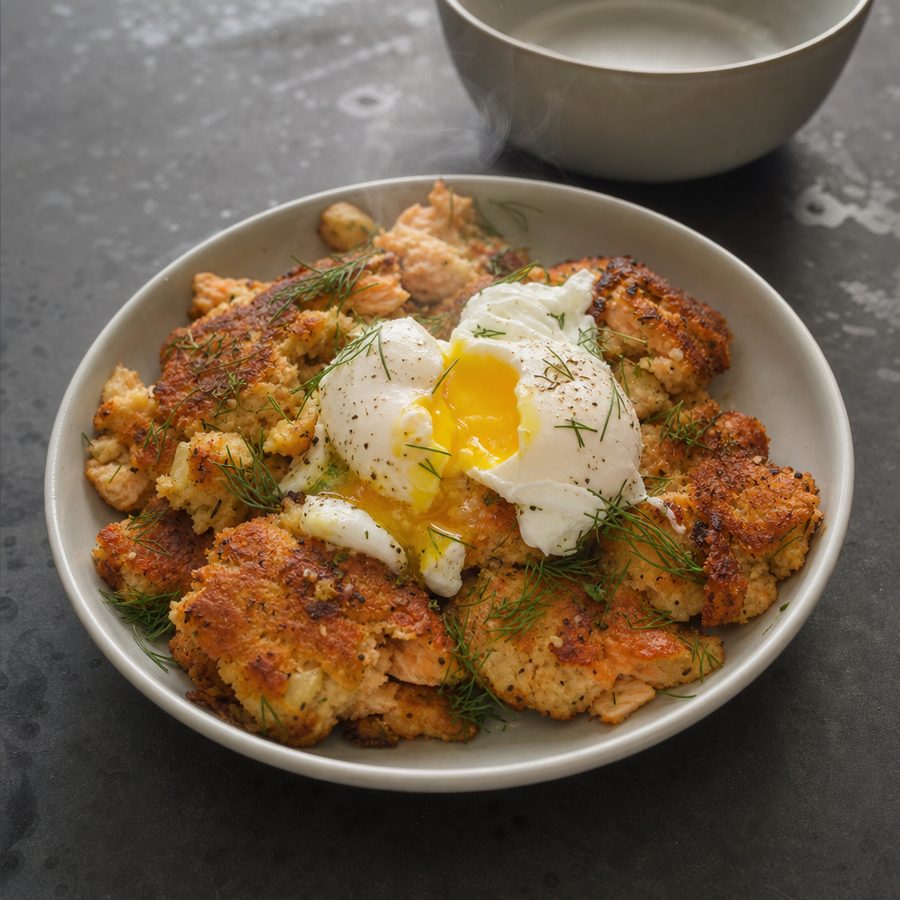
Golden pan-seared cakes of flaked salmon and quinoa, brightened with scallion, dill, Dijon, and lemon, each crowned with a soft poached egg that spills its runny yolk over the top.
Why You'll Love This Recipe
These are savory breakfast cakes for anyone who wants a real, protein-forward morning plate instead of something sweet. Flaked salmon and quinoa are bound with egg, seasoned with scallion, dill, and Dijon, then seared into golden patties and topped with a soft poached egg. They turn a modest amount of fish into a filling plate, and they suit cooks who like to prep components ahead and pull a substantial breakfast together quickly.
The batter has to be right, and so does the sear. Rinsing the quinoa first removes its bitter natural coating, and cooling both the fish and the grain keeps the mixture firm enough to hold a patty. Dijon and lemon cut the richness of the salmon while the dill and scallion keep each bite bright. A patient, undisturbed sear in shimmering olive oil builds a crisp golden crust that gives way to a tender, moist interior, and the runny yolk on top acts as a rich, silky sauce that ties the plate together.
What makes the plate satisfying is its combination of protein, whole grain, and good fat. Salmon and eggs bring high-quality protein and the fat in salmon carries a naturally rich, savory flavor, while quinoa adds fiber and a pleasant chew that helps the meal stay with you. It eats like comfort food but leaves you steady rather than heavy, which is exactly what a good breakfast should do.
Ingredients
- 440 g salmon
- 2 cups cooked quinoa
- 6 large eggs (2 for binding, 4 to poach)
- 4 scallions, minced
- 3 tbsp fresh dill, chopped
- 1 tbsp Dijon mustard
- 1 tbsp lemon juice
- 3 tbsp olive oil
- 1/2 tsp salt
Instructions
- Cook the salmon: If your salmon is raw, set the fillet in a wide skillet, add water until it nearly covers the fish, and bring to a bare simmer over medium heat. Poach gently until the flesh turns opaque and flakes easily with a fork, about 8 to 10 minutes depending on thickness. Lift it out, let it cool a few minutes, then peel off the skin and break the flesh into coarse flakes with a fork, checking for and removing any pin bones.
- Cook the quinoa: Rinse the quinoa under cold running water in a fine-mesh sieve until the water runs clear, which washes away its bitter coating. Combine it with water in a saucepan, bring to a boil, then cover and simmer over low heat until the grains are tender and you can see the little curled germ release, about 15 minutes. Fluff with a fork and let it cool; warm quinoa makes a slack, sticky batter.
- Prep the aromatics: Trim and thinly slice the scallions, using both the white and green parts. Finely chop the fresh dill, reserving a little for garnish. Measure out the lemon juice and Dijon mustard.
- Mix the batter: In a large bowl, beat 2 of the eggs, then add the flaked salmon, cooled quinoa, scallions, dill, Dijon, lemon juice, and salt. Fold everything together until the mixture holds together when pressed. If it feels too wet to shape, let it rest a few minutes so the quinoa absorbs moisture.
- Shape the cakes: Divide the mixture and firmly pack it into evenly sized patties about three-quarters of an inch thick, pressing so they hold their shape. Set them on a plate and chill for 15 minutes if you have time; this helps them stay together in the pan.
- Sear the cakes: Heat the olive oil in a nonstick skillet over medium heat until it shimmers. Lay the cakes in without crowding and sear undisturbed until a deep golden crust forms, about 3 to 4 minutes. Flip once and cook the second side until golden and heated through, another 3 to 4 minutes. Transfer to a plate.
- Poach the eggs: Bring a wide pot of water to a bare simmer, with only small bubbles rising. Crack each of the remaining eggs into a small cup and slide it gently into the water. Poach until the whites are fully set but the yolks are still soft, about 3 minutes, then lift out with a slotted spoon and rest briefly on a paper towel to drain.
- Plate: Set two warm cakes on each plate, top each serving with a poached egg, and garnish with the reserved dill.
Variations
- Smoked salmon swap: Replace the poached fish with flaked cold-smoked or hot-smoked salmon for a saltier, more assertive flavor; reduce the added salt since smoked fish is already seasoned.
- Herb and caper punch: Fold rinsed, chopped capers and a little grated lemon zest into the batter for a brighter, briny edge alongside the dill.
- Crab cake style: Swap the salmon for cooked, picked crabmeat for a sweeter, more delicate cake; keep the Dijon and dill to season it. This changes the seafood but keeps the dish shellfish-based.
- Feta and spinach: Stir crumbled feta and wilted, squeezed-dry chopped spinach into the mixture for a tangier, greener cake. Note that this adds dairy.
- Spiced with harissa: Whisk a spoonful of harissa paste into the batter and swap the dill for chopped cilantro for a warm, gently spicy version with a North African accent.
Storage & Leftovers
Store the seared cakes in an airtight container in the refrigerator for up to three days. Poached eggs are best made fresh, so poach them just before serving rather than storing them.
To reheat, warm the cakes in a nonstick skillet over medium heat for a few minutes per side to bring back the crisp crust, or in a 350°F (175°C) oven until heated through. Avoid the microwave, which softens the crust and can dry out the fish.
For a make-ahead breakfast, mix and shape the cakes the night before, cover, and refrigerate raw on a plate. Chilled cakes sear more neatly, so in the morning you only need to heat the oil, sear, and poach the eggs.
Notes & Tips
- Cool the components: Let both the salmon and the quinoa cool before mixing. Warm ingredients make a loose, sticky batter that spreads in the pan, while cool ones hold a firm patty.
- Check for pin bones: Run your fingers over the flaked salmon before mixing and pull out any small pin bones with your fingertips or tweezers, so no one bites down on one.
- Test the bind first: Sear a small test cake before shaping the rest. If it falls apart, work in a little more beaten egg; if it feels wet, let the batter rest so the quinoa soaks up moisture.
- Freshen up dried dill: Fresh dill gives the brightest flavor, but if you only have dried, use about a third as much and add it to the batter rather than as garnish, since dried herbs need moisture to bloom.
- A splash of vinegar for the eggs: Adding a small splash of vinegar to the poaching water helps the egg whites set faster and hold a tidier shape around the yolk.
- Round out the plate: Serve with a simple green salad, sliced cucumber and tomato, or a wedge of lemon to squeeze over the top for an easy, fresh accompaniment.
Nutrition & Mindful Eating
- The cakes and the egg on top are one dish rather than two. The quinoa and salmon crisp on the outside and stay soft within, and the yolk running down through them is what pulls the whole plate together.
- Quinoa is what gives these cakes their texture. The small grains catch the heat and turn crunchy against the pan while the middle stays tender, and they bring fiber and a complete protein of their own.
- A poached egg is worth the small fuss, because the white sets while the yolk stays liquid, and that yolk carries choline and the fat-soluble vitamins as well as doing the work of a sauce.
- Dijon mustard in the mixture keeps the cakes from tasting mild, scallions give a light onion snap, and dill goes in generously enough that you smell it before the cake reaches your mouth.
- Salmon folded through in large flakes turns up in pieces rather than disappearing into the mixture, and between the fish, the egg and the quinoa these cakes hold you longer than they look like they will.
- As you eat, break the yolk first and watch it run into the crisp edges, then take the plate at a slower pace than a weekday morning usually allows.
Frequently Asked Questions
Can I use canned salmon instead of cooking a fillet?
Yes. Drain it well and flake it, removing any large bones or skin if you prefer. Canned salmon is already cooked and a little saltier, so taste before adding the full amount of salt.
My cakes keep falling apart in the pan. What went wrong?
Usually the mixture is too wet or too warm. Make sure the quinoa and salmon are cool, let the batter rest so the grain absorbs moisture, pack the patties firmly, and let them sit undisturbed to form a crust before flipping.
How do I know when the poached eggs are done?
Poach in barely simmering water until the whites are fully opaque and set but the yolk still feels soft when nudged, about 3 minutes. Lift one out and touch it gently; a set white with a jiggly center means a runny yolk.
Can I make these without the poached egg on top?
Yes. The cakes are already bound with egg and stand on their own, so you can skip the poached egg and serve them with a squeeze of lemon or a dollop of yogurt instead.