
Salmon Quinoa Tabbouleh Bowl
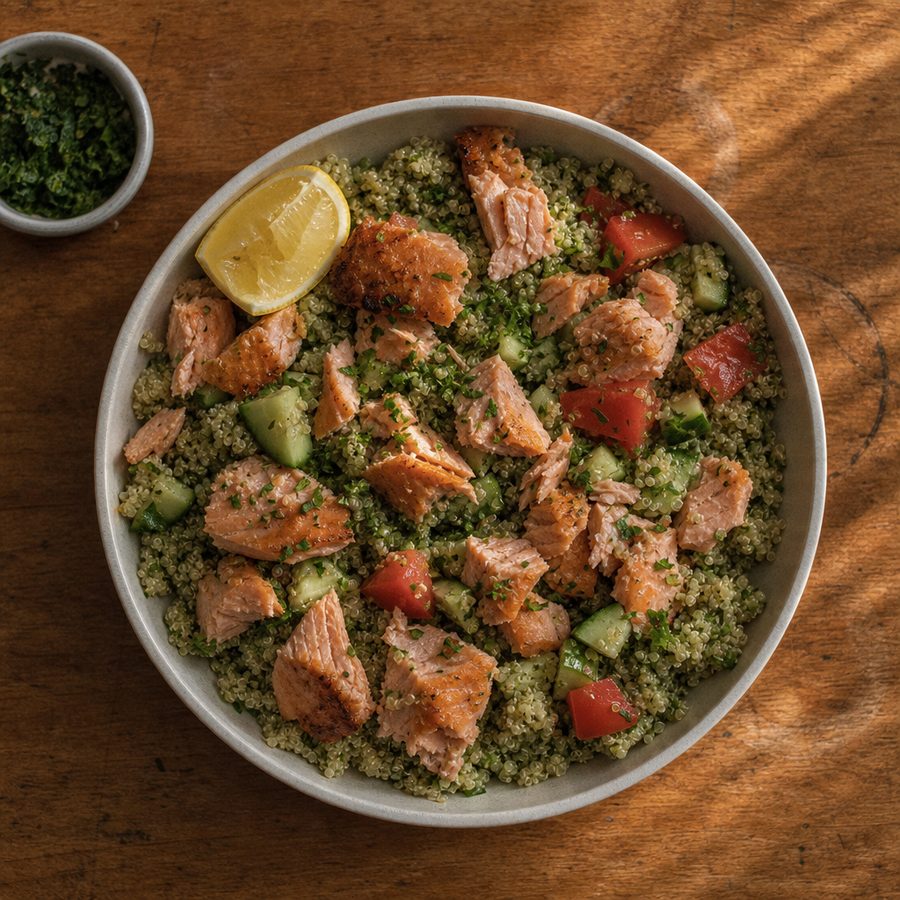
A fillet of tender, flaky salmon rests on a bright, herb-heavy quinoa tabbouleh tossed with parsley, mint, cherry tomatoes, cucumber, and scallion in a lemon and olive oil dressing.
Why You'll Love This Recipe
This is a bowl built for anyone who wants a lunch that eats light but still keeps them full through the afternoon. Cool, herb-packed quinoa tabbouleh sits under a warm, rich salmon fillet, so it works whether you want a fresh desk lunch, a make-ahead meal, or something quick to pull together after cooking a batch of grain earlier in the week. It leans bright and green rather than heavy, which makes it a welcome change from the usual midday sandwich or wrap.
Contrast, and a deliberate lack of fuss. Rinsing the quinoa strips its natural bitter coating so the grain tastes clean and nutty, and cooling it before mixing keeps the parsley and mint vivid instead of wilted. The dressing is nothing more than olive oil, lemon juice, and salt, which lets the herbs and the sweetness of the tomato lead while the acid cuts through the richness of the fish. Searing the salmon flesh-side down first gives it a golden, savory crust that plays against the crisp cucumber and cool grain underneath.
One bowl, and it carries protein, healthy fat, and fiber. The salmon brings a rich, flaky protein and omega-3 fats, the quinoa adds a complete plant protein and a tender chew, and the load of parsley, mint, tomato, and cucumber contributes fiber, water, and freshness that keep each bite feeling light. It is the kind of meal that leaves you full and steady rather than heavy, and it tastes like something you made on purpose, not a compromise.
Ingredients
- 4 salmon fillets (4 oz each)
- 3 cups cooked quinoa
- 2 cups parsley, finely chopped
- 1/2 cup mint, chopped
- 1 1/2 cups cherry tomatoes, diced
- 1 cucumber, diced
- 4 scallions, sliced
- 3 tbsp olive oil
- 3 tbsp lemon juice
- 1/2 tsp salt
Instructions
- Cook the quinoa: Rinse the quinoa under cold running water in a fine-mesh sieve until the water runs clear, which rinses off the bitter coating. Combine it with water in a saucepan, bring to a boil, then cover and lower to a gentle simmer until the water is absorbed and the grains uncoil and turn translucent, about 15 minutes. Fluff with a fork and spread on a plate or tray to cool to room temperature so it does not steam the herbs.
- Prep the vegetables and herbs: While the quinoa cools, finely chop the parsley and chop the mint. Dice the cherry tomatoes and the cucumber into small, even pieces, and thinly slice the scallions. Keep the pieces small, because a tabbouleh is meant to be herbs with grain through it rather than a chopped salad, and a large piece of cucumber breaks that.
- Cook the salmon: Pat the salmon fillets dry and season with salt. Set a nonstick or oven-safe skillet over medium-high heat with a little of the olive oil, and lay the fillets in flesh-side down. Sear undisturbed until the underside is golden, about 4 minutes, since salmon releases from the pan on its own once it has browned and tears if you move it early, then flip and cook until the salmon turns opaque and flakes easily when pressed with a fork, about 4 to 5 minutes more, or 125 to 130°F (52 to 54°C) at the thickest part, which is medium-rare. Take it to the FDA figure of 145°F (63°C) for seafood if you prefer it firm. Remove from the heat.
- Mix the tabbouleh: In a large bowl, toss the cooled quinoa with the chopped parsley, mint, tomato, cucumber, and scallion until evenly combined. Wait for the quinoa to be properly cool, since warm grain wilts mint on contact and the whole bowl goes drab.
- Dress the tabbouleh: Whisk the olive oil, lemon juice, and salt in a small bowl until it looks slightly thickened, so that the lemon is carried through the whole bowl rather than landing in one corner, then pour it over the quinoa and fold through until everything is lightly coated. Taste and adjust with a little more lemon or salt.
- Assemble the bowls: Divide the tabbouleh among bowls and top each with a salmon fillet. Serve right away while the salmon is warm and the tabbouleh is cool, or chill everything for a fully cold bowl.
Variations
- Swap the grain: Use cooked bulgur or couscous in place of the quinoa for a more traditional, tender tabbouleh. Note that both bulgur and couscous are made from wheat and add gluten.
- Add creamy richness: Fold in diced avocado or a spoonful of crumbled feta just before serving for extra richness. Feta adds dairy.
- Brighten with pomegranate: Scatter pomegranate seeds over the top for pops of tart sweetness and crunch that play well against the salmon.
- Warm spice: Season the salmon with ground cumin, coriander, and a pinch of Aleppo pepper before searing for a warmer, more aromatic edge.
- Canned fish shortcut: Skip the fresh fillets and fold drained canned salmon or tuna into the tabbouleh for a no-cook version that comes together in minutes.
Storage & Leftovers
Store leftovers in an airtight container in the refrigerator for up to 3 days. Keep the salmon and tabbouleh together or separate as you like; the tabbouleh actually holds up well because the sturdy quinoa does not go soggy the way cracked wheat can.
This bowl is good cold straight from the fridge, which makes it an easy packed lunch. If you prefer the salmon warm, reheat just the fish gently, either in a low oven or a covered skillet over low heat for a few minutes, until barely warmed through; high heat dries it out and turns it fishy. Leave the tabbouleh cold so the herbs stay fresh.
To get ahead, cook the quinoa and chop the herbs and vegetables up to a day in advance and keep them refrigerated, then dress and assemble when you are ready. Hold the lemon dressing separately and fold it in shortly before serving so the herbs keep their bright green color and the tabbouleh does not sit in liquid.
Notes & Tips
- Buy the freshest salmon you can: Look for fillets that smell clean and briny, not fishy, with firm, glossy flesh that springs back. Fresh fish makes the biggest difference in a simple bowl like this. Center-cut fillets of even thickness cook more evenly than thin tail pieces.
- Dry the herbs well: Wash the parsley and mint and spin or pat them completely dry before chopping. Wet herbs dilute the dressing and make the tabbouleh watery. A sharp knife also keeps the herbs from bruising and turning dark.
- Salt the tomatoes if they are watery: If your cherry tomatoes are very juicy, dice them and let them sit a few minutes in a strainer before adding, so they do not flood the bowl with liquid.
- Check the salmon early: Salmon goes from perfect to dry fast. It is done when the color turns from translucent to opaque and it flakes with gentle pressure; pull it off the heat a touch before it looks fully cooked, since it keeps cooking off the pan.
- Taste before you serve: Herbs and lemon mellow as the bowl sits, so taste after mixing and add a little more lemon juice or salt to keep it bright. Cold food needs slightly more seasoning than warm food.
- Round out the plate: This bowl is a full meal on its own, but a spoonful of hummus, a few olives, or a wedge of warm flatbread on the side turns it into a more generous spread.
Nutrition & Mindful Eating
- The quinoa is really here to carry the herbs, and the salmon sits on top of all of it. Parsley and mint by the handful, cold tomato and cucumber, and a rich flaked fish make a lunch that tastes green and full at once.
- Parsley and mint chopped just before serving keep their oils and their color, and used in this quantity they stop being a seasoning and become a vegetable, bringing vitamin C and vitamin K in with them.
- Tomato and cucumber diced small release their juice into the quinoa and become part of the dressing, adding water and crunch that make the bowl feel cold and generous on a warm day.
- Quinoa is used with a light hand here so the grains stay loose and separate rather than clumping, and each one carries fiber and magnesium along with its protein.
- Salmon flaked over the top in large pieces is the rich note against all that green, and the lemon and olive oil dressing the bowl cut through it on every other bite.
- As you eat, breathe in the mint and the lemon before the first forkful and notice how cold and loud the herbs are against the fish, then let the meal take the time it takes.
Frequently Asked Questions
Can I use canned or leftover cooked salmon instead of fresh fillets?
Yes. Drained canned salmon or flaked leftover cooked salmon both work well folded into or set on top of the tabbouleh, and they turn this into a fast no-cook lunch. Just be a little more generous with lemon and salt, since fresh-seared fish carries more of its own savoriness.
Why is my tabbouleh watery?
Usually it is wet herbs or very juicy tomatoes. Dry the parsley and mint thoroughly after washing, and if your tomatoes are especially watery, let the diced pieces drain for a few minutes before mixing. Dressing the bowl just before serving rather than hours ahead also helps.
Is this better served warm or cold?
Both are good. The classic version pairs cool tabbouleh with a warm salmon fillet for contrast, but it is also excellent fully chilled, which makes it ideal for meal prep and packed lunches. If you reheat, warm only the fish gently so it does not dry out, and keep the tabbouleh cold.
My quinoa tastes a little bitter. What went wrong?
Quinoa has a natural coating called saponin that tastes soapy or bitter if it is not rinsed off. Run the raw grain under cold water in a fine-mesh sieve until the water runs clear before cooking, and the finished quinoa will taste clean and nutty.