
Salmon With Sicilian Eggplant Caponata
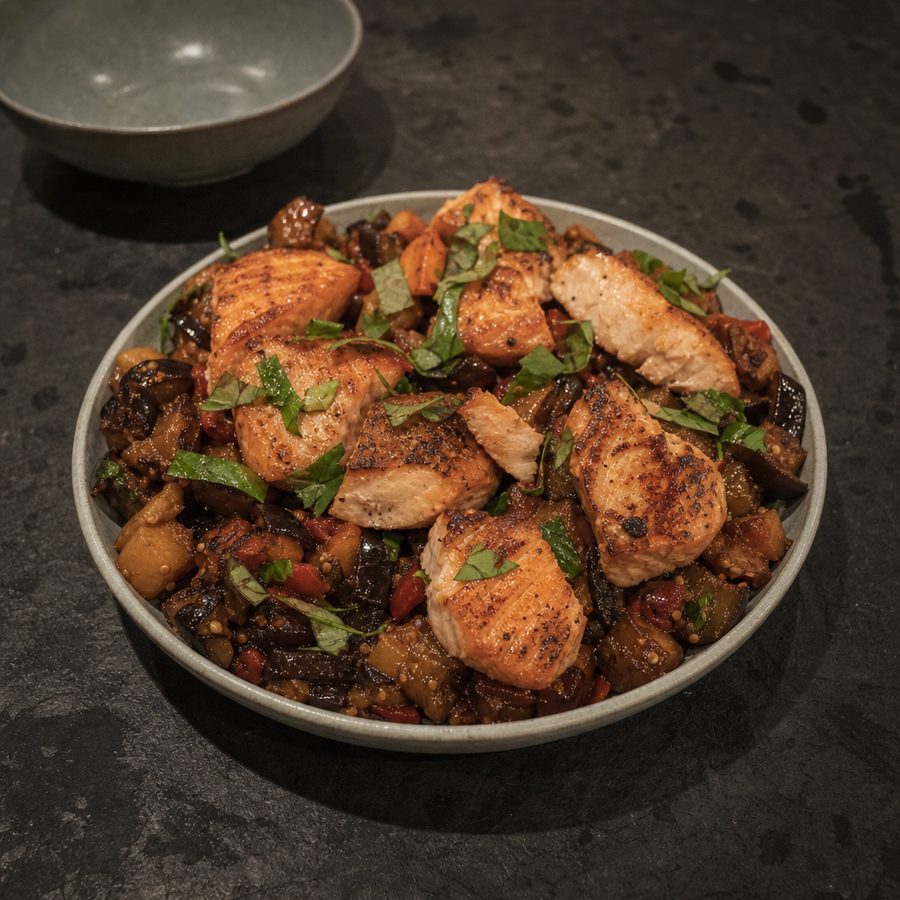
Seared salmon served over a sweet and sour Sicilian caponata of roasted eggplant, cherry tomatoes, olives, and basil, finished with a splash of balsamic.
Why You'll Love This Recipe
This plate is for anyone who wants dinner to feel a little special without a trip to a restaurant. If you love the sweet and sour side of Sicilian cooking, caponata gives you that layered flavor, and the seared salmon turns it into a full meal. It puts an omega-3 fish over a pan of vegetables, and it is generous enough to serve when friends come over yet simple enough for a Tuesday night at home.
Roasting the eggplant first drives off its moisture and deepens its flavor, so it holds its shape in the caponata instead of turning to mush. Building the tomatoes, onion, olives, and balsamic separately lets that sweet-sour balance develop while the eggplant browns. Searing the salmon skin-side down gives you a crisp skin and a moist interior, and resting it on the warm caponata lets the flavors meet without the fish overcooking in the sauce.
It satisfies because the caponata carries real depth, sweet, sour, and savory at once, so a modest amount feels like plenty. The rich salmon sits against those bright, tangy vegetables in a way that keeps every bite interesting. You leave the table feeling like you ate something considered and complete, not a quick throw-together, even though most of the work is just letting the oven and skillet do their jobs.
Ingredients
- 1 1/4 lb salmon fillets
- 1 large eggplant, cubed
- 1 1/2 cups cherry tomatoes
- 1/3 cup olives
- 1 small onion
- 4 tbsp olive oil
- 1 1/2 tbsp balsamic
- 4 cloves garlic
- 1/4 cup basil
- 1/2 tsp salt
Instructions
- Roast the eggplant: Set your oven to 425°F (220°C). Toss the cubed large eggplant with 2 tablespoons of the olive oil and half the 1/2 teaspoon salt, spread it on a sheet pan with room between the pieces, since eggplant crowded on a tray steams into something gray and wet rather than bronzing, and roast for 18 minutes until browned and tender, stirring once.
- Build the caponata base: Meanwhile, warm 1 tablespoon olive oil in a skillet over medium heat. Cook the diced small onion for 4 minutes until soft, then add the 4 cloves minced garlic and cook one minute more until fragrant, so that the garlic softens without browning, because burnt garlic would be the loudest thing in a sweet-sour pan.
- Simmer the vegetables: Add the 1.5 cups halved cherry tomatoes and 1/3 cup olives to the skillet. Cook for 6 minutes until the tomatoes break down, then stir in the roasted eggplant and the 1.5 tablespoons balsamic and simmer 3 minutes, since the vinegar needs that time on the heat to lose its sharpness and turn into the sweet-sour glaze the dish is named for.
- Sear the salmon: Pat the 1.25 lb salmon fillets dry and season with the rest of the salt. Heat the last 1 tablespoon olive oil in a second skillet over medium-high and lay the fillets skin-side down, pressing gently for the first minute, because salmon skin curls away from the pan as it heats and it only crisps where it stays flat against the metal.
- Cook through: Sear the salmon for 4 minutes until the skin is crisp, then flip and cook 3 to 4 minutes more, until the fillets read 125 to 130°F (52 to 54°C) and the center is just opaque and moist.
- Plate and finish: Stir the torn basil into the caponata off the heat, since basil in a simmering pan goes black within a minute, then spoon it onto plates and rest a salmon fillet on top of each. Spoon any pan juices over and serve right away.
Variations
- Swap the fish: Sear thick cod or halibut instead of salmon, cooking it to 145°F (63°C) until the flesh flakes cleanly.
- Add pine nuts: Toast a spoonful of pine nuts and scatter them over the caponata for crunch and a nutty finish.
- Add capers: Stir a tablespoon of rinsed capers into the caponata for the traditional Sicilian briny note.
- Make it sweeter: Add a few chopped golden raisins with the tomatoes if you like a more pronounced sweet-sour balance.
- Change the herb: Finish with chopped mint or parsley in place of basil for a different fresh accent on the plate.
Storage & Leftovers
Cool the salmon and caponata within an hour and store them separately in airtight containers in the fridge for up to three days. Keeping them apart lets you reheat the caponata thoroughly while warming the fish gently, and the caponata's flavor deepens beautifully after a day.
Reheat the salmon with care so it stays tender. Warm it covered in a 275°F (135°C) oven for about 10 minutes, or in short microwave bursts at half power, just until heated through. The caponata reheats well on the stove over low heat, or serve it at room temperature.
The caponata is a natural make-ahead. Cook it up to three days in advance and keep it chilled, since it only improves as it sits. When dinner nears, warm the caponata, sear the raw fillets fresh, and plate, so only the salmon cooks to order.
Notes & Tips
- Roast, do not fry: I roast the eggplant instead of frying so it browns deeply on far less oil and holds its shape in the caponata.
- Dry the salmon: Pat the fillets dry before searing, since a dry surface is what gives you crisp skin instead of steam.
- Do not crowd the pan: Sear the fillets with space around them so they brown rather than stew in their own moisture.
- Pull salmon early: Take the fish off at 125 to 130°F (52 to 54°C) and let it rest, so carryover heat leaves it silky, not dry.
- Balance the balsamic: Taste after the balsamic goes in; add a few drops more if you want the sweet-sour edge sharper.
- Add basil last: I stir the basil in off the heat so it stays green and fragrant rather than wilting into the sauce.
Nutrition & Mindful Eating
- The eggplant, tomato and olives cook down together until it is hard to tell where one ends and the next begins, and the salmon goes in near the end so it stays firm against something that soft.
- Eggplant is the ingredient that makes caponata what it is. Cooked long and in enough oil it collapses into something silky and almost meaty, and the purple skin is where the pigment nasunin sits.
- Balsamic vinegar going into sweet softened onion is the sour half of a sweet and sour dish, and it is what keeps a pan this generous with oil from ever tasting flat.
- Tomatoes break down into the sauce and pull their lycopene into the olive oil, where it is easier to absorb, and the olives scattered through stay salty and firm so there is something to bite against.
- Salmon laid into the hot caponata takes on the sweetness and the vinegar while its own fat runs back into the sauce, and torn basil over the top at the last moment keeps the plate smelling fresh.
- As you eat, taste for the sweet and the sour arriving one after the other, and let a dish that spent this long on the stove be worth properly sitting down for.
Frequently Asked Questions
Can I use a different fish?
Yes. Thick cod, halibut, or trout work well over caponata; sear salmon to 125 to 130°F (52 to 54°C), and cook cod, halibut, or trout to 145°F (63°C) until they flake.
My eggplant turned out watery and soft, why?
It steamed instead of roasting. Spread the cubes in a single layer with space between them, and give them the full roast at 425°F (220°C) so the moisture cooks off.
Can I make the caponata ahead?
Absolutely. It keeps three days chilled and tastes even better, so make it in advance and simply sear the salmon fresh when you are ready to eat.
What is caponata, and does it add starch?
It is a sweet and sour Sicilian eggplant relish, and it brings vegetables rather than starch. With omega-3 salmon and olive oil alongside it, the plate stays squarely in Mediterranean territory.