
Salmon, Spinach, and Feta Frittata
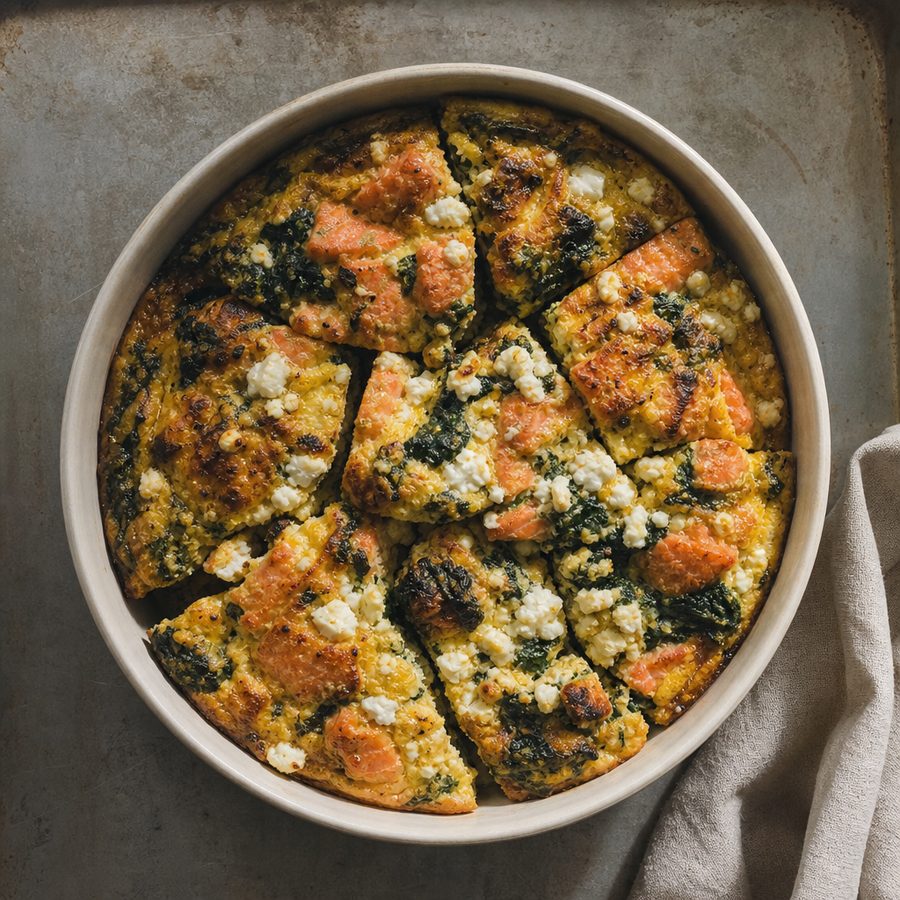
A fluffy baked frittata of flaked salmon, wilted baby spinach, and tangy feta, brightened with fresh dill and sweet softened onion.
Why You'll Love This Recipe
This is a savory baked egg dish built for anyone who wants a hot, protein-rich breakfast without standing at the stove every morning. It leans on flaked fish, greens, and briny cheese for a meal that feels substantial at the start of the day but is just as good sliced cold from the fridge at noon. If you cook once and eat across several days, this is the kind of dish that rewards you.
The eggs are handled gently and the oven does the setting. Poaching the salmon first keeps it moist and lets it flake into tender pieces rather than drying out, and cooking the spinach until its water evaporates keeps the finished frittata from turning watery. Pouring the beaten eggs over aromatics that are already hot, then finishing in a steady oven, gives you an even, custardy set from edge to center instead of a rubbery scramble.
Rich on one side, fresh on the other. The eggs and feta bring savory depth, the salmon adds real staying power, and the spinach and dill keep each bite bright rather than heavy. The feta is carrying most of the salt as well, which is worth remembering before you reach for the shaker, since smoked salmon brings a good deal of its own. It holds its shape in neat wedges, carries well, and fills you up in a way that keeps hunger quiet for hours.
Ingredients
- 400 g salmon
- 10 large eggs, beaten
- 6 cups baby spinach
- 3/4 cup crumbled feta
- 1 medium onion, diced
- 3 tbsp fresh dill
- 3 tbsp olive oil
Instructions
- Preheat and prep: Preheat the oven to 375°F (190°C). Dice the onion, roughly chop the fresh dill, and crack the eggs into a bowl, whisking until the yolks and whites are fully blended and slightly frothy.
- Cook the salmon: Bring a wide skillet of water to a gentle simmer, slide in the salmon, and poach until it turns opaque and flakes easily with a fork, about 8 minutes. Lift it out, let it cool briefly, then peel off any skin and flake the flesh into large pieces with a fork, checking for and removing any pin bones.
- Soften the aromatics: Wipe the skillet dry, then heat the olive oil in an oven-safe skillet over medium heat. Add the diced onion and cook, stirring, until soft and translucent, about 5 minutes. Add the baby spinach by the handful and stir until fully wilted and any released liquid has cooked off, about 3 minutes.
- Combine: Stir the chopped dill into the beaten eggs. Gently fold the flaked salmon into the onion and spinach so it is evenly spread across the pan, then pour the seasoned eggs over the top, tilting the skillet so they settle into an even layer.
- Bake: Sprinkle the crumbled feta over the surface and transfer the skillet to the oven. Bake until the center is set and no longer jiggles when you nudge the pan and the top is lightly golden, about 18 minutes.
- Rest and serve: Let the frittata rest in the pan for 5 minutes so it finishes setting and slices cleanly, then cut into wedges and serve warm or at room temperature.
Variations
- Swap the fish: Trade the salmon for flaked cooked trout or canned tuna, drained well, for a similar protein with a milder or brinier edge.
- Change the cheese: Use crumbled goat cheese in place of the feta for a creamier, less salty tang; this keeps the dairy but softens the sharpness.
- More vegetables: Fold in halved cherry tomatoes or thawed frozen peas along with the spinach for extra color and a touch of sweetness.
- Herb shift: Replace the dill with chopped fresh parsley or basil for a different aromatic character while keeping everything else the same.
- Add a little heat: Stir a pinch of red pepper flakes or some sliced scallion into the eggs for gentle warmth against the rich feta.
Storage & Leftovers
Store leftover wedges in an airtight container in the refrigerator, where they keep well for up to four days. Let the frittata cool completely before covering so condensation does not collect and soften it.
To reheat, warm a wedge in a 325°F (163°C) oven or toaster oven for about 10 minutes until heated through, which keeps the texture better than a microwave. If you are short on time, a microwave works too; use short bursts at reduced power so the eggs stay tender rather than turning tough.
For make-ahead, bake the whole frittata the night before, cool it fully, and refrigerate it sliced. It is good cold or at room temperature, so you can pull a wedge straight from the fridge, or wrap portions individually for grab-and-go mornings.
Notes & Tips
- Buy the right salmon: A center-cut fillet poaches most evenly; if you can only find a thin tail piece, check it a minute or two early so it does not overcook and dry out.
- Dry your spinach well: The biggest cause of a soggy frittata is excess moisture, so cook the spinach until the pan looks dry before the eggs go in, and press out any water if you use thawed frozen spinach instead.
- Season with the feta in mind: Feta is salty, so taste before adding more salt to the eggs; you can always sprinkle a little flaky salt on the finished wedges rather than risk overdoing it in the batter.
- Know when it is set: The center should barely jiggle and spring back when you touch it; a knife slipped into the middle should come out clean, not wet, which tells you the eggs are cooked through.
- Use an oven-safe pan: A well-seasoned cast-iron or stainless skillet moves straight from stovetop to oven; if your only oven-safe pan is nonstick, confirm it is rated for the oven temperature before you start.
- Serve it alongside something fresh: A simple green salad, sliced cucumber and tomato, or a wedge of whole-grain toast rounds the plate out and plays well against the rich, savory eggs.
Nutrition & Mindful Eating
- Eggs, salmon and feta are the three things you taste here, and they arrive in that order. The eggs are the soft body of the frittata, the fish gives it substance, and the cheese punctuates it with salt.
- Eggs cooked gently and pulled from the heat while the center still wobbles set into something closer to a custard than a scramble, and the yolks bring choline and fat-soluble vitamins along with that richness.
- Spinach wilted and squeezed dry before it goes in keeps the frittata from turning watery, and cooking it down this way concentrates the folate and the lutein into a much smaller amount of green.
- Feta crumbled in rather than stirred through stays in soft salty pockets you come across as you eat, and because it is so strongly flavored a small amount seasons the entire pan while adding calcium.
- Onion softened in olive oil first goes sweet and disappears into the background, feeding the gut bacteria that like allium fibers, and dill folded in at the end is the smell that hits when you cut the first wedge.
- As you eat, let the soft center and the pockets of feta and dill come as they come, and give a slice at the table the time it deserves rather than eating it standing up.
Frequently Asked Questions
Can I use canned salmon instead of a fresh fillet?
Yes. Drain it well, flake it, and remove any large bones, then skip the poaching step and stir it straight into the wilted spinach and onion. It brings a slightly softer texture and a more pronounced savory flavor.
Why did my frittata turn out watery?
The usual culprit is moisture from the spinach or fish. Cook the spinach until the pan looks dry and any liquid has evaporated, and let the poached salmon drain briefly before flaking it in so it does not weep into the eggs.
Can I make this without a skillet that goes in the oven?
Yes. Soften the onion and spinach in any skillet, then transfer everything to a greased baking dish, pour the eggs over, top with feta, and bake as directed. Add a couple of minutes if the dish is deeper than a skillet.
Is this good cold, or does it need to be reheated?
It is good cold or at room temperature, which makes it easy to pack. If you prefer it warm, a short spell in a low oven brings back the just-baked texture better than a microwave.