
Salmon Teriyaki Rice Bowl
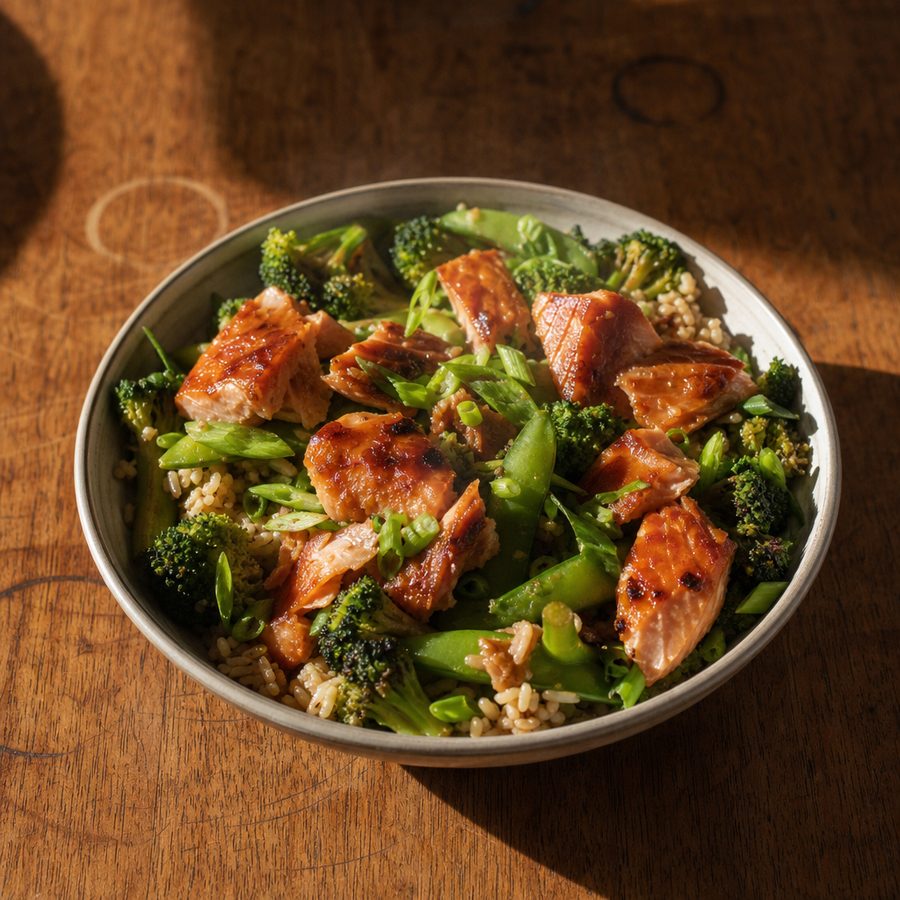
Seared salmon fillets glazed with a homemade soy-ginger teriyaki, served over brown rice with steamed broccoli and snap peas and finished with sliced scallions.
Why You'll Love This Recipe
Savory and satisfying, and there is no long list of steps standing between you and it. Salmon sears in minutes, the vegetables steam alongside it, and a quick pan glaze pulls everything together over a base of nutty brown rice. It is a good fit for someone cooking for a family or meal-prepping a few portions, and it leans on fish rather than any other protein.
The glaze is where the flavor lives. Reducing the soy sauce, coconut aminos, ginger, and garlic in a small pan for a few minutes concentrates them into something thick enough to cling to the fish, so each bite carries the savory-sweet, slightly gingery coating instead of a thin sauce that slides off. Brushing the glaze onto the salmon only in the last minute lets the fillet build a crisp seared surface first, then take on a glossy finish without the sugars in the aminos scorching in the pan.
The bowl is filling in a lasting way. Salmon brings rich protein and omega-3 fats, brown rice adds whole-grain carbohydrates and fiber, and the broccoli and snap peas layer in more fiber along with a fresh, crisp bite against the tender fish. The scallions and the pungent ginger-garlic glaze keep it from feeling heavy, so it eats as a complete, balanced plate that holds you through the evening.
Ingredients
- 4 salmon fillets (about 600 g)
- 4 cups broccoli florets
- 2 cups snap peas
- 4 tbsp soy sauce
- 2 tbsp coconut aminos
- 1 tbsp grated fresh ginger
- 3 garlic cloves, minced
- 2 tbsp avocado oil
- 3 scallions, sliced
- 3 cups cooked brown rice
Instructions
- Cook the brown rice: Rinse the brown rice under cold water until it runs mostly clear, then simmer it in water, covered, over low heat until the grains are tender and the water is absorbed, about 40 minutes. Turn off the heat and let it sit, covered, for a few minutes, since the grains at the top and the bottom of the pot even out during that rest, then fluff with a fork.
- Prep the aromatics: Peel and finely grate the fresh ginger. Peel and mince the garlic cloves. Trim and thinly slice the scallions, keeping the white and green parts, and set them aside for garnish, because they go on raw and they are the only sharp thing against a glaze this sweet.
- Make the glaze: Combine the soy sauce, coconut aminos, grated ginger, and minced garlic in a small saucepan. Bring to a gentle simmer over medium heat and cook, stirring now and then, until slightly syrupy, about 3 minutes, since a thin glaze runs straight off the fish and pools in the bottom of the bowl. Remove from the heat.
- Sear the salmon: Pat the salmon fillets dry with a paper towel. Heat the avocado oil in a skillet over medium-high heat until it shimmers. Lay the fillets in the pan skin-side down and cook without moving them for 3 to 4 minutes, because salmon releases from the metal on its own once the skin has crisped and tears if you lift it early, until the skin is crisp and the flesh has turned opaque about halfway up. Flip and cook another 3 to 4 minutes, brushing the tops with some of the glaze in the final minute, since it has sugar in it and would burn black over the full four, until the fish flakes easily with a fork and reaches 145°F (63°C) at the thickest part.
- Steam the vegetables: While the salmon cooks, set the broccoli florets and snap peas in a steamer basket over simmering water, cover, and steam until bright green and crisp-tender, about 4 minutes.
- Assemble the bowls: Divide the brown rice among bowls. Top with the salmon and the steamed broccoli and snap peas, drizzle with the remaining glaze, and garnish with the sliced scallions.
Variations
- Shrimp instead of salmon: Swap the salmon for peeled shrimp, searing them just until pink and opaque, a couple of minutes per side, then tossing with the glaze.
- Spicy kick: Stir a spoonful of chili-garlic paste or a pinch of red pepper flakes into the glaze as it simmers for a warm heat that plays off the ginger.
- Sesame finish: Sprinkle toasted sesame seeds and a few drops of toasted sesame oil over the finished bowls for a nuttier aroma; note this adds sesame.
- Extra greens: Add trimmed bok choy or baby spinach to the steamer with the broccoli and snap peas for another layer of vegetables.
- Cauliflower rice base: Trade the brown rice for steamed cauliflower rice for a lighter, lower-carb base that still soaks up the glaze.
Storage & Leftovers
Store leftovers in an airtight container in the refrigerator for up to three days. Keep the salmon, rice, and vegetables together or separated as you like; a small container of extra glaze on the side keeps everything from drying out.
Reheat gently to protect the fish. Warm a portion in the microwave at reduced power in short bursts, or set it covered in a low oven until just heated through. A splash of water over the rice before reheating brings back its moisture, and a fresh drizzle of glaze revives the flavor.
To get ahead, cook the brown rice and make the glaze up to a few days in advance and refrigerate them separately. With those done, you only need to sear the salmon and steam the vegetables at dinnertime, which takes just a few minutes.
Notes & Tips
- Pick the right fillets: Look for salmon fillets of even thickness so they cook at the same rate. Fillets with the skin on hold together better in the pan and give you that crisp skin-side sear.
- Dry fish sears better: Patting the salmon dry before it hits the oil is the difference between a browned crust and a steamed, gray surface, because surface moisture has to evaporate before the fish can brown.
- Watch the glaze closely: The glaze goes from thin to syrupy quickly at the end. Pull it off the heat while it still coats the back of a spoon; it thickens more as it cools.
- Grate ginger from frozen: Keep a knob of fresh ginger in the freezer and grate it straight from frozen. It grates more finely and you avoid stringy bits in the glaze.
- Keep the vegetables crisp: Pull the broccoli and snap peas the moment they turn bright green and still have a little bite. Overcooked, they go dull and soft against the tender fish.
- Adjust the salt to taste: Because the glaze reduces, its saltiness concentrates. Taste it before drizzling and, if you want it milder, loosen it with a splash of water rather than more soy sauce.
Nutrition & Mindful Eating
- Salmon, brown rice and the two green vegetables split the work in this bowl. The fish is rich, the rice is chewy and absorbent, and the broccoli and snap peas keep their crunch, so no two spoonfuls feel the same.
- Salmon takes a glaze better than it takes a dry heat, because its fat holds onto the sauce, and that same fat is where the long-chain omega-3s live, alongside the protein that makes the bowl a dinner.
- Brown rice keeps its bran, which is why the grains stay separate and slightly nutty under the sauce and why the fiber they carry keeps the bowl feeling substantial.
- Broccoli florets catch the glaze in their crevices and snap peas stay sweet and squeaky when they only meet the heat briefly, and both bring vitamin C and fiber in with the crunch.
- Ginger and garlic go into the hot avocado oil first, and the soy sauce and coconut aminos reduce down over them into something dark and glossy. The scallions scattered at the end are raw and sharp against all that.
- As you eat, build each forkful so it gets some fish, some rice and something green, and take the bowl somewhere you can sit down with it rather than finishing it over the stove.
Frequently Asked Questions
How do I know when the salmon is done?
The flesh turns from translucent to opaque and flakes easily when you press a fork into the thickest part. If you use a thermometer, look for 145°F (63°C) at the center. It continues to firm up slightly after it leaves the pan.
Can I use frozen salmon?
Yes. Thaw it fully in the refrigerator first, then pat it very dry before searing. Excess water from thawing will steam the fish instead of letting it brown, so drying it well matters.
What is the difference between the soy sauce and the coconut aminos here?
The soy sauce brings the deep, salty savory backbone, while the coconut aminos adds a gentler, slightly sweeter note and softens the overall saltiness. Together they give the glaze its savory-sweet balance.
Can I make this without a steamer basket?
Yes. Add the broccoli and snap peas to a pan with a little simmering water, cover, and cook until bright green and crisp-tender, then drain. You can also microwave them, covered, with a splash of water until just tender.