
Salt-Crusted Lamb Chops
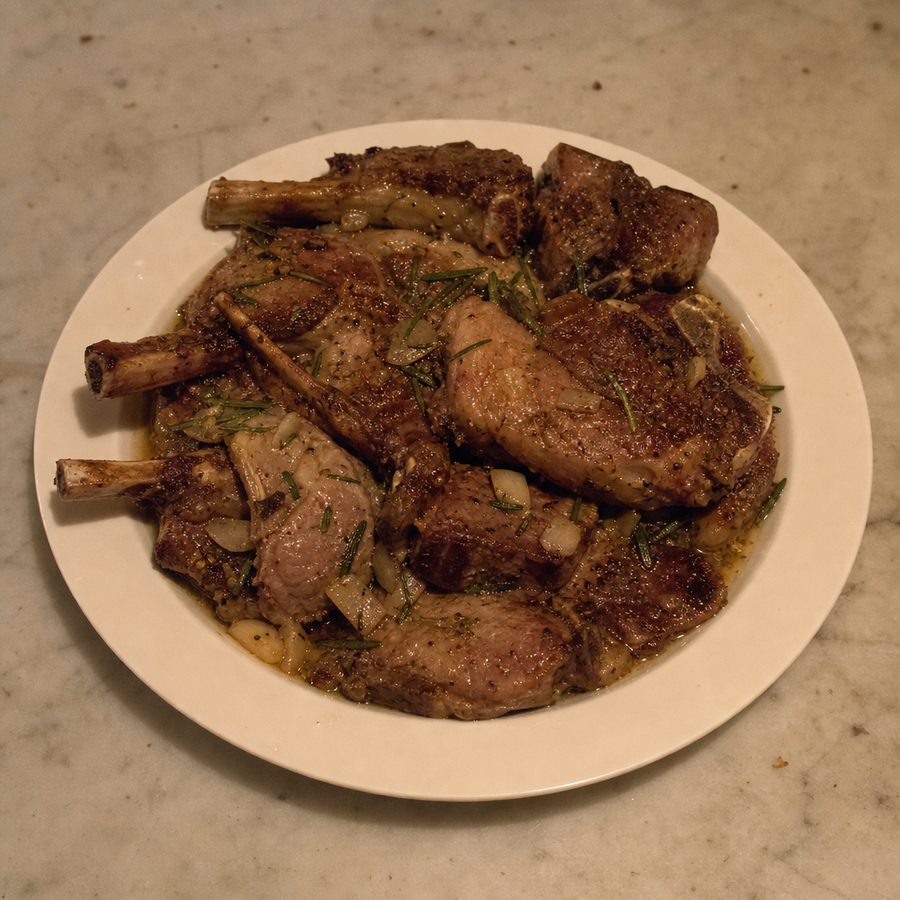
Thick lamb chops seared to a deep, salty crust and basted with butter until the fat turns nutty and the meat stays pink and juicy inside.
Why You'll Love This Recipe
This is a fast, deeply savory main built around one exceptional ingredient: good lamb chops. It suits anyone who wants a restaurant-quality piece of meat on a weeknight without a long ingredient list or fussy technique. Because it leans entirely on salt, browning, and butter, the quality of the lamb itself does the heavy lifting, which makes it a satisfying choice for a cook who wants to taste what the meat actually offers.
The crust is the whole thing. Searing thick, dry chops in a very hot pan drives a browning reaction that builds hundreds of new savory, roasted flavor compounds on the surface, giving you that dark, salty bark against the tender pink interior. The searing is purely about flavor and texture, not sealing anything in. Finishing with butter and basting bastes the exterior in hot, nutty fat, carrying that richness over every bite and helping the crust reach a beautiful deep brown.
Lamb is one of the most nutrient-dense proteins on the plate, and this preparation keeps it simple enough to appreciate. It delivers complete protein along with iron, zinc, and B12 in a form the body absorbs readily, and the natural fat plus the butter finish makes it filling, so a modest portion satisfies. The rest at the end keeps the meat juicy, and the salt crust seasons every layer rather than sitting only on top.
Ingredients
- 1 3/4 lb lamb chops
- 2 tbsp butter
- 3/4 tsp salt
Instructions
- Bring the chops to temperature: Take the lamb chops out of the refrigerator and let them sit at room temperature for about 30 minutes. Pat them very dry on both sides with paper towels; a dry surface is what lets the crust form instead of steaming.
- Season: Sprinkle the salt generously over both sides of each chop, pressing it lightly into the meat so it adheres. Season right before cooking so the salt draws out flavor without pulling too much moisture to the surface.
- Heat the skillet: Set a heavy cast-iron or stainless skillet over medium-high heat and let it get hot, about 3 to 4 minutes, until a drop of water flicked onto the surface sizzles and evaporates on contact. A properly hot pan is what builds the browned crust.
- Sear: Lay the chops in the dry pan without crowding them and sear undisturbed for 3 to 4 minutes, until the underside is deeply browned. Flip and sear the second side another 3 to 4 minutes. Stand thicker chops on their fatty edge with tongs for a moment to render and crisp that fat.
- Butter baste: Add the butter to the pan and let it foam. Tilt the pan slightly, gather the melted butter with a spoon, and pour it repeatedly over the tops of the chops for about 1 minute. Cook to an internal temperature of about 130 to 135°F (54 to 57°C) for medium-rare or 140°F (60°C) for medium, read on an instant-read thermometer at the thickest part away from the bone.
- Rest and serve: Move the chops to a plate or board and let them rest for 5 minutes so the juices redistribute and the temperature evens out. Spoon a little of the browned butter from the pan over the top and serve.
Variations
- Beef tallow finish: Swap the butter for beef tallow when basting for a cleaner, beefier richness. It has a high smoke point and takes the heat of the pan well.
- Hard cheese crust: In the last minute, press a thin layer of finely grated hard cheese onto the tops of the chops and let it melt and crisp against the heat for a salty, savory shell. This adds dairy.
- Eggs in the drippings: After the chops rest, crack eggs into the hot pan and fry them in the leftover lamb fat and butter until the edges are lacy. This adds eggs and makes it a heartier plate.
- Ghee baste: Use ghee in place of the butter for basting. Being clarified, it browns without the milk solids scorching, giving a nuttier finish. This still adds dairy.
- Flaky finishing salt: Reserve a pinch of coarse flaky salt and sprinkle it over the chops after they rest, so you get a crunchy, briny hit on top of the seared crust in addition to the salt cooked into the meat.
Storage & Leftovers
Refrigerate leftover chops in an airtight container once they have cooled, and use them within 3 to 4 days. Keep them whole rather than sliced so they hold their moisture better in the fridge.
Reheat gently to avoid overcooking the already-cooked interior. Warm the chops in a skillet over low heat with a little butter, turning once, just until heated through, or bring them to room temperature first and give them a quick sear to refresh the crust. A microwave works in a pinch but softens the crust and can dry the meat.
To get ahead, salt the chops and keep them uncovered on a rack in the refrigerator for a few hours or overnight; the surface dries out, which gives you an even better crust when you sear the next day. Pull them out to lose the chill before cooking.
Notes & Tips
- Buy thick chops: Ask for chops at least an inch thick, ideally cut from the rack or loin. Thin chops overcook before they can build a real crust, while a thick chop gives you time to brown the outside and keep the center pink.
- Dry is everything: Surface moisture is the enemy of a crust. Pat the chops thoroughly dry, and if you have time, leave them uncovered in the fridge for a few hours before cooking to dry them further.
- Render the fat cap: Lamb's fatty edge holds a lot of flavor but needs direct heat to crisp. Hold the chops on their edge with tongs for a minute so that fat renders and browns instead of staying flabby.
- Use a thermometer: Bone and thickness make lamb hard to judge by feel. An instant-read thermometer pulled at about 130 to 135°F (54 to 57°C) gives you reliable medium-rare every time; remember the temperature climbs a few degrees while it rests.
- Don't move it early: The crust releases the meat from the pan on its own when it is ready. If a chop sticks when you try to flip it, it needs another minute; forcing it tears the browned surface off.
- Save the pan fat: The browned butter and lamb drippings left in the skillet are pure flavor. Spoon them back over the chops when serving, or save them to cook eggs or another cut in later.
Nutrition & Mindful Eating
- Lamb, butter and salt is the whole cast, and each has one job. The chops bring the flavor, the salt draws moisture to the surface so a crust can form, and the butter carries heat back over the top and turns nutty as it goes.
- Lamb has a flavor all its own, grassy and faintly sweet, with fat that turns firm and rich as it renders. The protein is dense enough that a chop or two eats like a full meal, and the iron in it is the kind the body takes up most readily.
- A heavy coat of salt does more than season. It pulls surface moisture out so the meat can brown properly, and what is left behind is a savory shell that shatters slightly at the first cut and pushes the flavor of the lamb forward.
- Butter goes in at the end, once the pan is already hot, and foams up around the chops. Basting with it browns the milk solids into something nutty, gilds the crust, and carries the vitamins A and D that butter holds.
- The chops need a few minutes off the heat before you cut them, which stops the juices from running out onto the board. That pause is also when the smell of browned butter and rendered lamb fat fills the room.
- As you eat, cut close to the bone where the meat is richest, feel the salt crust give against the soft interior, and give the plate your attention rather than standing over the stove with it.
Frequently Asked Questions
What cut of lamb chops should I use?
Rib chops (from the rack) and loin chops both work beautifully here. Rib chops are more tender and elegant with a long bone, while loin chops are meatier and hold up well to a hard sear. Whichever you choose, look for chops at least an inch thick with a good fat cap.
How do I know when the lamb is done?
Use an instant-read thermometer at the thickest part, away from the bone. About 130 to 135°F (54 to 57°C) gives you juicy medium-rare, and 140°F (60°C) gives medium. Pull the chops a few degrees early since the temperature keeps rising during the rest.
Do I need to add oil to the pan?
No. Lamb renders plenty of its own fat as it sears, and the butter goes in at the end for basting. Start with a dry, hot pan so the meat browns rather than steams, and let the chops release their own fat.
Why rest the chops before serving?
Resting lets the juices redistribute through the meat and the internal temperature even out, so the chops stay moist when you cut them instead of losing their juices to the plate. Five minutes is enough for chops this size.