
Sardine and Eggs
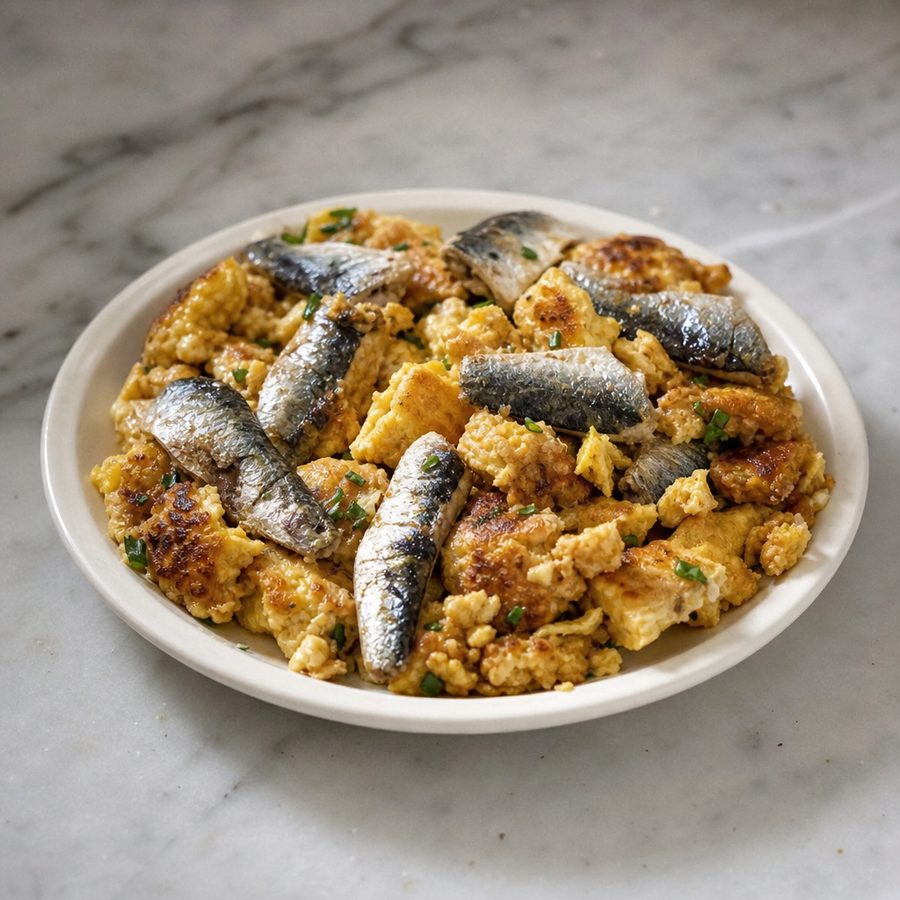
Rich canned sardines laid over soft, buttery scrambled eggs seasoned with a little salt.
Why You'll Love This Recipe
This is a fast, protein-dense breakfast for anyone who wants something hot and filling without a long ingredient list or any chopping. It leans entirely on animal foods: two tinned fish and eggs cooked in butter, with just enough salt to bring them together. If you keep sardines in the pantry, it comes together in the time it takes to scramble eggs, which makes it a reliable option on mornings when you want real food and not much fuss.
One component is bold and the other is mild. Sardines are dense, oily, and boldly savory, so they need a soft, mild partner to keep the plate from feeling heavy, and low, slow scrambled eggs in butter are exactly that. Cooking the eggs over gentle heat and pulling them while they are still glossy keeps the curds small and custardy rather than dry, and that softness is what carries the richer fish. Warming the sardines on top rather than stirring them in keeps their fillets whole and their flavor distinct instead of muddying the eggs.
The dish satisfies because it is rich in complete protein and natural fat, the combination that tends to keep you full for hours. The sardines bring oily fish and their soft edible bones, the eggs bring their yolks, and the butter rounds everything into something that eats like comfort food while still being simple and whole. It is warm, savory, and substantial, the kind of breakfast that settles you rather than leaving you hunting for a snack an hour later.
Ingredients
- 2 cans sardines, drained
- 11 large eggs
- 3 tbsp butter
- 1/4 tsp salt
Instructions
- Drain the sardines: Open the cans of sardines and tip them into a fine sieve or lay them on a folded paper towel to drain off the packing liquid. Leave the fillets whole so they stay intact when you lay them over the eggs.
- Beat the eggs: Crack the eggs into a bowl, add the salt, and whisk well with a fork or whisk until the yolks and whites are fully blended and the mixture is uniform and slightly frothy.
- Melt the butter: Set a nonstick or well-seasoned skillet over medium-low heat and add the butter. Let it melt and foam gently, swirling to coat the bottom of the pan, but do not let it brown.
- Softly scramble the eggs: Pour in the beaten eggs and let them sit for a few seconds, then stir slowly and steadily with a silicone spatula, pushing the eggs from the edges toward the center as curds form. Keep the heat low and the eggs moving so they stay creamy; pull the pan off the heat while they still look slightly wet and just set, since they will finish cooking from residual heat.
- Warm the sardines on top: Lay the drained sardines over the warm scrambled eggs and let them sit for about a minute so they heat through from the warmth of the eggs and pan.
- Serve: Divide the eggs and sardines among plates and serve right away, while the eggs are still soft and the sardines are warm.
Variations
- Cheesy eggs: Stir a handful of grated hard cheese into the eggs just before they finish scrambling so it melts through. This adds dairy.
- Crisp-fried sardines: Instead of warming the sardines on top, fry the drained fillets in a little butter over medium heat until the edges brown and crisp, then lay them over the eggs for a crunchier bite.
- Bacon underneath: Cook strips of bacon until crisp, then build the eggs and sardines on top of them for a smoky, salty base. This adds pork.
- Extra-rich eggs: Whisk a couple of additional egg yolks into the beaten eggs for an even softer, more custardy scramble under the fish.
- Sardines in oil: Choose sardines packed in oil rather than water and spoon a little of that oil over the finished plate for a fuller, silkier fish flavor.
Storage & Leftovers
Store leftovers in an airtight container in the refrigerator for up to three days. Keep the eggs and sardines together; the fish will perfume the eggs a little as they sit, which most people who like this dish do not mind.
Reheat gently, since scrambled eggs turn rubbery when they get too hot. Warm the plate in a skillet over low heat or in short bursts in the microwave, stirring between them, and stop while the eggs are just warmed through rather than steaming. A little extra butter in the pan helps bring back the soft texture.
To get ahead, you can drain the sardines and whisk the eggs with the salt the night before and keep both covered in the refrigerator, then scramble in the morning. The scrambled eggs are best cooked fresh, so hold off on that step until you are ready to eat.
Notes & Tips
- Pick your sardines: Whole fillets with the soft bones left in have the fullest flavor and the softest texture; skinless, boneless tins are milder if the stronger taste is new to you. Sardines packed in oil taste richer, while those in water taste cleaner and lighter.
- Drain them well: Pat the sardines dry after draining so their packing liquid does not pool on the plate and thin out the buttery eggs. A quick press with a paper towel is enough.
- Keep the heat low: The single biggest factor in soft eggs is gentle heat. If the pan starts to sizzle hard or the butter browns, lift it off the burner for a few seconds to let it cool before continuing.
- Salt lightly: Sardines are already salty, so the small amount of salt in the eggs is usually plenty. Taste before adding more, and adjust at the plate rather than in the pan.
- Warm, do not overcook, the fish: Sardines are fully cooked in the tin, so they only need a minute of warmth on the eggs. Leaving them on the heat longer just dries them out and makes them fall apart.
- Serve it immediately: Soft scrambled eggs firm up as they sit, so plate and eat this right away. If you are cooking for a few people, have everyone at the table before the eggs come off the heat.
Nutrition & Mindful Eating
- The eggs and the sardines meet in the butter. Eggs cooked low and slow stay loose and creamy, the fish stays firm and briny inside them, and the butter is the thing carrying flavor back and forth between the two.
- Sardines have a flavor that arrives all at once, oily and deeply savory, and warming them gently in the pan rounds that edge off. They are eaten whole, bones and all, which is where the calcium sits alongside the vitamin D and the long-chain omega-3 fats.
- Eggs stirred over low heat keep setting after the pan comes off the burner, so pulling them early is what keeps them soft. The yolks are the richest part and hold the choline and the lutein that go with their deep color.
- Butter melted before anything else goes in sets the tone for the whole pan. It keeps the eggs from tightening, it rounds off the salt of the fish, and it brings vitamin A along with the fat that helps the rest of the plate get absorbed.
- Salt is the tuning knob here. It brings the sardine oil forward and wakes the eggs up, and because the fish arrives already savory you season at the end, where you can taste what you are doing.
- As you eat, let the soft eggs round off the brine of the fish, and take the first few bites slowly enough that you are actually awake for them.
Frequently Asked Questions
Do I have to eat the bones in the sardines?
The small bones in whole sardines are soft, fully edible, and where much of the calcium is, so most people eat them without noticing. If you would rather skip them, buy boneless sardines or lift the fillets off the backbone before laying them on the eggs.
How do I keep the eggs from turning rubbery?
Cook them low and slow, stir often, and take the pan off the heat while the eggs still look slightly wet. They keep cooking from residual heat, so pulling them early is what leaves them soft and creamy rather than tough.
Will the whole dish taste very fishy?
Sardines are bold, but the mild buttery eggs mellow them considerably, and warming the fish on top rather than mixing it in keeps the flavor from spreading through everything. Choosing sardines packed in water or a skinless, boneless tin gives a lighter result if you prefer.
Can I make this ahead for a busy morning?
You can drain the sardines and whisk the eggs with salt the night before and refrigerate both, which cuts the morning down to just scrambling. The eggs themselves are best cooked fresh, since reheated scrambled eggs lose their soft texture.