
Sardine, Fennel, and Citrus Salad
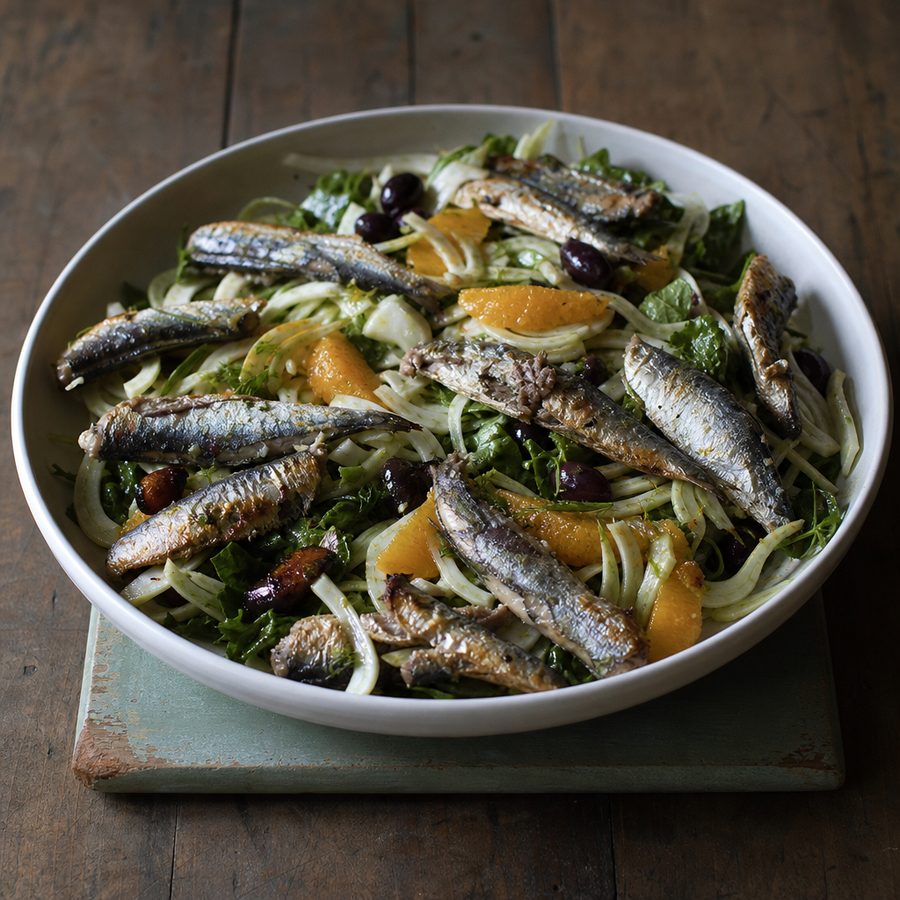
Oil-packed sardines laid over crisp shaved fennel, sweet orange segments, and peppery arugula, dotted with kalamata olives and finished with a bright lemon-and-olive-oil dressing and fresh parsley.
Why You'll Love This Recipe
This is a cold, no-cook lunch that comes together in the time it takes to shave a fennel bulb, which makes it a good answer for anyone who wants something substantial in the middle of a busy day without turning on the stove. It leans on the pantry for its backbone, so with a few cans of sardines on the shelf and a couple of oranges in the bowl you are most of the way there. It suits people who want a plate that feels like a real meal rather than a snack, and who like bold, briny, savory flavors.
Everything around the sardines is built to cut through them. Sardines are rich and oily, and on their own they can feel heavy, so everything around them is built to cut through that richness: the lemon in the dressing, the sweet-tart orange segments, and the clean anise crunch of raw fennel shaved thin enough to stay crisp under the dressing. The olives echo the salt in the fish while the arugula brings a peppery bite, and the parsley keeps the whole plate tasting fresh. Slicing the fennel very thin is the one technique that matters most, because thick fennel turns the salad woody and hard to eat.
The sardines bring a real amount of protein, and the olive oil and olives add fat that keeps you satisfied. The fennel and orange contribute fiber and a natural sweetness that means you do not miss any bread or grain, and the arugula and citrus load the plate with color and freshness. It eats like something indulgent while quietly being built from whole, simple foods.
Ingredients
- 6 cans sardines in olive oil (about 510g), drained
- 2 bulbs fennel, shaved thin
- 2 oranges, segmented
- 4 cups arugula
- 3/4 cup kalamata olives, halved
- 1/4 cup olive oil
- 2 tbsp lemon juice
- 3 tbsp chopped parsley
- 1/4 tsp salt
Instructions
- Prep the produce: Trim the stalks and root end from the fennel, halve the bulbs lengthwise, and shave them into paper-thin slices with a sharp knife or a mandoline, since raw fennel cut thick eats like a vegetable and cut thin eats like a salad. Cut the peel and white pith off the oranges with a knife, then slice between the membranes to release clean segments, working over the bowl to catch the juice. Halve the kalamata olives and pull out any pits. Finely chop the parsley.
- Drain the sardines: Open the cans of sardines and tip them into a fine strainer to drain off the packing oil, because it is heavily salted and would take over a plate this simple. Leave the fillets whole, or break them into large pieces if you prefer smaller bites. Set aside.
- Make the dressing: In a small bowl, whisk together the olive oil, lemon juice, and salt until it looks slightly thickened and blended, so that the lemon is carried across the whole plate rather than landing on two leaves.
- Dress the base: Put the arugula and shaved fennel in a large bowl, pour over about half the dressing, and toss gently until every leaf is lightly coated. Spread the mixture out over serving plates.
- Top and finish: Arrange the sardines, orange segments, and olives over the greens rather than tossing them through, since sardines are soft enough to fall apart the moment they meet a salad spoon. Drizzle the remaining dressing over the top and garnish with the chopped parsley. Serve right away, while the fennel is still crisp.
Variations
- Swap the citrus: Use ruby grapefruit or blood orange segments in place of the oranges for a sharper, less sweet edge that stands up well to the briny olives and fish.
- Change the greens: Trade the arugula for baby spinach or a handful of watercress. Watercress keeps the peppery bite, while spinach makes the plate milder and softer.
- Different oily fish: Swap the sardines for oil-packed mackerel fillets, which are meatier and even richer. This keeps the dish fish-forward with a slightly bolder flavor.
- Add avocado: Fan sliced ripe avocado over the top for extra creaminess that softens the brine. This adds more fat and a buttery texture to each bite.
- Herb it up: Replace the parsley with fresh dill or mint, or use a mix. Dill leans savory and pairs naturally with the fish, while mint plays up the sweetness of the citrus.
Storage & Leftovers
This salad is best eaten the day it is made, but leftovers keep in an airtight container in the refrigerator for up to two days. The fennel will soften and lose some of its crunch as it sits in the dressing, and the arugula will wilt, so expect a mellower, more marinated texture the next day.
There is nothing to reheat here, and you should not try to warm it, since heat wilts the greens and dulls the fresh citrus. If it has been in the cold too long, let it sit at room temperature for a few minutes before eating so the olive oil loosens and the flavors open back up.
To get ahead, shave the fennel, segment the oranges, halve the olives, and whisk the dressing up to a day in advance and store them separately in the refrigerator. Keep the sardines drained and covered on their own. Toss everything together only when you are ready to eat, so the greens stay lively and the fennel stays crisp.
Notes & Tips
- Buy the best sardines you can: The fish is the star, so quality shows. Look for cans labeled packed in olive oil with whole fillets, and give them a gentle drain rather than a hard press so they stay moist and intact.
- A mandoline is worth it: Fennel needs to be nearly translucent to eat well raw. A mandoline gets it thinner and more evenly than a knife, and thin fennel is the difference between crisp and stringy.
- Save the fennel fronds: The feathery green tops taste like a milder version of the bulb. Chop a few and use them alongside or instead of the parsley for a garnish that ties the plate together.
- Segment oranges over a bowl: Cutting the segments free over a bowl catches the juice that escapes, and you can whisk a spoonful of that juice into the dressing for extra citrus flavor without adding more lemon.
- Taste before you salt: Both the sardines and the kalamata olives are already salty, so add the salt to the dressing lightly and taste the finished plate before reaching for more.
- Make it a bigger meal: Serve it with a bowl of olives and some sliced cucumber and cured meat on the side to stretch it into a fuller spread when you want more on the table.
Nutrition & Mindful Eating
- Fennel, orange and sardine work because each one answers the last. The fish is salty and rich, the orange is sweet and wet, and the fennel is cold and crisp underneath both, so no single flavor gets to sit still.
- Fennel shaved thin against the grain stays crunchy and tastes faintly of anise, sweeter and softer on the tongue than the bulb smells. It brings fiber and potassium into a plate that would otherwise be mostly fish and fat.
- Orange segments burst rather than dissolve, dropping sweet juice into the dressing as you cut through the plate, and the vitamin C that comes with them helps the body take up the iron sitting in the fish and greens.
- Sardines and kalamata olives are the two salty things here, and they are meant to be eaten together. The fish brings its omega-3 fats and the calcium from its soft bones, the olives bring a winey, brackish note and their own soft fat.
- Arugula and parsley scattered over the top add a peppery, green edge, and the last of the lemon and olive oil goes on at the table so the fennel is still crunching when the plate arrives.
- As you eat, get fennel, orange and fish onto the same fork at least once and pay attention to how differently each behaves in your mouth, which is usually enough to keep you at the table a little longer.
Frequently Asked Questions
Will this taste too fishy?
It has a distinctly savory, briny flavor, but the lemon dressing, the sweet orange segments, and the fresh parsley all work to balance and lighten the richness of the sardines, so it lands far more bright than heavy. If you are new to sardines, start with fillets packed in olive oil, which are milder than the water-packed kind.
Do I need to remove the bones from the sardines?
No. The tiny spines in canned sardines are soft, fully edible, and easy to eat without noticing. They are also where much of the calcium comes from, so leaving them in is a benefit, not a chore.
Can I use fennel seed if I cannot find fresh fennel bulb?
The fresh bulb is doing two jobs here, adding crunch and a mild anise flavor, and fennel seed cannot replace the texture. If you have no fennel bulb, use very thinly sliced celery or crisp cucumber for the crunch instead.
Why is my fennel turning brown after I slice it?
Cut fennel oxidizes and browns the same way an apple does. Toss the shaved slices with a little of the lemon juice as soon as they are cut, or keep them in cold water until you are ready to build the plate, and they will stay pale and crisp.