
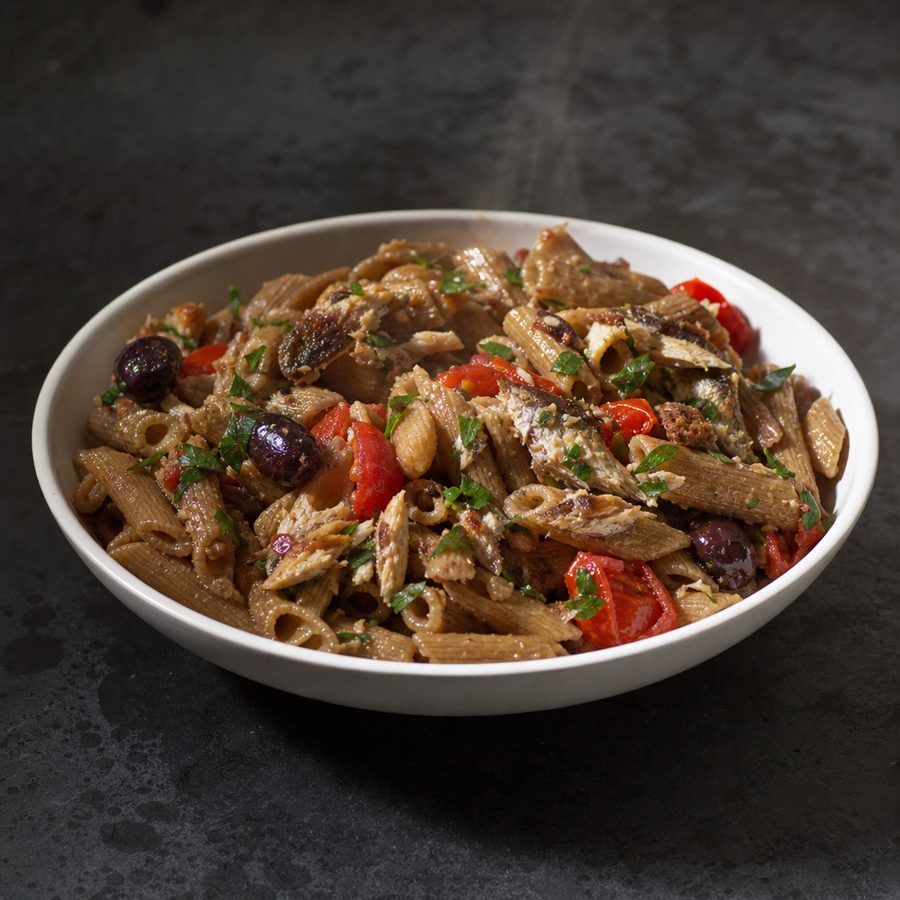
Sardine and Tomato Whole Wheat Pasta
Tender whole wheat pasta tossed with olive-oil-softened garlic, cherry tomatoes that burst into a light sauce, briny kalamata olives, and flaky sardines, all brightened with fresh lemon juice and parsley.
Why You'll Love This Recipe
Fast, affordable, and nourishing, with no trip to the store. It leans on pantry and produce staples, canned sardines and whole wheat pasta, that keep for weeks, and it comes together in the time it takes the pasta water to boil. It is a good fit for cooks who find plain canned fish intimidating, because here the sardines melt into a garlicky tomato sauce where their richness reads as savory depth rather than anything fishy.
The cherry tomatoes burst in warm, garlic-infused olive oil. As the tomatoes collapse over medium heat, they release their juices and build a light, glossy sauce with no canned tomato or long simmer required. The garlic is softened first and gently, not browned, so it perfumes the oil without turning bitter, and the olives lend a salty, briny backbone that seasons the whole pan. A final hit of lemon juice and raw olive oil at the end keeps everything bright and fresh-tasting.
The plate holds together without one part dominating. The sardines bring rich, savory protein and omega-3 fats, the whole wheat pasta adds hearty fiber and a nutty chew that stays with you, and the tomatoes, olives, parsley, and lemon keep each bite lively instead of heavy. It is the kind of meal that feels light but leaves you full, the sort of simple cooking that tastes like more effort than it took.
Ingredients
- 3 cans sardines, drained
- 4 cups cooked whole wheat pasta
- 2 cups cherry tomatoes, halved
- 1/3 cup kalamata olives, halved
- 4 tbsp olive oil
- 4 garlic cloves, thinly sliced
- 1 1/2 tbsp fresh lemon juice
- 1/4 cup chopped parsley
- scant 1/2 tsp salt
Instructions
- Cook the pasta: Bring a large pot of well-salted water to a rolling boil. Add the whole wheat pasta and cook until tender but still with a slight bite, following the low end of the package time since whole wheat can turn soft quickly. Scoop out a little of the starchy cooking water, then drain the pasta and set both aside.
- Prep the ingredients: While the water heats, thinly slice the garlic cloves, halve the cherry tomatoes, and halve the kalamata olives. Chop the parsley and squeeze the fresh lemon juice. Open the cans of sardines and drain them well, discarding the packing liquid.
- Soften the garlic: Warm the olive oil in a large skillet over medium heat. Add the sliced garlic and cook gently until fragrant and just turning pale gold at the edges, about 1 minute. Keep the heat moderate so the garlic does not brown and turn bitter.
- Burst the tomatoes: Add the halved cherry tomatoes and olives to the skillet. Cook, stirring occasionally and pressing lightly on the tomatoes, until they collapse and release their juices into a loose, light sauce, 6 to 8 minutes.
- Fold in the sardines and pasta: Gently fold the drained sardines into the tomatoes, breaking them into large flakes with a spoon. Add the drained pasta, lemon juice, and salt, and toss gently to coat. If the pan looks dry, loosen it with a splash of the reserved pasta water until the sauce clings to the noodles.
- Finish and serve: Remove from the heat, garnish with the chopped parsley, and finish with a drizzle of olive oil. Serve warm.
Variations
- Add a little heat: Sprinkle red pepper flakes into the oil with the garlic for a gentle, warming kick that plays well against the briny olives.
- Swap the fish: Use canned mackerel or canned tuna in place of the sardines for a milder flavor; both flake into the sauce the same way.
- Extra greens: Stir in a few handfuls of baby spinach or arugula with the pasta and let it wilt in the warm sauce for more color and vegetables.
- Caper brightness: Add a spoonful of drained capers with the olives for an extra layer of salty, tangy punch.
- Toasted crumb topping: Finish each bowl with toasted whole wheat breadcrumbs for a crisp contrast to the soft pasta; note this adds extra gluten.
Storage & Leftovers
Store leftovers in an airtight container in the refrigerator for up to three days. The flavors settle and meld as it sits, so the second-day bowl is often even more savory than the first.
Reheat gently in a skillet over medium-low with a splash of water to loosen the sauce, tossing until warmed through. A short burst in the microwave works too; stir halfway so the pasta heats evenly and does not dry at the edges.
To get ahead, burst the tomatoes and olives in the garlicky oil up to a day in advance and refrigerate that sauce base. When you are ready to eat, cook fresh pasta, rewarm the sauce, and fold in the sardines, lemon, and parsley just before serving so they taste fresh.
Notes & Tips
- Choose good sardines: Look for sardines packed in olive oil or water rather than heavy sauces; oil-packed tend to be plumper and richer, while water-packed taste cleaner and lighter. Either works, but check that the label lists whole fillets if you prefer larger flakes.
- Save the pasta water: Set aside a little of the starchy cooking water before you drain. A splash stirred in at the end loosens the sauce and helps it cling to the noodles instead of pooling at the bottom of the bowl.
- Don't rush the garlic: Keep the heat at medium and pull the garlic off the moment it smells fragrant and turns pale gold. Browned garlic turns bitter and can throw off the whole dish, so err on the gentle side.
- Season last, taste first: Olives and canned sardines both carry salt, so add the measured salt after everything is combined, taste, and only then adjust. You may find it needs little to none.
- Mash the tomatoes: If your tomatoes are stubborn and won't collapse on their own, press them against the pan with the back of a spoon to help them release their juices and build the sauce faster.
- Round out the plate: A simple green salad or some crusty bread on the side turns this into a fuller meal and is handy for soaking up the last of the lemony, garlicky oil.
Nutrition & Mindful Eating
- Pasta, sardines and tomatoes are the whole dish, and the pasta water is the fourth ingredient nobody writes down. It pulls the oil and the burst tomatoes into a sauce that clings, so the fish ends up spread through the bowl rather than sitting on top of it.
- Whole wheat pasta keeps its bran and germ, which gives the strands a nutty flavor and a firmer chew that stands up to a strong sauce, and brings fiber along for the ride.
- Sardines pressed into hot oil with the garlic collapse into a savory base, and what you taste afterward is depth rather than fish. Their soft bones go with them, which is where the calcium comes from, alongside the omega-3 fats.
- Cherry tomatoes split and release their juice into the pan, going sweeter as they reduce, and kalamata olives drop in salt and a winey edge that keeps all that sweetness in check.
- Garlic sliced thin and cooked slowly in olive oil is the smell this dish is built on, and the lemon and parsley go on off the heat at the very end so both stay sharp against the richness underneath.
- As you eat, twist the fork against the bowl and see how much sauce the pasta holds, then give the meal the length of the bowl rather than finishing it in front of a screen.
Frequently Asked Questions
Will this taste very fishy?
Not the way plain canned fish can. Simmered into the garlicky tomato and olive sauce and finished with lemon, the sardines read as rich and savory rather than strongly fishy. Draining them well and using the lemon juice both keep the flavor balanced.
Can I use a different pasta shape?
Yes. Short shapes like penne, rigatoni, or fusilli catch the loose tomato sauce nicely, and long strands like spaghetti or linguine work well too. Cook to just tender, since whole wheat pasta can soften quickly.
Do I need to remove the bones from the sardines?
No. The bones in canned sardines are very soft, fully edible, and add calcium. They break down as you flake the fish into the sauce and disappear into the dish.
Can I make it without the olives?
You can, though the olives add much of the briny, salty depth. If you leave them out, taste and add a little extra salt, or a spoonful of capers, to make up for the seasoning they would have provided.