
Seared Duck Breast Arugula Salad
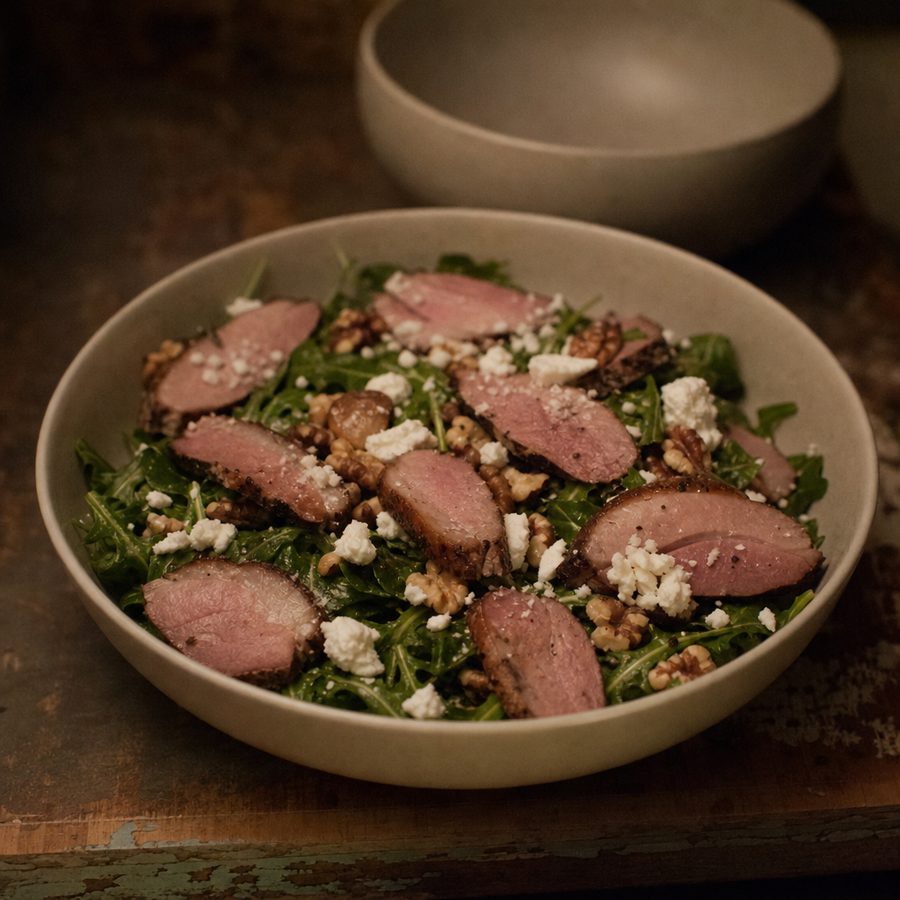
Warm slices of seared duck breast fanned over peppery arugula with tangy goat cheese, toasted walnuts, thin radish, and a bright Dijon-balsamic olive oil dressing.
Why You'll Love This Recipe
This is a bistro-style main-course salad that eats like a full meal rather than a starter. Warm, richly savory duck sits against cool, sharp greens, which is a combination worth sitting down for rather than eating standing up. It suits anyone who wants something protein-forward that still feels like an occasion, and it needs one skillet and one bowl. Duck also renders enough fat to cook itself, so there is no oil in the pan at any point.
Start the duck skin-side down in a cold, dry pan. Bringing the heat up slowly gives the thick fat layer time to render and melt away, which is what leaves the skin thin and crisp instead of flabby. Searing browns the surface for deep, roasted flavor and crackling texture. The Dijon in the dressing is doing real work too: mustard acts as an emulsifier, holding the oil and balsamic together so the vinaigrette clings to the leaves instead of sliding off.
Rich and bright are both on this plate. The duck and toasted walnuts bring lasting, savory fullness; the goat cheese adds creamy tang; the arugula and radish keep everything peppery and fresh; and the balsamic cuts through the richness so no bite feels heavy. Duck is a source of protein and iron, walnuts contribute plant-based omega-3 fats, and the arugula adds vitamin K and folate, so the plate feels indulgent while still nourishing you.
Ingredients
- 4 duck breasts (about 6 oz each)
- 6 cups arugula
- 2/3 cup crumbled goat cheese
- 1/2 cup toasted walnuts
- 4 tbsp olive oil
- 1 tbsp balsamic vinegar
- 1 tsp Dijon mustard
- 4 radishes, thinly sliced
- 1/2 tsp salt
Instructions
- Toast the walnuts: Warm a dry skillet over medium heat, add the walnuts, and toast, tossing often, until fragrant and lightly golden, about 4 to 5 minutes. Tip them onto a plate right away, since a hot dry skillet goes on toasting them after the burner is off and walnuts turn bitter quickly, then roughly chop them once cool.
- Score and season the duck: Pat the duck breasts very dry. Using a sharp knife, score the skin in a shallow crosshatch, cutting through the fat but not into the meat, so that the fat underneath has a way out as it melts. Season both sides with the salt.
- Render and sear the duck: Lay the duck skin-side down in a cold, dry skillet, then set it over medium heat. Let it cook undisturbed so the fat renders and the skin turns deep golden and crisp, about 8 to 10 minutes, pouring off excess fat as it pools. Flip and cook the meat side 3 to 5 minutes more, until an instant-read thermometer reads about 130 to 135°F (54 to 57°C) for medium-rare.
- Rest, then slice: Move the duck to a board and let it rest, skin-side up, for about 5 minutes, since the juices need that time to settle back into the meat and skin left face down steams itself soft. Slice crosswise against the grain into thin strips.
- Whisk the dressing: In a small bowl, whisk together the olive oil, balsamic vinegar, Dijon mustard, and salt until it looks smooth and slightly thickened. The mustard is what holds the oil and the vinegar together, and a split dressing runs straight to the bottom of the bowl.
- Prep and dress the greens: Trim and thinly slice the radishes. Put the arugula and radishes in a large bowl, drizzle with just enough dressing to lightly coat, and toss. Spread over the plates.
- Assemble: Fan the sliced duck over the greens while it is still warm, because the warm fat softens the arugula underneath just enough and that contrast is the whole point of the plate. Sprinkle with the crumbled goat cheese and toasted chopped walnuts, and finish with a light drizzle of the remaining dressing.
Variations
- Blue cheese swap: Trade the goat cheese for crumbled blue cheese for a sharper, saltier bite against the duck. This keeps the dish rich in dairy.
- Herb-forward finish: Toss chopped fresh tarragon or chives into the greens for a fresh, anise-like lift that pairs naturally with duck.
- Pecan or hazelnut: Use toasted pecans or hazelnuts in place of the walnuts for a different toasty note; this still adds nuts.
- Citrus dressing: Whisk a little fresh lemon or orange zest into the dressing for extra brightness that cuts the richness without adding meaningful carbohydrate.
- Warm bacon accent: Crisp a little chopped bacon and scatter it over the top for smoky depth; this adds pork.
Storage & Leftovers
Store leftovers with the components separated when you can. Keep the sliced duck in an airtight container in the refrigerator for up to 3 days; keep undressed arugula and radish in their own container so the leaves stay crisp. Once greens are dressed, they wilt within a few hours.
Duck is best rewarmed gently so it does not overcook and toughen. Warm the slices in a skillet over low heat for a minute or two, or let them come to room temperature while you set out fresh greens. It is also very good eaten cold, sliced straight over the salad.
To get ahead, sear and slice the duck and toast the walnuts up to a day in advance, and whisk the dressing and refrigerate it. When it is time to eat, toss the greens, fan on the duck, and add the cheese and walnuts so assembly takes only a couple of minutes.
Notes & Tips
- Start the pan cold: Resist the urge to preheat the skillet for the duck. A cold start over medium heat is what melts the fat layer down slowly and leaves the skin crisp rather than chewy.
- Dry skin browns best: Pat the duck skin thoroughly dry before it hits the pan. Surface moisture steams instead of browning and keeps the skin from crisping.
- Dress lightly, taste, add more: Add just enough dressing to make the leaves glisten, then taste before adding more. Arugula is delicate and turns soggy under a heavy hand.
- Tame the pepper: If arugula is too sharp for you, mix in a handful of milder baby spinach or butter lettuce to soften the peppery edge while keeping the salad fresh.
- Watch the walnuts closely: Toasted nuts go from golden to burnt in under a minute. Pull them the moment they smell fragrant and move them off the hot pan right away.
- Serve slightly warm: Let the duck rest just until it is warm, not hot, before slicing over the cold greens. The gentle contrast of warm meat and cool leaves is what makes this dish feel special.
Nutrition & Mindful Eating
- The contrast is the whole idea. Warm duck straight from the pan goes over cold arugula, the rendered fat wilts the leaves slightly wherever it touches them, and the goat cheese and radish keep the plate from tipping too far toward rich.
- Duck breast is dark, dense-fleshed meat with a deep flavor, scored across the fat and started in a cold pan so it renders slowly and the skin turns crisp, and it carries iron in the form your body takes up most easily.
- Walnuts toasted for a minute or two go from waxy to fragrant and give the salad its crunch, and they bring the plant omega-3 fat walnuts are known for along with it.
- Goat cheese crumbles into tangy pockets that soften against the warm meat, and thin slices of radish stay cold, crisp, and faintly peppery, so between them the plate keeps a sharp edge in every forkful.
- The dressing is dijon, balsamic and olive oil whisked together, and it needs to be assertive here. The mustard grips the leaves, the vinegar answers the duck fat with a little sweetness, and the pepperiness of the arugula sits under the whole thing.
- As you eat, build a forkful with duck, leaf and cheese together and notice how differently each one lands, and slow down enough that a salad this good does not disappear in four bites.
Frequently Asked Questions
How do I know when the duck is done?
Use an instant-read thermometer in the thickest part of the breast. About 130 to 135°F (54 to 57°C) gives you rosy medium-rare, which is how duck breast is usually served. Let it rest a few minutes before slicing, and always cut against the grain for tenderness.
What do I do with all the rendered duck fat?
Pour it off the pan as it accumulates during searing so the skin can crisp. Strain the cooled fat into a jar and refrigerate it; it is excellent for cooking eggs or vegetables later.
Can I make this ahead for a packed lunch?
Yes. Sear and slice the duck, toast the walnuts, and keep the dressing separate. Pack the undressed greens on their own and toss everything together just before eating so the arugula stays crisp. The duck is fine cold.
The arugula is too peppery for me. What can I do?
Blend in a milder green like baby spinach or butter lettuce to soften the bite, and add a touch more olive oil to the dressing. A little extra creamy goat cheese also mellows the sharpness.