
Seared Duck Breast With Barley and Roasted Brussels Sprouts
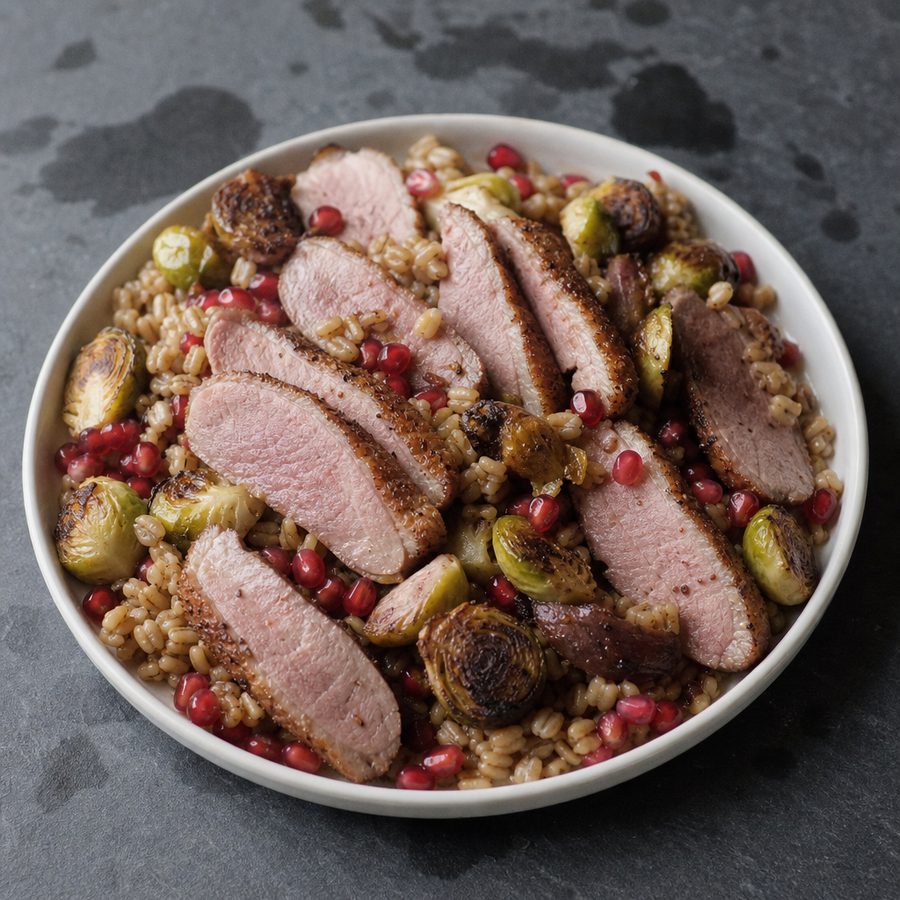
Thin slices of crisp-skinned seared duck breast fan out over herbed barley and deeply caramelized roasted Brussels sprouts, all finished with a glossy balsamic glaze and a scattering of bright pomegranate seeds.
Why You'll Love This Recipe
This is a restaurant-style plate that comes together on a weeknight: a chewy, nutty grain, sweet-and-bitter roasted sprouts, and slices of rich, rosy duck tied together with a tart glaze. It suits anyone who wants a protein-forward, high-fiber dinner that still feels special enough for a guest, and it rewards a cook who likes a little technique without demanding a long list of steps. Duck breast is also easier to cook well than its reputation suggests, since it starts in a cold pan and most of the work is leaving it alone.
Contrast, built on a piece of real technique. Starting the duck skin-side down in an unheated pan lets the thick fat layer render out gradually, which is what gives you crisp skin over tender meat rather than a rubbery band of fat. Roasting the Brussels sprouts cut-side down at high heat caramelizes their flat faces, turning their natural sugars sweet and taming any cabbage-like edge, while a quick simmer of balsamic in the duck pan pulls up the browned bits into a glaze that cuts the richness of the meat.
Duck, barley, and sprouts make a plate with weight to it. Duck breast is a substantial source of protein and iron, barley brings a hearty, filling chew along with soluble fiber, and the sprouts add still more fiber plus a real vegetable presence on the plate. The pomegranate seeds pop with juice and color, and the balsamic keeps everything bright, so the meal feels indulgent while leaning on whole ingredients that keep you full.
Ingredients
- 2 large duck breasts
- 5 cups Brussels sprouts, halved
- 3 cups cooked barley
- 1/2 cup pomegranate seeds
- 3 tbsp olive oil
- 2 tbsp balsamic vinegar
- 4 garlic cloves, minced
- 1 1/2 tsp fresh thyme
- 1/2 tsp salt
Instructions
- Cook the barley: Rinse the barley under cool water, then add it to a pot of salted water and bring to a boil. Lower to a simmer and cook, uncovered, until the grains are tender but still pleasantly chewy, about 25 to 30 minutes. Drain off any excess water and set the barley aside, covered, to keep warm.
- Roast the Brussels sprouts: Preheat the oven to 425°F (220°C). Trim and halve the Brussels sprouts, mince the garlic, and strip the thyme leaves from their stems. Toss the sprouts with olive oil, garlic, thyme, and salt, then spread them cut-side down in a single layer on a sheet pan. Roast about 22 minutes, until the cut sides are deeply browned and the sprouts are fork-tender.
- Sear the duck: Pat the duck breasts very dry and score the skin in a shallow crosshatch, cutting through the fat but not into the meat. Season with salt. Lay the breasts skin-side down in a dry, ovenproof skillet, then set it over medium heat so the fat renders slowly as the pan warms; sear about 6 minutes, until the skin is crisp and deep golden. Flip and cook about 4 more minutes, until the thickest part reaches 130 to 135°F (54 to 57°C) for a rosy medium.
- Rest the duck: Transfer the duck to a cutting board and let it rest at least 5 minutes so the juices settle before slicing.
- Make the glaze: Pour off all but a thin film of the rendered fat from the skillet. Add the balsamic vinegar and simmer over medium heat about 1 minute, scraping up any browned bits, until it thickens into a light syrup.
- Slice and plate: Slice the rested duck thinly against the grain. Fold the roasted Brussels sprouts into the warm barley and divide among plates. Lay the duck slices on top, drizzle with the balsamic glaze, and garnish with pomegranate seeds.
Variations
- Swap the grain: Trade the barley for farro or wheat berries for a similar chew, or use quick-cooking freekeh when you are short on time; cook each until tender before folding in the sprouts.
- Change the protein: Bone-in, skin-on chicken thighs work in place of duck. Sear them skin-side down and finish in the hot oven until the juices run clear and they reach 175°F (80°C), then slice and plate the same way.
- Add a crunch: Fold toasted walnuts or pistachios into the barley for extra texture and a buttery note against the pomegranate; this adds nuts.
- Finish with cheese: Crumble goat cheese or shaved ricotta salata over the plate just before serving for a tangy, creamy contrast; this adds dairy.
- Brighten the fruit: In place of pomegranate seeds, garnish with fresh orange segments or halved red grapes for a juicier, more mellow sweetness alongside the duck.
Storage & Leftovers
Store leftovers in an airtight container in the refrigerator for up to 3 days. Keep the sliced duck separate from the barley and sprouts if you can, so the skin does not go soft sitting against the warm grain.
Reheat the barley and sprouts gently in a skillet over medium heat with a splash of water to loosen them, or in the microwave until steaming. Warm the duck slices only briefly, just until they lose their chill, since duck breast is best kept pink and overheating will dry it out; a few seconds in a hot dry pan crisps the skin back up.
To get ahead, cook the barley and roast the sprouts up to two days in advance and keep them chilled. Sear the duck and make the balsamic glaze fresh the day you serve, since both are quick and taste far better hot off the pan.
Notes & Tips
- Buy the right duck: Look for plump Pekin (Long Island) duck breasts, the most common at the market, with a thick, unblemished skin layer; that fat is what crisps up, so avoid breasts that look trimmed down to the meat.
- Dry skin crisps best: Pat the duck skin as dry as possible before searing, and for the crispest result leave the scored breasts uncovered in the fridge for a few hours ahead of time so the surface dries out.
- Save the rendered fat: Strain the golden fat you pour off the pan into a jar and keep it in the fridge; it is excellent for roasting potatoes or the next batch of sprouts.
- Judge the sprouts by color: The Brussels sprouts are done when the cut faces are browned and a knife slides in easily; pale sprouts will taste sulfurous, so give them the full time and do not crowd the pan.
- Season the glaze to taste: If the balsamic reduces too far and tastes sharp, stir in a spoonful of water off the heat to loosen it; if it is too tart for you, a small drizzle of honey rounds it out, though that adds sugar.
- Round out the plate: This is a complete plate on its own, but a simple bitter green salad or a spoon of plain yogurt alongside balances the richness of the duck nicely.
Nutrition & Mindful Eating
- Duck, barley and roasted sprouts make a plate that works on texture as much as flavor. The meat is tender under a crisp edge, the barley is chewy and soaks up whatever runs off the duck, and the sprouts come out of the oven caramelized and a little bitter.
- Duck breast rewards patience. Started skin-side down in a cold pan, the fat renders out slowly and leaves the skin thin and crackling while the meat underneath stays pink and juicy, and that dark meat carries iron in its most readily absorbed form.
- Barley stays distinctly chewy however long you cook it, which is exactly what you want under a rich piece of meat, and the beta-glucan fiber that gives the grains their slight slipperiness is part of why this plate stays with you.
- Brussels sprouts roasted rather than boiled are a different vegetable altogether. The cut faces go deep brown and nutty, the loose outer leaves turn to crisps in the pan, and the fiber and vitamin C are still in there under all that char.
- Pomegranate seeds, balsamic, thyme and garlic are the finish. The seeds burst cold and tart against the warm meat, the balsamic cooks down to something glossy and sweet, and the thyme and garlic in the roasting pan perfume the whole tray.
- As you eat, listen for the skin as the knife goes through it, then take a forkful with barley and a burst of pomegranate together, and let dinner run at the pace of the plate rather than the clock.
Frequently Asked Questions
How done should the duck be?
Duck breast is best served rosy, around medium. Pull it from the pan when the thickest part reads 130 to 135°F (54 to 57°C) and let it rest, where it will climb a few more degrees. Cooked past that it turns dry and livery, so an instant-read thermometer is worth using.
Why start the duck in a cold pan?
Laying the breast skin-side down in an unheated skillet and then turning on the heat lets the thick fat layer render out slowly and evenly. That gradual rendering is what gives you shatteringly crisp skin instead of a soft, greasy layer, and it also gives you plenty of clean duck fat to pour off.
My barley turned out gummy. What happened?
Gummy barley usually means too little water or not enough draining. Simmer it in plenty of salted water like pasta, taste for a tender-but-chewy bite, then drain off any excess before folding it with the sprouts so the grains stay distinct.
Can I use frozen Brussels sprouts?
Fresh sprouts caramelize far better. Frozen ones release a lot of water and tend to steam rather than brown, so if that is all you have, thaw them completely, pat them very dry, and expect softer, less charred results.