
Seared Elk Steaks with Butter
A fast-seared elk steak with a deep brown crust, seasoned simply with salt and basted in butter so the center stays pink and juicy.
Why You'll Love This Recipe
This is a plainly cooked, protein-forward dinner for anyone who wants a serious cut of red meat handled with respect. Elk is one of the cleanest-tasting steaks you can buy, with a mild flavor that reads more like a fine beef than anything strongly gamey. It suits a cook who likes their meat cooked fast and simply, and who cares more about the quality of the sear and the doneness than about sauces or sides.
The technique is built entirely around how fast the meat can overcook. With almost no marbling to protect it, elk overcooks in seconds, so you want a very hot pan and a short, hard sear that browns the outside while the inside stays rare to medium-rare. The butter comes in at the end, once the crust has set: as you baste, the hot fat carries flavor and heat over the whole surface and keeps the outer layer from drying while the center finishes. Pulling it early and resting lets the heat even out and the juices settle so they stay in the meat when you slice.
A crisp, savory crust against a tender, rosy interior, all of it richened by butter. It is deeply filling from the protein alone, which keeps you full for hours, and it delivers a lot of iron and B vitamins in a small, honest package. There is nothing on the plate but meat, fat, and salt, which is exactly the point: it tastes like the ingredient, done well.
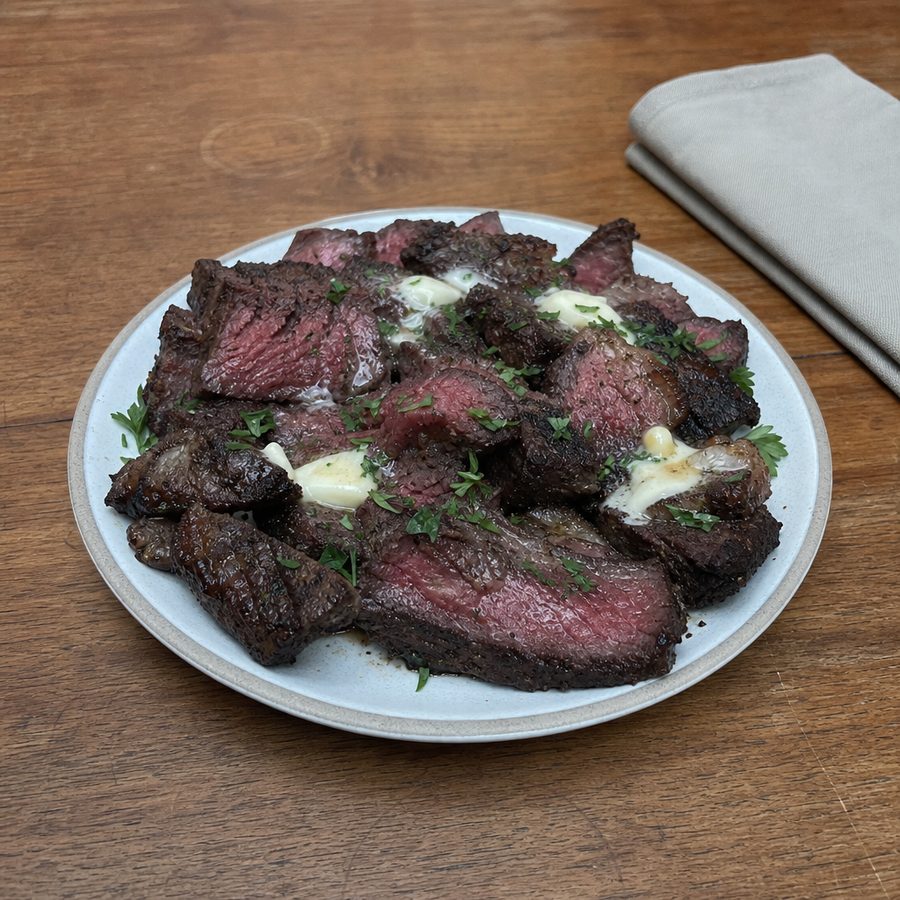
Ingredients
- 4 elk steaks (about 8 oz each)
- 6 tbsp butter
- 1 tsp salt
Instructions
- Temper and season: Take the elk steaks out of the refrigerator and let them sit at room temperature until the chill is off, about 30 to 45 minutes. Pat them completely dry with paper towels, then season all over with salt, pressing it gently into the surface.
- Heat the skillet: Set a heavy cast-iron or stainless skillet over high heat and let it get screaming hot, until you see the first faint wisps of smoke rising off the dry surface. A hot pan is what builds the crust on a cut like this, so give it a few minutes.
- Sear the first sides: Lay the steaks in the dry pan without crowding them and let them sear undisturbed for about 1 1/2 to 2 minutes, until a deep brown crust forms. Flip once and sear the second side for another 1 1/2 to 2 minutes.
- Add butter and baste: Add the butter to the pan and let it foam. Tilt the pan slightly so the butter pools, then spoon it continuously over the steaks for the last minute of cooking. Pull them at 125 to 130°F (52 to 54°C) on an instant-read thermometer for medium-rare; because elk firms up so fast, do not take it past medium-rare or it turns dry and tough.
- Rest and serve: Move the steaks to a warm plate and let them rest for 5 minutes so the juices settle before you cut. Spoon any browned butter left in the pan over the top and serve.
Variations
- Tallow sear: Sear the steaks in a thin film of rendered beef tallow instead of a dry pan, then finish with the butter as written. The tallow gives an even deeper browned, beefy edge to the crust.
- Cheese crust: In the last minute, shower the top of each steak with finely grated hard aged cheese so it melts into the butter and crust. This leans harder into the dairy already in the dish.
- Bone marrow finish: Roast a split marrow bone until the marrow is soft, then spread the warm marrow over the rested steak in place of, or alongside, the basting butter for a richer, more unctuous bite.
- Egg on top: Fry an egg in the same butter after the steak comes out and slide it onto the resting meat so the yolk runs into the crust. This adds egg to the plate.
- Different cut: Swap the elk for another red-meat steak such as bison or venison, cut to a similar thickness. Cook it the same way and keep it at medium-rare, since these cuts behave the same way and dry out fast.
Storage & Leftovers
Refrigerator: store leftover steak in an airtight container in the refrigerator for up to 3 to 4 days. Slice it only when you are ready to eat, since whole pieces hold their moisture better than cut ones.
Reheating: because the meat is already cooked and still rare, gentle heat is everything. Warm slices in a skillet with a little butter over low heat just until they lose their chill, or eat them cold. High heat or a microwave will push it past medium-rare and dry it out.
Make-ahead: you can salt the steaks and hold them uncovered in the refrigerator up to a day in advance, which dries the surface for an even better crust; simply bring them to room temperature before searing.
Notes & Tips
- Buy the right thickness: Ask for steaks cut at least an inch thick. Thin elk steaks go from raw to overdone almost instantly, and thickness is your only buffer for getting a real crust while keeping the center rare.
- Dry surface, better crust: The single biggest lever on the crust is a dry surface. Pat the steaks hard with paper towels before salting, and if you have time, let them sit uncovered in the refrigerator so the outside dries further.
- Trust a thermometer: With so little fat, the window between perfect and overcooked is tiny. An instant-read thermometer pulled at 125 to 130°F (52 to 54°C) takes the guesswork out far better than pressing the meat or watching the clock.
- Use clarified butter for a hotter sear: If your butter browns too fast and threatens to burn during basting, clarified butter or ghee has the milk solids removed and takes more heat before it scorches. It is an easy swap that keeps the fat from turning bitter.
- Rest on a warm plate: Rested meat that sits on a cold plate loses too much heat by the time you eat. Warm the serving plate under hot tap water and dry it, so the five-minute rest does not leave the steak lukewarm.
- Salt to taste at the table: Elk's flavor is clean and mild, so taste a slice before adding more. A final pinch of flaky salt on the cut surface, where it clings, sharpens the meat without oversalting the whole steak.
Nutrition & Mindful Eating
- Elk, butter and salt work as a trio because each one covers what the others leave. The meat brings a deep, slightly sweet flavor, the butter rounds it out and keeps the surface glossy, and the salt is what draws the meat's own savoriness up to the top.
- Elk is close-grained and firm with a clean, faintly sweet flavor and a fine texture that slices beautifully, and it is dense with complete protein and the heme iron that dark red meat carries.
- Because the grain is so fine, elk cooks quickly and is best pulled a shade earlier than you think. A hard sear on both sides and a few minutes off the heat is enough, and the rest stops the juices from running out onto the board.
- Butter added at the end of the sear foams, browns and turns nutty in the pan, and spooned back over the steaks it gives the crust a rich sheen and brings a little vitamin A with it.
- A steak like this holds you for a long stretch, and the protein along with the zinc and B12 in the meat is what does it. Cut thick slices across the grain and it stays tender all the way through.
- As you eat, notice the dark crust against the soft interior and the way the browned butter sits over the top of it, and give the steak your full attention for the few minutes it takes to finish.
Frequently Asked Questions
Why does my elk steak turn out dry and tough?
Almost always because it was cooked past medium-rare. Elk has very little marbling, so there is no fat to keep it juicy once the center climbs past about 130°F (54°C). Use a thermometer, pull it early, and rest it; if anything, err toward rare.
Does elk taste gamey?
Farm-raised and quality wild elk is mild, clean, and closer to beef than to strong game. A hot sear and the butter basting round out the flavor further. If you are sensitive to gaminess, keep the doneness to medium-rare, since overcooking is what tends to concentrate any liver-like notes.
Can I cook the steaks straight from frozen?
It is better to thaw them fully in the refrigerator first, then bring them to room temperature before searing. A frozen steak cooks unevenly, and with a cut this delicate you want tight control over the center so it stays rare while the crust forms.
Do I need to add oil to sear these?
No. You sear the steaks in a dry, screaming-hot pan and add the butter only at the end for basting. Adding butter at the start would just burn it during the long, high-heat sear before the crust is set.