
Seared Lamb Chops in Butter
Lamb loin chops seared hard until the fat cap crisps, then basted with melted butter for a rich, nutty finish and a rosy center.
Why You'll Love This Recipe
These seared lamb chops are for anyone who wants a satisfying dinner on the table in minutes, with almost nothing to shop for and nothing to chop. Lamb loin chops are the small, tender T-bone-shaped cuts from along the back, and they reward fast, hot cooking. This is a weeknight-simple plate with three things worth getting right: a deeply browned crust, a crisp band of rendered fat, and a rosy, tender center.
A bone-dry, hard sear, then a finishing baste of butter. Searing in a very hot dry skillet builds the brown crust and deep flavor that come from the surface of the meat browning; it is worth taking the extra moment to stand the chops on their fat edge so that fat renders and crisps rather than staying soft. The butter goes in only at the end, where it foams and browns gently and carries that nutty flavor over every surface as you spoon it back across the meat.
The dish is filling in a lasting way because lamb is rich in high-quality protein and its own fat, both of which are slow to digest and keep you full. Pulling the chops at a rosy medium-rare and letting them rest keeps them juicy rather than dry, and the salt plus browned butter is all the seasoning this cut needs. It is a small amount of food that eats big, which is exactly what you want from a quick, protein-forward dinner.
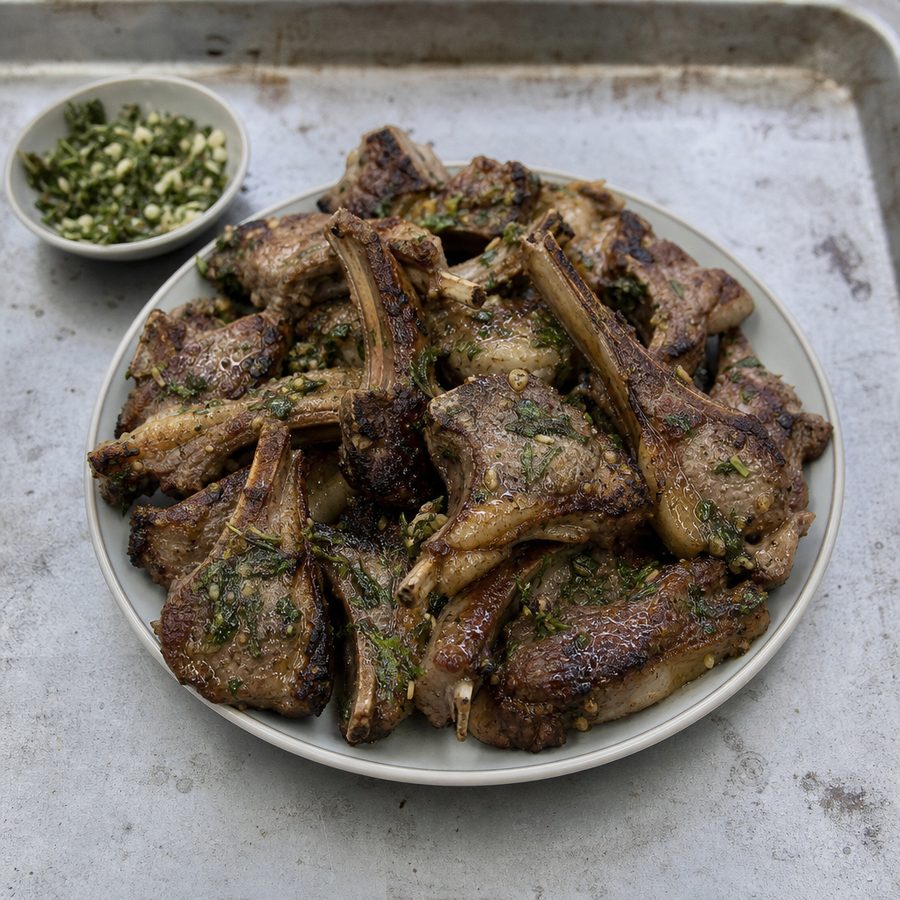
Ingredients
- 8 lamb loin chops
- 2 tbsp butter
- 1 tsp salt
Instructions
- Bring the chops to temperature: Take the lamb loin chops out of the refrigerator and let them sit at room temperature for about 20 minutes so they cook evenly. Pat both sides completely dry with paper towels; a dry surface is what lets the meat brown instead of steam.
- Season: Season the chops generously on both sides with salt, pressing it in lightly so it adheres to the surface.
- Heat the skillet: Set a heavy skillet, cast iron if you have one, over medium-high heat and let it get properly hot until a drop of water flicked onto the surface sizzles and vanishes instantly.
- Sear: Lay the chops in the dry hot skillet and sear undisturbed for 2 to 3 minutes per side, until each face is deeply browned. Then, using tongs, hold the chops on their edge to render the fat cap directly against the pan until it turns golden and crisp.
- Butter-baste: In the last minute of cooking, add the butter to the skillet. As it foams, tilt the pan slightly and spoon the melted butter over the chops repeatedly to coat them. For a rosy medium-rare center, pull the chops when a thermometer reads 130 to 135°F (54 to 57°C); they will climb a few degrees as they rest.
- Rest and serve: Transfer the chops to a plate and rest for 5 minutes so the juices settle and stay in the meat when you cut. Spoon any browned butter from the pan over the top and serve.
Variations
- Cheese-crusted finish: In the last minute, sprinkle finely grated hard cheese over each chop and let it melt and crisp against the hot meat. This adds dairy.
- Beef tallow sear: Swap the butter for a spoonful of beef tallow or rendered lamb fat for an even richer, more savory crust with a higher smoke point.
- Bone broth pan sauce: After resting the chops, pour a splash of animal bone broth into the hot skillet, scrape up the browned bits, and reduce it into a quick glossy sauce to spoon over the meat.
- Egg on the side: Fry an egg in the leftover browned butter in the pan and serve it alongside the chops for a heartier plate. This adds egg.
- Grilled instead of seared: Cook the salted chops over a hot grill instead of a skillet for a smokier crust, standing them on the fat edge to render, then finish with a knob of butter off the heat.
Storage & Leftovers
Refrigerate leftover chops in an airtight container once they have cooled, and use them within three to four days. Keep the browned butter with them if any is left, since it will firm up in the cold and melt again on reheating.
Reheat gently to keep the meat from drying out and toughening. Warm the chops in a skillet over low to medium-low heat with a little butter, turning once, just until heated through; a quick, gentle warm-up is far better than a long blast. Because these are best rosy in the center, they are also good served cold or at room temperature, sliced off the bone.
To get ahead, pat the chops dry and season them with salt up to a day in advance, then keep them uncovered on a plate in the refrigerator. Sitting salted and uncovered dries the surface further, which gives you an even better crust when you sear. Bring them back to room temperature before cooking.
Notes & Tips
- Buy chops of even thickness: Ask the butcher for loin chops cut to a consistent thickness, ideally around an inch. Even chops cook at the same rate, so you are not overcooking the thin ones while waiting on the thick ones.
- Use a thermometer: An instant-read thermometer takes the guesswork out. Pull at 130 to 135°F (54 to 57°C) for medium-rare, 140°F (60°C) for medium; the temperature rises a few degrees during the rest, so account for that carryover.
- Let the pan get truly hot: A properly preheated skillet is the difference between a browned crust and gray, steamed meat. If the chops do not sizzle sharply the moment they touch the pan, it was not hot enough.
- Do not crowd the skillet: Give each chop room. Packing them in drops the pan temperature and traps steam, which keeps the surface from browning. Sear in batches if your pan is small.
- Save the rendered fat: The lamb fat and browned butter left in the pan are pure flavor. Spoon them over the chops, or strain and refrigerate to cook eggs or other meat in later.
- Salt is the only seasoning you need: Season more generously than feels natural, since salt draws out moisture for a better crust and seasons the interior. Taste after resting and add a final pinch of flaky salt if it needs it.
- Butter-braised shanks: Trade the loin chops for four lamb shanks, brown them all over in the butter in a Dutch oven, then cover and braise at 300°F for about two and a half hours, until the meat pulls easily from the bone. Skim the fat, reduce the juices in the pot, and swirl in a little more butter for a glossy jus.
Nutrition & Mindful Eating
- Lamb, butter and salt is a short list and the pan does the rest. The chops render some of their own fat, the butter joins it and browns, and the salt goes on early so it has time to work into the surface.
- Lamb loin chops carry a distinct flavor, faintly grassy and a little sweet, that stands on its own in a hot pan, and the meat is dense with complete protein and the heme iron and zinc lamb is known for.
- The strip of fat along the edge of each chop is worth its own minute. Held against the pan with tongs until it turns golden, it renders down and gives you both a crackling edge to bite through and a layer of lamb fat to cook the rest of the chop in.
- Butter foams up around the chops and browns as the milk solids toast, which is where the nutty smell comes from, and tilting the pan to spoon it back over builds a glossy, deeply savory surface, with a little vitamin A riding along.
- Cooking these on the bone is what keeps the meat next to it juicy, and it also leaves you something to pick up at the end. The bite closest to the bone is the best one on the plate and it is worth going after with your hands.
- As you eat, work from the outside toward the bone and notice how the crisp fat edge tastes against the pink center, and keep the pace slow enough that you are still tasting it at the last bite.
Frequently Asked Questions
How do I know when the chops are done without cutting into them?
Use an instant-read thermometer inserted into the thickest part away from the bone. Around 130 to 135°F (54 to 57°C) gives a rosy medium-rare; 140°F (60°C) is medium. Remember the temperature keeps climbing a few degrees while the chops rest, so pull them just before your target.
Why did my chops turn out gray instead of browned?
Almost always it is a pan that was not hot enough or chops that were not dry. Pat them thoroughly dry, get the skillet hot enough that the meat sizzles sharply on contact, and avoid crowding, which traps steam and keeps the surface from browning.
My butter turned dark and smelled nutty. Did I burn it?
If it is golden-brown and smells toasty and nutty, that is browned butter and it is delicious spooned over the meat. Only if it turns very dark, smells acrid, and looks black has it burned; in that case wipe the pan and add fresh butter for the final baste.
Can I cook loin chops straight from the refrigerator?
You can, but they cook more evenly if you let them sit at room temperature for about 20 minutes first. Cold centers tend to leave the outside overcooked before the middle warms up, and a short rest on the counter gives you a more even rosy interior.