
Scallop Cakes With Lemon and Chive
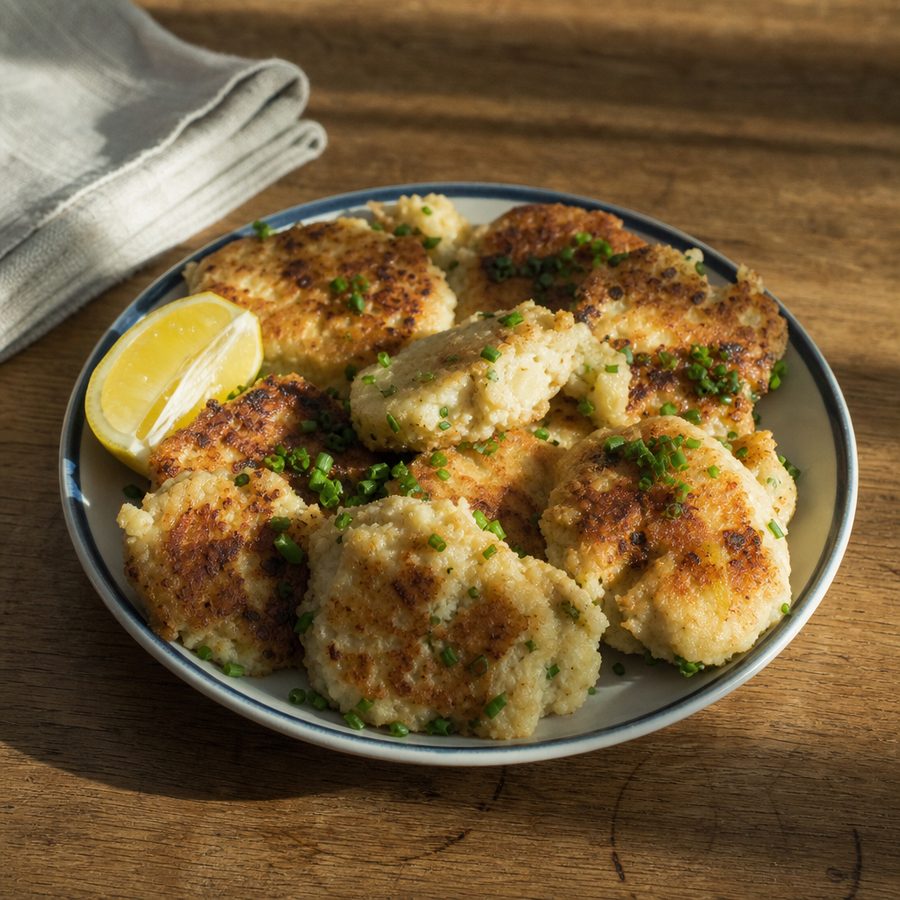
Tender baked cakes of chopped scallops bound with egg and almond flour, brightened by lemon juice, fresh chives, and minced shallot for a sweet, briny bite.
Why You'll Love This Recipe
These are delicate, refined little cakes for anyone who wants something more special than a standard protein snack. Sweet, briny scallops carry the whole dish, so it feels like a small plate you would order out, yet it comes together with a short list of fresh ingredients and a single sheet pan. It suits a light lunch, an elegant starter, or a between-meal bite when you want real food rather than something from a wrapper.
Do less to the scallops than you think. Searing the scallops first drives off surface moisture and builds a little golden flavor, and pulsing them only until they are flecked, not pureed, keeps a tender bite instead of a rubbery paste. Almond flour and egg do just enough binding to hold the cakes without masking the seafood, while lemon juice, chives, and shallot lift the natural sweetness of the scallops and keep each bite bright. A short rest before shaping lets the almond flour soak up moisture so the cakes hold their form in the oven.
Sweet, high-quality seafood protein is almost the whole build here, which is filling and slow to leave you hungry, while the herbs and citrus keep every bite tasting fresh rather than heavy. There is no breading or heavy batter, so the flavor stays clean and the texture stays light. It is the kind of snack that feels indulgent but leaves you steady and clear afterward.
Ingredients
- 11 oz cooked scallops, chopped
- 1 egg
- 1/3 cup almond flour
- 3 tbsp chopped chives
- 1 tbsp lemon juice
- 1 small shallot, minced
Instructions
- Cook the scallops: Pat the scallops very dry with paper towels so they brown rather than steam. Heat a lightly oiled skillet over medium-high until it shimmers, then add the scallops in a single layer and sear until opaque through and lightly golden, about 2 minutes per side. Transfer to a plate and let them cool until you can handle them.
- Preheat and prep the pan: Preheat the oven to 400°F (200°C) and line a baking sheet with parchment paper.
- Prep the aromatics: Peel and finely mince the shallot. Finely chop the chives. Squeeze the lemon and set the juice aside.
- Pulse the scallops: Add the cooled scallops to a food processor and pulse in short bursts until they are broken into small, even flecks with some texture still visible. Stop before it turns into a paste, or the cakes will be gummy.
- Mix the batter: Scrape the pulsed scallops into a bowl. Add the egg, almond flour, chopped chives, lemon juice, and minced shallot, and fold gently with a spatula until the mixture holds together when pressed. Let it rest a few minutes so the almond flour absorbs moisture and firms up.
- Shape the cakes: With clean, slightly damp hands, scoop portions of the mixture and press each into a small, compact patty about a half-inch thick. Set them on the lined baking sheet, spaced apart.
- Bake: Bake for about 16 minutes total, carefully flipping each cake once at the halfway mark, until the tops are golden and the cakes feel set and springy rather than soft. Let them rest a couple of minutes on the sheet before serving so they firm up.
Variations
- Fresh herb swap: Trade the chives for finely chopped dill or tarragon for a different herbal note that still pairs naturally with the scallops.
- Crab blend: Fold in some lump crabmeat along with the scallops for a richer seafood flavor and a flakier texture; this adds another shellfish.
- Gentle heat: Stir a pinch of cayenne or a little Old Bay seasoning into the mixture for a warm, savory edge that plays off the sweet scallops.
- Citrus lift: Add a little finely grated lemon or orange zest to the batter for a brighter, more aromatic finish alongside the juice.
- Creamy dipping sauce: Serve the cakes with a quick sauce of plain yogurt whisked with lemon and chopped herbs; this adds dairy.
Storage & Leftovers
Store fully cooled cakes in an airtight container in the refrigerator, where they keep well for up to three days. Keep them in a single layer or separated with parchment so they do not stick together or lose their shape.
To reheat, warm them in a 350°F (175°C) oven or toaster oven for a few minutes until heated through and the surface crisps again. Avoid the microwave if you can, since it softens the crust and can make the scallops rubbery.
To get ahead, mix the batter and shape the cakes, then keep them uncooked and covered in the refrigerator for up to a day before baking. You can also freeze baked, cooled cakes in a sealed container and reheat straight from frozen in the oven until hot in the center.
Notes & Tips
- Buy dry-packed scallops: Look for dry-packed scallops rather than wet-packed ones soaked in solution; they sear better and taste sweeter instead of watery and salty.
- Dry them well: Pat the scallops thoroughly dry before searing. Surface moisture is the enemy of browning, and drier scallops give the cakes more flavor.
- Do not over-pulse: Pulse in short bursts and stop while you can still see small flecks of scallop. Over-processing turns the mixture pasty and makes the finished cakes dense and springy in a bad way.
- Cook a tester first: Before shaping the whole batch, cook one small patty to check seasoning and texture, then adjust the lemon or salt in the rest of the mixture.
- Fix a loose mixture: If the batter feels too wet to hold a patty, work in a little more almond flour and let it rest a few minutes before shaping.
- Serve them bright: Serve the cakes warm with extra lemon wedges and a handful of dressed greens; a squeeze of citrus right before eating keeps the seafood tasting fresh.
Nutrition & Mindful Eating
- The scallops, the egg and the almond flour work as one thing here. The scallop meat is what you taste, the egg holds the cakes together so they stay tender, and the almond flour gives them just enough structure to take a crust.
- Scallops are sweet and close-grained, and they turn from translucent to opaque almost as soon as they meet heat, which is why these cakes stay soft in the middle. That quick-cooking meat carries protein dense enough to make a small cake eat like real food.
- Almond flour is fine, pale and faintly sweet, and it toasts along with the outside of the cake, bringing a nutty edge and the vitamin E and unsaturated fat that almonds carry.
- Chives, shallot and lemon are the fresh part. The shallot softens into the mix and goes sweet, the chives stay green and oniony, and a spoonful of lemon juice lifts everything just before the cakes hit the heat.
- A couple of these hold you longer than their size suggests, and the protein in the scallops and egg is doing most of that work, which is why they eat like a small meal rather than something to pick at.
- As you eat, notice how the crust gives way to something still sweet and tender underneath, and let the lemon and the chive register between bites rather than finishing the plate standing over the pan.
Frequently Asked Questions
Can I use frozen scallops?
Yes. Thaw them fully in the refrigerator, then pat them very dry before searing. Excess water from thawing will keep them from browning and can make the mixture too wet to shape.
Why did my cakes fall apart?
Usually the mixture was too loose or the scallops were over-pulsed into a paste. Fold in a little more almond flour, let the batter rest so it firms up, and press each cake compactly before baking.
Can I pan-fry them instead of baking?
Yes. Cook them in a lightly oiled skillet over medium heat, a few minutes per side, until golden and set through. Handle them gently when flipping, since they are delicate.
Bay scallops or sea scallops?
Either works. Larger sea scallops give more of that sweet, meaty flavor once chopped, while small bay scallops are fine too; just be sure to cook and cool them before pulsing.