
Seared Scallops in Brown Butter with Pecans
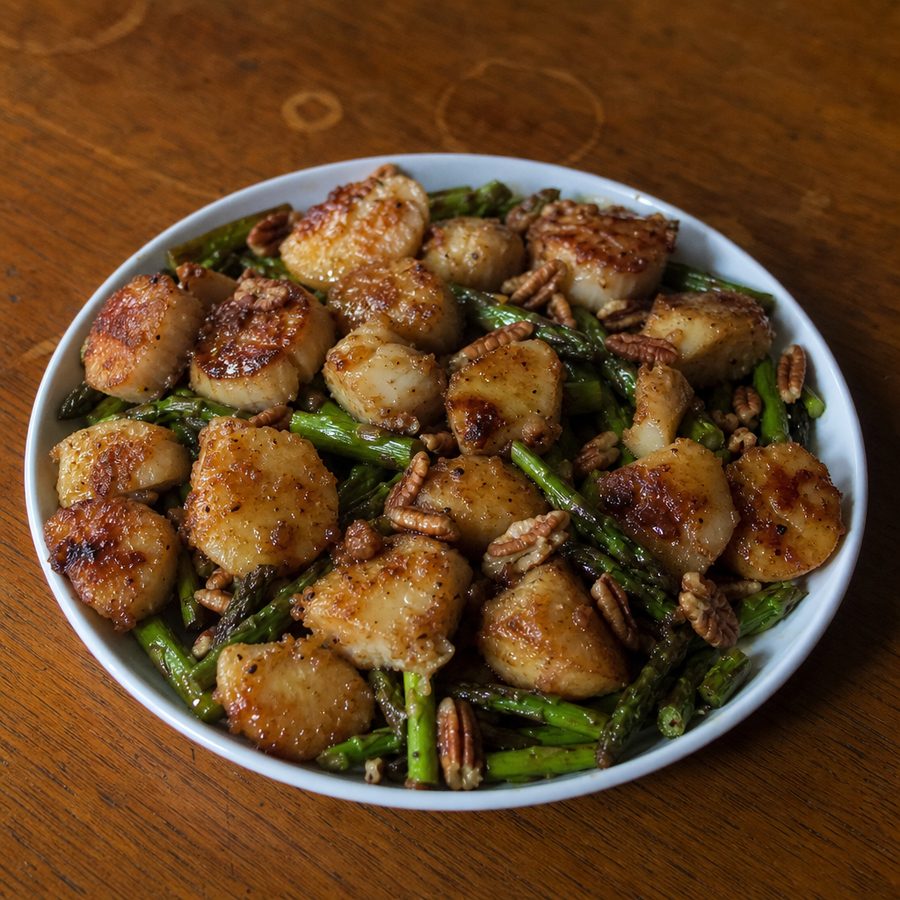
Plump sea scallops seared until golden, then finished in nutty brown butter with toasted pecans, garlic, lemon, and parsley alongside crisp-tender asparagus.
Why You'll Love This Recipe
This is a restaurant-style plate that comes together in one pan in under half an hour, which makes it a strong choice for a special weeknight dinner or a low-effort dinner-party main. It leans on a short list of ingredients and rewards good technique rather than long cooking, so it suits a cook who wants something impressive without a lot of steps or cleanup. It is not a plate to cook while talking to guests, though, since scallops go from perfect to rubbery inside a minute and the browning butter needs watching.
Brown butter is the whole reason. As butter melts past the foaming stage, its milk solids toast and take on a deep, nutty flavor that plain butter never has, and the chopped pecans amplify that same toasted quality. A hot pan and dry scallops are the other half of the equation: moisture is the enemy of a good sear, so patting them dry and leaving them undisturbed is what builds the golden crust that carries the whole plate. A squeeze of lemon at the end cuts the richness and keeps everything bright.
It is satisfying because sweet, tender scallops are a concentrated source of protein, while the butter, olive oil, and pecans bring richness and staying power that keep the plate from feeling thin. The asparagus adds a fresh, crisp contrast and fiber, and the parsley and lemon lift the whole thing so it tastes clean rather than heavy. It is a nourishing meal that still feels like a treat.
Ingredients
- 1 lb large sea scallops
- 6 1/2 tbsp butter
- 2 tbsp olive oil
- 1 bunch asparagus, trimmed
- 1/2 cup pecans, chopped
- 1 tbsp lemon juice
- 2 cloves garlic, minced
- 2 tbsp chopped parsley
Instructions
- Prep the aromatics and vegetables: Snap or trim the woody ends off the asparagus. Roughly chop the pecans. Mince the garlic and finely chop the parsley. Set everything within reach of the stove, because the brown butter comes together quickly once you begin.
- Dry and season the scallops: Pull off the small side muscle from each scallop if it is still attached. Pat the scallops very dry on all sides with paper towels. Surface moisture is what keeps them from browning. Leave them unseasoned, because sea scallops come out of the water already briny and the browned butter finishes them.
- Sear the scallops: Heat the olive oil in a large skillet over medium-high heat until it shimmers. Lay the scallops in the pan without crowding and leave them undisturbed for about 2 minutes, until a deep golden crust forms. Flip and sear the second side about 2 minutes more, until just opaque in the center and firm but still springy. Transfer to a plate.
- Brown the butter: Lower the heat to medium and add the butter to the same pan. As it melts and foams, add the garlic and chopped pecans and swirl the pan constantly. In 2 to 3 minutes the foam will subside and the milk solids will turn golden and smell nutty; watch closely, because it goes from browned to burnt fast.
- Cook the asparagus: Add the trimmed asparagus to the brown butter and toss to coat. Cook, turning occasionally, for 3 to 5 minutes depending on thickness, until the spears are bright green and crisp-tender when pierced with a knife tip.
- Finish and serve: Return the scallops and any resting juices to the pan. Stir in the lemon juice and chopped parsley, then spoon the pecan brown butter over the scallops to warm them through. Serve right away, with the asparagus alongside and the pan sauce poured over the top.
Variations
- Shrimp instead of scallops: Swap in peeled large shrimp and sear them until pink and opaque, about a minute or two per side. This keeps the dish shellfish-based with a similar quick-cooking approach.
- Sage brown butter: Drop a few fresh sage leaves into the butter as it browns; they crisp up and add an earthy, aromatic note that pairs well with the nutty pecans.
- Green beans in place of asparagus: Use trimmed green beans instead of asparagus, cooking them a few minutes longer until crisp-tender. It is an easy year-round substitute when asparagus is out of season.
- Walnut or almond swap: Replace the pecans with chopped walnuts or sliced almonds. This still adds tree nuts, but each brings its own toasted character to the brown butter.
- Capers and extra lemon: Stir a spoonful of rinsed capers into the finished pan sauce and add a little extra lemon juice for a brighter, briny, more piccata-like finish.
Storage & Leftovers
Store leftover scallops, asparagus, and pan sauce together in an airtight container in the refrigerator for up to two days. Seafood is best eaten soon after cooking, so plan to finish leftovers quickly for the best texture and flavor.
Reheat gently to avoid turning the scallops rubbery. Warm them in a skillet over low heat with a little of the butter, just until heated through, or cover and use short bursts in the microwave at reduced power. Avoid high heat, which overcooks the scallops and tightens them.
To get ahead, chop the pecans, mince the garlic, chop the parsley, and trim the asparagus earlier in the day and refrigerate them. With the prep done, the searing and brown butter take only minutes, so you can cook everything fresh right before serving.
Notes & Tips
- Buy 'dry' scallops: Look for scallops labeled dry-packed rather than wet-packed. Wet scallops are treated with a solution that makes them release liquid in the pan and steam instead of sear. If you can only find wet ones, pat them especially dry and let them sit uncovered on paper towels first.
- Don't move them while they sear: Once a scallop hits the hot oil, leave it alone. Poking or flipping early tears the forming crust. When it is ready to turn, it will release from the pan without sticking.
- Watch the butter by smell and color: Brown butter is done when the foam settles, the flecks at the bottom turn golden brown, and it smells toasty and nutty. Pull it off the heat the moment you get there, since the milk solids scorch within seconds of browning.
- Match asparagus timing to thickness: Thin spears cook in a couple of minutes; thick ones need longer. Test with a knife tip and aim for crisp-tender and bright green, not floppy. For very thick spears, peel the lower ends first so they cook evenly.
- Toast the pecans for more depth: The pecans toast in the butter, but if you want an even deeper flavor you can dry-toast them in the pan first, then set aside and add back when you brown the butter so they don't burn.
- Serve it right away: This plate is at its best the minute it's done, while the scallops are hot and the butter is still glossy. Have plates and any sides ready before you start searing so nothing sits and cools.
Nutrition & Mindful Eating
- The scallops, the browned butter and the pecans are the three things that make this plate. The scallops stay sweet and soft, the butter goes nutty as its solids toast, and the pecans give the whole thing something to crunch against.
- Butter taken past melted is a different ingredient. The solids brown and turn the fat toasty and almost caramel, and that fat carries vitamin A along with the flavor it spreads over every scallop on the plate.
- Pecans toasted in the pan turn deeply fragrant and stay crisp under the sauce, and the unsaturated fat and manganese they carry ride along inside a handful that mostly earns its place on texture.
- Asparagus goes in whole and comes out squeaking against the tooth, still green through the center, and the folate and fiber it brings arrive with that grassy spring flavor rather than separately from it.
- Lemon, garlic and parsley go on at the end where the heat cannot dull them. The acid cuts straight through the browned butter, and that is what keeps a dish this rich tasting fresh right to the last bite.
- As you eat, catch the smell of the butter before anything else, then the way the asparagus snaps against the soft scallop, and take the plate sitting down so the meal has room to be a meal.
Frequently Asked Questions
How do I know when the scallops are done?
Perfectly cooked scallops are golden and crusted on the outside and just opaque in the center. They should feel firm but still have a slight spring when pressed. They cook fast, so pull them at about two minutes per side; overcooking makes them tough and rubbery.
Can I use frozen scallops?
Yes. Thaw them fully in the refrigerator overnight or in a sealed bag under cold running water, then pat them very dry before searing. Frozen scallops carry extra moisture, so drying them thoroughly is even more important for a good crust.
My butter burned instead of browning. What happened?
Brown butter turns from golden and nutty to burnt in a matter of seconds, especially over high heat. Keep the heat at medium, swirl the pan constantly, and rely on your nose and eyes: as soon as it smells toasty and the solids look golden, take it off the heat.
What can I serve alongside this?
The asparagus cooks right in the pan, so the plate is fairly complete on its own. If you want more on the table, a simple green salad or cauliflower mash rounds it out and soaks up the extra brown butter nicely.