
Seared Scallops With Cauliflower Puree and Asparagus
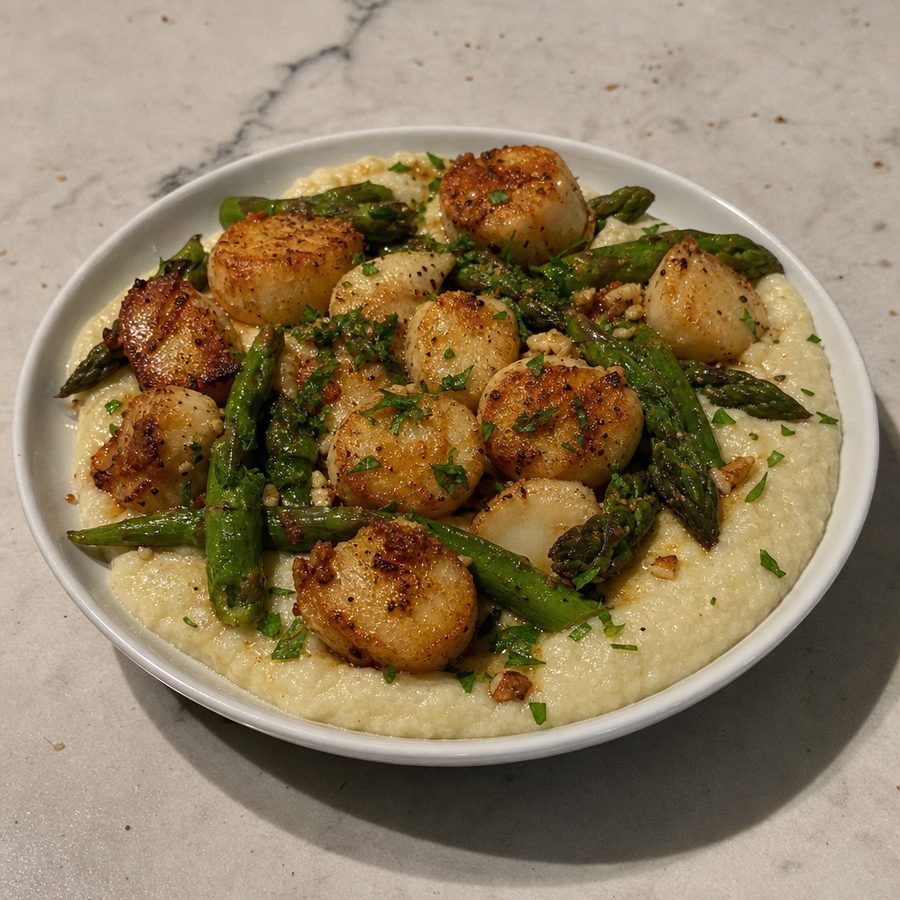
Golden seared scallops rest on a silky cauliflower puree with roasted asparagus, a bright, protein-rich dinner that comes together in about thirty-five minutes for four.
Why You'll Love This Recipe
Something that feels special without keeping you in the kitchen all evening is a narrow target, and scallops hit it. Scallops sound fancy, and they read that way on the plate, but they cook in minutes and pair with pantry staples you likely already have. It suits a quiet date night, a small celebration, or any weeknight when you're low on carbs and want protein that still feels generous and satisfying.
The method works because each part cooks on its own clock. Roasting the asparagus and simmering the cauliflower happen while your hands are free, so the puree and vegetables are ready before the scallops ever hit the pan. Drying the scallops and using a hot skillet is what builds that deep golden crust in two to three minutes a side. Adding garlic only after the flip keeps it from scorching in the high heat.
Three components share the plate and no two of them are alike. The scallops are sweet and firm with a crisp exterior, the cauliflower puree is warm and silky with butter and parmesan, and the roasted asparagus adds a green, slightly charred bite. Lemon juice in the puree cuts the richness so nothing feels heavy, and the protein in the scallops holds you without a pile of starch on the plate.
Ingredients
- 1 1/4 lb sea scallops, patted dry
- 1 medium head cauliflower, chopped
- 1 lb asparagus, trimmed
- 2 tbsp butter
- 3 tbsp olive oil, divided
- 4 cloves garlic
- 1/4 cup grated parmesan
- 1 tbsp lemon juice
Instructions
- Roast the asparagus: Heat the oven to 425°F (220°C). Toss the trimmed asparagus with 1 tablespoon olive oil and spread it on a sheet pan in one layer. Roast for 10 to 12 minutes, until the spears are tender with a little char at the tips but still have some snap.
- Simmer the cauliflower: While the asparagus roasts, put the chopped cauliflower and 2 smashed garlic cloves in a pot, cover with water, and bring to a boil. Simmer for 10 to 12 minutes, until a knife slides through a floret with no resistance. Drain very well, since cauliflower holds a surprising amount of water and any of it left behind makes a puree that runs across the plate.
- Blend the puree: Add the drained cauliflower and garlic to a blender or food processor with the butter, parmesan, and lemon juice. There is no salt in the list, because the parmesan brings enough of its own. Blend until completely smooth, 30 to 60 seconds, since cauliflower goes grainy rather than silky if it is only half worked. If it looks stiff, add a spoonful of warm water. Cover to keep it warm.
- Prep the scallops: Pat the scallops fully dry on both sides with paper towels; this is what lets them brown instead of steam. Leave them unseasoned, since sea scallops come out of the water already briny. Mince the remaining 2 garlic cloves and set them near the stove.
- Sear the scallops: Heat the remaining 2 tablespoons olive oil in a large skillet over medium-high until it shimmers. Add the scallops flat-side down without crowding and sear undisturbed for 2 to 3 minutes, until a deep golden crust forms, because a full pan drops the heat and scallops that release their water will poach instead of browning. Flip, add the minced garlic, and cook 1 to 2 minutes more, until the centers are just opaque and firm.
- Plate: Spread the warm cauliflower puree on each plate, set the asparagus alongside, and arrange the scallops on top. Spoon any garlicky pan oil over the scallops and serve right away while the crust is crisp.
Variations
- Shrimp instead of scallops: Swap in a pound of raw shrimp, searing them two to three minutes total until pink and curled, for a more budget-friendly plate.
- Herbed puree: Blend a handful of fresh chives or parsley into the cauliflower for a green, herby finish.
- Brown butter drizzle: Cook the butter until it smells nutty and turns amber, then spoon it over the scallops instead of stirring it into the puree.
- Broccoli swap: Trade the asparagus for broccoli florets roasted at the same temperature for 15 to 18 minutes until the edges crisp.
- Chili-lemon kick: Add a pinch of red pepper flakes to the searing oil and finish with extra lemon for a brighter, warmer edge.
Storage & Leftovers
Store leftovers in an airtight container in the fridge for up to two days. Keep the scallops separate from the puree and asparagus if you can, since the crust softens once it sits against anything moist. The puree holds best of the three and will thicken as it chills.
Reheat the scallops gently in a skillet over medium heat for just a minute or two per side, only long enough to warm through. Overcooking is the real risk here, so pull them the moment they're hot. Warm the puree in a small pot with a splash of water, stirring so it loosens back to silky.
You can make the cauliflower puree up to two days ahead and refrigerate it, then reheat it while the asparagus roasts. The asparagus can also be trimmed the day before. I'd always sear the scallops fresh, though, since that crust is the whole point and it doesn't survive storage.
Notes & Tips
- Dry means brown: Pat the scallops completely dry before they touch the pan, because any surface moisture steams them instead of searing them.
- Don't crowd: Leave space between scallops in the skillet; if they touch, they trap steam and won't build a crust.
- Listen for the sear: You want a steady sizzle when the scallops go in, so wait until the oil shimmers before adding them.
- Drain the cauliflower well: Shake off every bit of water after simmering, or the puree turns thin and loses its silky body.
- Leave them alone: Resist moving the scallops for the first few minutes; that undisturbed contact is what forms the golden crust.
- Check for the side muscle: Peel off the little rectangular tab on the side of each scallop if it's still attached, since it turns rubbery when cooked.
Nutrition & Mindful Eating
- The scallops, the puree and the asparagus are built to be eaten together in one forkful. The puree is savory and smooth, the asparagus gives the plate something green and snapping, and the scallops bring the sweetness that ties both to each other.
- Parmesan is what turns this puree savory. A little of it melts into the hot cauliflower and brings a salty, nutty depth along with the calcium that hard aged cheese carries, and it is the reason people go back for a second spoonful.
- Cauliflower simmered soft blends into something genuinely creamy, with a mild sweetness that only comes out once the raw edge is gone, and the fiber and vitamin C stay right there in the puree.
- Asparagus cooked just until it squeaks keeps its color and its grassy flavor, and the folate and fiber in the spears arrive with that bite rather than as a separate thing you have to think about.
- Garlic simmers with the cauliflower and lemon goes into the blender with it, so the puree is warm and bright at once. That squeeze of acid is what stops the butter and the cheese from sitting heavy.
- As you eat, drag a scallop through the puree and take a piece of asparagus in the same bite, and slow down enough that you notice the lemon arriving after everything else.
Frequently Asked Questions
Can I use frozen scallops?
Yes, frozen scallops work well and are often fresher than the thawed ones at the counter. Thaw them overnight in the fridge, then pat them very dry before searing. Any extra moisture will keep them from browning, so take your time with the paper towels.
My scallops came out rubbery. What happened?
They were most likely overcooked. Scallops only need about two to three minutes on the first side and one to two after the flip; pull them as soon as the centers turn just opaque and firm. They keep cooking a little off the heat, so err on the early side.
Can I make this ahead for leftovers?
The cauliflower puree makes great leftovers and keeps for up to two days, and it reheats smoothly with a splash of water. I'd sear the scallops fresh rather than storing them, since the crust softens once cooked. If you do have extra, warm them gently and briefly.
What replaces the mashed potato?
Cauliflower puree, which gives you the same silky bed under the scallops without the starch. The whole plate is seafood and vegetables, with no meat or poultry anywhere in it.