
Seared Scallops over Cauliflower Puree with Chives
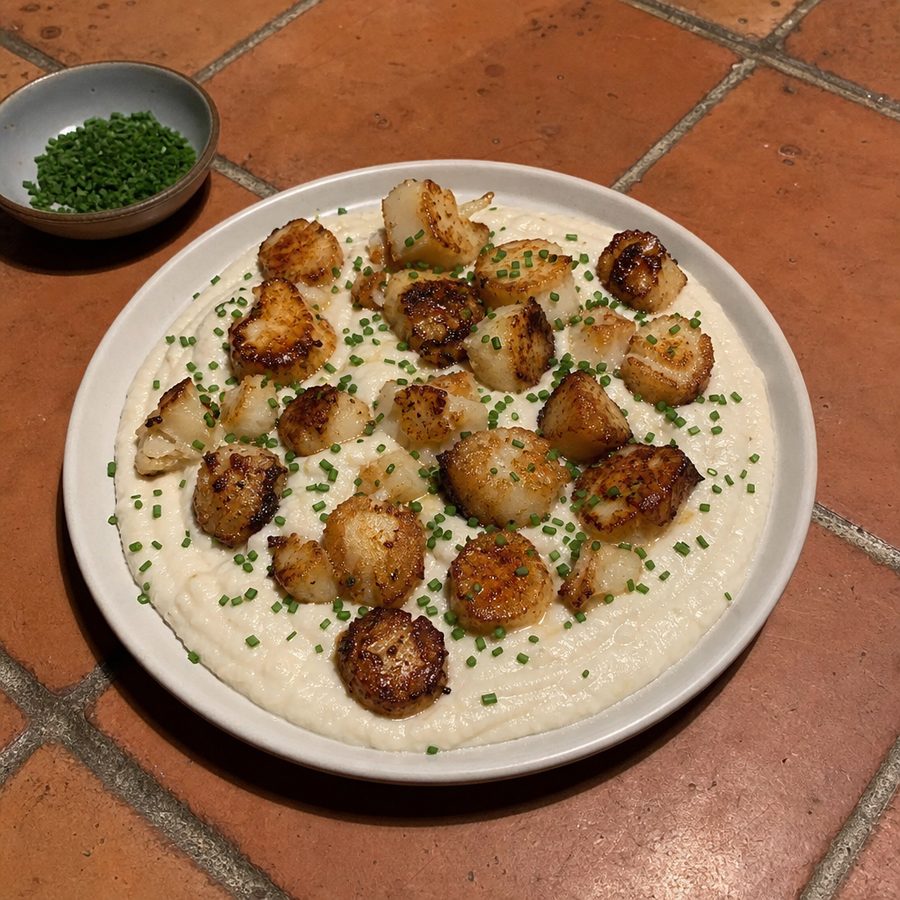
Golden pan-seared sea scallops rest on a silky olive-oil-and-coconut-milk cauliflower puree brightened with lemon and finished with a shower of fresh chives.
Why You'll Love This Recipe
This is a plate that looks and tastes like it came from a restaurant kitchen, yet it comes together in one skillet and a blender. Sweet, tender sea scallops sit on a warm cushion of pureed cauliflower, and the whole thing feels special enough for company while staying gentle and simple in its ingredients. It suits anyone who wants an elegant dinner without a long list of hard-to-find items, and anyone who is keeping their meals free of grains, dairy, and other common irritants.
The magic is in two techniques done well. First, the cauliflower is steamed until truly soft and then blended with olive oil and coconut milk, which gives the puree a glossy, whipped texture that stands in beautifully for a classic cream sauce. Second, the scallops go into a hot pan and are left alone, which is the only way to build that deep golden crust. Browning is purely about flavor and texture here, and drying the scallops first is what lets it happen. A squeeze of lemon in the puree keeps the richness from feeling heavy, and the chives add a fresh, oniony lift right at the end.
Scallops are sweet and protein-dense, so this dinner is filling without weighing you down, and the cauliflower puree brings a soft, comforting body along with fiber and gentle sweetness. The olive oil and coconut milk carry enough richness to make each bite satisfying, so a modest portion feels like plenty. It is the kind of meal that leaves you content rather than stuffed, and it plates prettily enough that eating it slowly comes naturally.
Ingredients
- About 1 1/3 lb sea scallops, patted dry
- 1 large head cauliflower, cut in florets
- 3 tbsp olive oil, divided
- 2 tbsp avocado oil
- 3 garlic cloves
- 1/3 cup coconut milk
- 3 tbsp minced chives
- 1 tbsp fresh lemon juice
Instructions
- Prep the aromatics and cauliflower: Cut the head of cauliflower into evenly sized florets so they cook at the same rate. Peel the garlic cloves and leave them whole. Mince the chives and set them aside for garnish, keeping them out of the pan, since they lose their perfume the moment they meet heat.
- Steam until very tender: Set the cauliflower florets and whole garlic cloves in a steamer basket over simmering water, cover, and steam until a knife slides through a floret with no resistance, about 12 minutes. You want them fully soft, not just fork-tender, so the puree turns out smooth rather than grainy.
- Blend the puree: Transfer the hot cauliflower and garlic to a blender or food processor. Add most of the olive oil, the coconut milk, and the fresh lemon juice. Blend until completely silky, stopping to scrape down the sides. If it is too thick to move, add a splash of the steaming water until it loosens into a smooth puree. Keep it warm, covered, while you sear.
- Dry the scallops: Pat the sea scallops very dry on all sides with paper towels, pressing gently. Surface moisture is what keeps a scallop from browning, so take a moment here. If any scallops have the small tough side-muscle attached, pinch it off and discard it, since it stays chewy however briefly it sees the pan.
- Heat the pan: Add the avocado oil and the remaining olive oil to a wide skillet, preferably stainless steel or cast iron, and set it over high heat. Heat it until the fat shimmers and thins out but stops short of smoking, which usually takes a minute or two.
- Sear the scallops: Lay the scallops in the pan without letting them touch, working in batches if needed so the pan stays hot. Leave them undisturbed and sear about 2 minutes, until a deep golden-brown crust forms on the underside. Flip once and sear the second side about 2 minutes more, until the sides look opaque and the centers are just barely firm to the touch. Move them to a plate right away so they do not overcook.
- Plate and finish: Spoon a pool of the warm cauliflower puree onto each plate and spread it out slightly with the back of the spoon. Arrange the scallops crust-side up on the puree and garnish with the minced chives, and do it the moment they leave the pan, because a crust sitting face down in a warm puree softens within a minute.
Variations
- Olive oil and lemon finish: Let the olive oil in the skillet heat until it shimmers before searing, then spoon a little over the plated scallops with an extra squeeze of lemon.
- Herb swap: Trade the chives for minced fresh tarragon or dill, both of which pair naturally with scallops and give the plate a different fragrance.
- Roasted garlic puree: Instead of steaming the garlic, roast the whole cloves until soft and caramelized, then blend them in for a sweeter, mellower flavor in the puree.
- Seared shrimp: Swap the scallops for large peeled shrimp, searing them just until pink and opaque; this changes the shellfish but keeps the same quick method.
- Citrus-forward plate: Finish with a little grated lemon zest along with the juice for a brighter, more aromatic lift against the rich puree.
Storage & Leftovers
Store leftover scallops and puree in separate airtight containers in the refrigerator for up to two days. Scallops are delicate and are best eaten soon after cooking, so keep this in mind if you are cooking ahead.
Reheat the puree gently in a saucepan over low heat, stirring in a splash of water or coconut milk to bring back its silky texture. Warm the scallops briefly and gently in a skillet over medium-low heat just until heated through, since high heat will make them rubbery and tough.
To get ahead, make the cauliflower puree up to two days in advance and refrigerate it, then reheat it while you sear the scallops fresh. The puree holds up well, and searing the scallops at the last minute is what keeps the crust and tenderness at their best.
Notes & Tips
- Buy dry-packed scallops: Ask for "dry" scallops at the fish counter rather than "wet" ones treated with a phosphate solution. Wet scallops release liquid in the pan and steam instead of browning, so dry-packed ones are worth seeking out for a proper crust.
- Dry them longer if you can: After patting the scallops, let them sit uncovered on a paper-towel-lined plate in the fridge for a while before cooking. The drier the surface, the faster and darker the sear.
- Don't crowd the pan: Give each scallop room and sear in batches if needed. Too many at once drops the pan temperature and they will steam rather than brown.
- Know when a scallop is done: A perfectly cooked scallop is golden outside and just opaque in the center with a slight spring when pressed. If the center still looks glassy, give it a few more seconds; if it feels firm and bouncy, pull it right away.
- Chase a smoother puree: A high-speed blender gives the silkiest result, but if yours leaves it grainy, keep blending and add the warm steaming water a little at a time until it turns glossy.
- Adjust the finish to taste: Taste the puree before plating and add a touch more lemon juice if it feels rich, or a small pinch more salt if it tastes flat. The seasoning of the puree is what balances the sweet scallops.
Nutrition & Mindful Eating
- Two textures do all the work here. The puree underneath is smooth enough to pour, and the scallops on top are deeply browned on both faces and still soft through the middle, so every bite carries a firm edge and a yielding one.
- Scallops are sweet and firm and cook in about the time it takes to turn them once, which is exactly why they get a hot pan and nothing crowding them. That fast-cooking meat carries protein dense enough to anchor a dinner plate on its own.
- Hot olive oil is what makes the crust possible. It takes real heat before it smokes, so the scallops brown rather than steam, and it brings vitamin E with it.
- Cauliflower blended with coconut milk turns pale and glossy and tastes faintly sweet, the coconut fat giving it enough body to sit under a scallop while the fiber and vitamin C from the florets stay in the bowl.
- Chives and lemon go on last and both stay raw. The chives give a sharp green bite, the lemon cuts the olive oil and the coconut, and the garlic steamed soft and blended into the puree is what you smell before any of it reaches the table.
- As you eat, start with the browned face of a scallop and notice how completely different it is from the soft center, then let the lemon and the chives land before you reach for the next one.
Frequently Asked Questions
How do I keep my scallops from sticking to the pan?
Make sure both the scallops and the pan are ready before they meet. Pat the scallops completely dry, get the fat hot so it shimmers, and then leave the scallops alone once they hit the pan. As the crust forms, the scallops naturally release from the surface; if one resists when you try to flip it, it usually needs a few more seconds.
Can I use frozen scallops?
Yes. Thaw them fully in the refrigerator overnight, then pat them very dry, since thawed scallops hold extra moisture that works against browning. Taking the time to dry them well makes all the difference in getting a good sear.
My puree came out watery. What happened?
This usually comes from adding too much liquid at once or not draining the cauliflower well after steaming. Blend the cauliflower with the olive oil and coconut milk first, then add any steaming water only a little at a time until it is silky but still holds its shape on the plate.
What can I serve with this to make it a fuller meal?
A simple pile of sauteed greens like spinach or a crisp green salad rounds out the plate nicely without competing with the delicate scallops. The puree already gives you a soft, comforting base, so a fresh vegetable on the side is all you need.