
Seared Sea Scallops in Butter
Plump sea scallops seared over high heat until they build a deep golden crust, then basted in nutty browned butter.
Why You'll Love This Recipe
This is a fast, restaurant-caliber plate built around one exceptional ingredient: sweet, briny sea scallops given a deep seared crust and a coat of browned butter. It suits anyone who wants a rich, protein-forward dinner that comes together in minutes, and it is a good choice for a cook who wants something that feels special without a long ingredient list or fussy technique. Leaning entirely on animal ingredients and salt, it is naturally free of grains, sugar, and produce.
The whole dish succeeds or fails on two things: dry scallops and a hot pan. Surface moisture is the enemy of a crust, because the water has to boil off before the surface of the scallop can brown, so patting them bone-dry and searing over high heat lets that browning happen quickly, before the inside overcooks. That browning is what creates the toasted, nutty, faintly sweet flavor on the crust; it builds flavor and texture and does not seal anything in. Finishing in butter that has been allowed to foam and turn golden layers on a second nutty note and gives you a ready-made sauce straight from the pan.
Scallops are sweet and remarkably high in protein, which makes this a satisfying plate that keeps you full without feeling heavy, while the butter adds richness, carries fat-soluble vitamins, and rounds out the natural sweetness of the shellfish. The contrast of a crisp, caramelized crust against a tender, just-set interior is what makes each bite feel indulgent. With nothing but scallops, butter, and salt on the plate, the clean flavor of the seafood itself stays front and center.
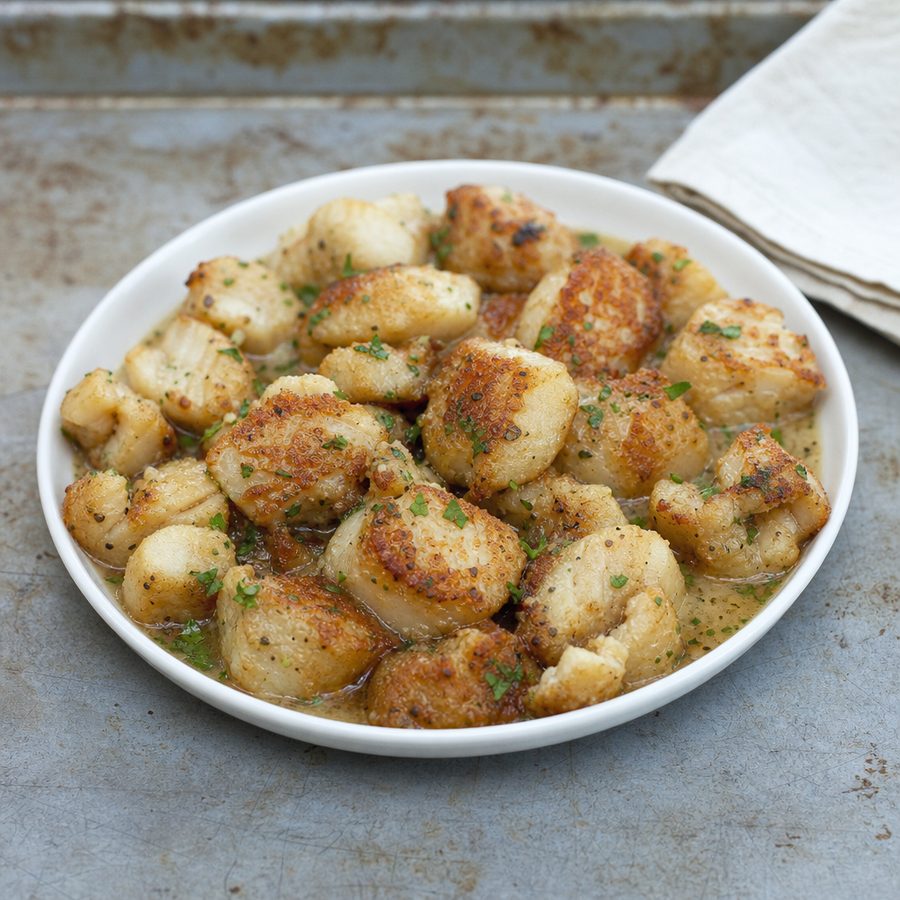
Ingredients
- 20 large sea scallops
- 8 tbsp butter
Instructions
- Prep the scallops: Look at the side of each scallop for a small, tough rectangular tab of muscle; if it is there, pinch it off and discard it, as it stays chewy when cooked. Pat every scallop bone-dry on all sides with paper towels, pressing gently, and leave them unseasoned, because sea scallops come out of the water already briny. Dry surfaces are what let a crust form; a wet scallop will steam and stay pale.
- Heat the pan and butter: Set a heavy stainless steel or cast iron skillet over high heat and let it get hot. Add part of the butter and let it melt and foam until it just stops bubbling and smells nutty; you want it hot enough that a scallop sizzles the moment it touches down.
- Sear undisturbed: Lay the scallops flat in the pan one at a time, leaving space between them so they do not touch; crowding traps steam and prevents browning. Do not move them. Let them sear for about 2 minutes, until the underside is a deep golden brown and the scallops release easily from the pan.
- Flip and baste: Turn each scallop with tongs or a thin spatula. Add the remaining butter and let it foam and turn golden brown. Tilt the pan slightly so the butter pools, and spoon it over the tops of the scallops for 1 to 2 minutes, until the sides look opaque and the scallops feel just firm with a slight spring; the very center should be barely translucent. Take them off the heat before they turn rubbery.
- Serve: Plate the scallops right away and spoon the warm browned butter from the pan over the top. Serve immediately, while the crust is still crisp.
Variations
- Deep browned butter: Let the finishing butter cook a little longer until it turns amber and the milk solids at the bottom go toasty brown, then spoon it over. This deepens the nutty, caramelized flavor without adding anything new.
- Bacon-fat sear: Render chopped bacon until crisp, remove it, and sear the scallops in the rendered fat instead of some of the butter, crumbling the bacon over the top to finish. This adds pork and a smoky, salty edge.
- Hard cheese finish: Grate a fine dusting of aged hard cheese over the hot scallops just before serving so it softens against the crust. This adds more dairy and a salty, savory note.
- Egg yolk crown: Crown each plated scallop with a warm, just-set egg yolk or a small fried egg so the rich yolk runs into the browned butter. This adds egg and makes the dish more luxurious.
- Duck fat sear: Swap some of the butter for duck fat when searing for a richer, more savory crust. This adds rendered poultry fat.
Storage & Leftovers
Store leftover scallops in an airtight container in the refrigerator for up to two days. Seafood is best eaten soon after cooking, and scallops in particular lose their tender texture the longer they sit, so plan to finish them promptly.
Reheat gently, since high heat will turn cooked scallops tough and rubbery. Warm them in a skillet over low heat with a little butter just until heated through, or eat them at room temperature; avoid the microwave, which cooks them further and makes them squeaky.
To get ahead, pull off the side muscle and pat the scallops completely dry, then keep them uncovered on a paper-towel-lined plate in the refrigerator for a few hours before cooking. Drier scallops sear better, so this resting time actually improves the crust. Do the searing itself just before serving.
Notes & Tips
- Buy dry-packed scallops: Ask the fishmonger for dry or dry-packed scallops, sometimes labeled diver scallops. Wet-packed ones are soaked in a phosphate solution that makes them hold water, so they leak in the pan and refuse to brown. Dry scallops look ivory or slightly pink rather than stark bright white.
- Know the side muscle: The small tough tab on the side of a scallop is the muscle that attached it to the shell. It is edible but stays chewy, so peel it off before cooking for the most tender result.
- Pick your pan for crust: A heavy stainless steel or cast iron skillet holds and returns heat far better than a nonstick pan, which is what gives you that deep, even sear. A thin or nonstick pan tends to produce pale, soft scallops.
- Judge doneness by feel: Perfectly cooked scallops feel just firm with a slight give, like the pad of your palm, and look opaque with a barely translucent center. If they feel hard and bouncy they have gone too far and will be rubbery.
- Sear in batches: When you are cooking a lot, work in batches rather than crowding the pan; a packed pan drops in temperature and steams the scallops. Keep finished ones loosely tented while you sear the rest.
- Save the pan butter: The browned butter left in the pan is the sauce, so scrape up every bit and spoon it over the scallops. If you have extra, drizzle it over the plate or serve alongside another cut of seafood or meat.
Nutrition & Mindful Eating
- Scallops and butter are the entire dish, which means technique carries it. The scallops need a dry surface and real heat, the butter goes in once the crust has set, and the two meet in a sauce that makes itself.
- Scallops are sweet, firm and close-grained, and they go from translucent to opaque faster than almost anything else you cook, which is why they come off the heat while the centers are still soft. The protein in that small round of muscle is dense enough to make dinner out of a few of them.
- Butter here is more than fat for the pan. Once the solids brown it goes toasty and almost sweet, coating the scallops in something far bigger than it looks, and the butterfat carries vitamin A along with the flavor.
- The crust is the whole reason to cook them this way. It sets in the first minute or so and gives a faint crackle before it gives way to a center that is closer to custard than to meat.
- A plate of these holds you better than their size suggests, and the protein is doing most of that work, which is why something this short still eats like a full dinner.
- As you eat, take one at a time and notice how little stands between you and the food, the crust, the sweetness underneath, the browned butter, and let a short meal still be a real one.
Frequently Asked Questions
Should I use fresh or frozen scallops?
Either works well. If you buy frozen, thaw them overnight in the refrigerator, then pat them very dry before cooking, since frozen scallops release extra water. The key is getting the surface bone-dry, no matter how they started.
Why did my scallops stick and not brown?
Two usual culprits: the scallops were still wet, or the pan and butter were not hot enough. Moisture and a cool pan both cause steaming instead of searing. Pat the scallops thoroughly dry, get the pan good and hot, and do not try to move the scallops until a crust has formed, because they release naturally once they are browned.
How do I keep them from turning rubbery?
Overcooking is the main risk. Scallops need only a couple of minutes per side; pull them off the heat when they are opaque on the outside with a barely translucent center and feel just firm with a little spring. Carryover heat finishes them on the plate.
What is the little white tab on the side?
That is the side muscle, the small tough piece that held the scallop to its shell. It is safe to eat but stays chewy, so it is best to peel it off before searing.