
Seared Sirloin with Thyme Herb Butter
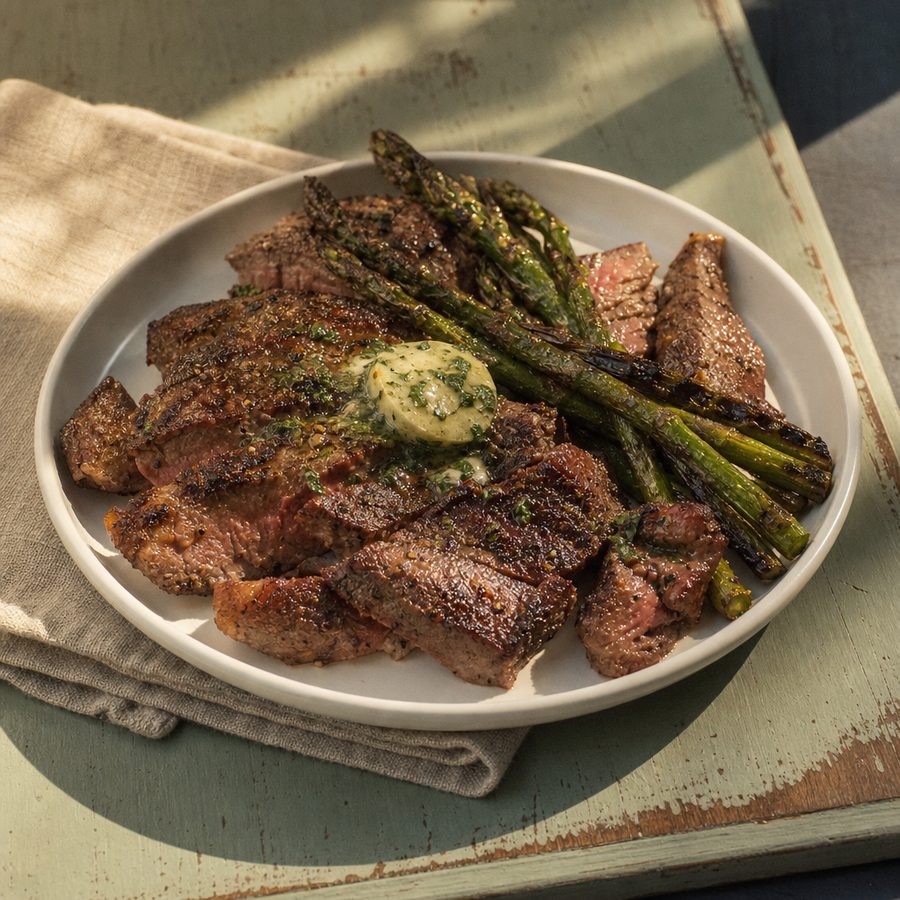
Thick sirloin steaks are seared until deeply browned, then crowned with a garlic-and-thyme butter that melts into every bite, served alongside asparagus blistered in the same steak pan.
Why You'll Love This Recipe
This is a weeknight steak dinner that eats like a restaurant plate, built for anyone who wants a hearty, protein-forward meal without a long ingredient list or fussy technique. Everything happens in one skillet, the herb butter takes two minutes to stir together, and the whole thing comes together in the time it takes the pan to heat and the steaks to sear. Take the steaks out of the refrigerator half an hour before you start, since a cold center is the usual reason a steak comes out gray under the crust.
The magic is the compound butter and the shared pan. Mashing raw garlic and fresh thyme into softened butter means that when the spoonful hits the hot steak, it melts into a quick pan-sauce of its own, carrying garlic and herb across the whole surface. Cooking the asparagus in the same skillet afterward lets it pick up the browned fond and steak drippings left behind, so a plain vegetable tastes like it was seasoned for hours. Searing over high heat is what builds the deep brown crust and its roasted, savory flavor; that browning is about taste and texture, not about trapping anything inside.
Beyond the flavor, this plate is filling. Sirloin is a beefy, protein-dense cut that keeps you satisfied for hours, the butter and olive oil add richness and fat-soluble flavor, and the asparagus brings fiber, crunch, and a fresh green contrast to the meat. Sirloin is also the cut to reach for on a Tuesday, since it carries real beef flavor at a fraction of what a ribeye costs and it takes to a hot pan just as well. It is a plate that feels indulgent while leaning on whole, simple ingredients.
Ingredients
- 4 sirloin steaks (about 6 oz each)
- 4 tbsp butter, softened
- 2 tbsp olive oil
- 1 lb asparagus, trimmed
- 3 cloves garlic, minced
- 1 tbsp fresh thyme leaves
- 1 tsp salt
Instructions
- Make the herb butter: Mince the garlic finely and strip the thyme leaves from their stems. In a small bowl, mash the softened butter together with the garlic and thyme using a fork until evenly combined. Set aside at room temperature so it stays spreadable.
- Prep the steaks and asparagus: Snap or trim the woody ends off the asparagus. Pat the sirloin steaks completely dry with paper towels, then season both sides with salt. Dry, room-temperature steaks brown far better than cold, damp ones, so let them sit out while the pan heats.
- Sear the steaks: Heat the olive oil in a heavy skillet over medium-high until it shimmers and just begins to smoke. Lay the steaks in the pan without crowding and sear undisturbed 3 to 4 minutes per side, until a deep brown crust forms and the interior reaches 130 to 135°F (54 to 57°C) on an instant-read thermometer for medium-rare. Work in batches if the pan is tight.
- Rest the steaks: Transfer the steaks to a plate or board and tent loosely with foil. Let them rest while you cook the asparagus; this gives the juices time to settle so they stay in the meat when you cut it.
- Blister the asparagus: Return the same skillet to medium-high heat with its browned bits and rendered fat still in it. Add the asparagus in a single layer and cook, turning occasionally, until bright green, lightly charred in spots, and just tender when pierced, about 4 to 6 minutes.
- Finish and serve: Set each steak on a plate with a share of asparagus alongside. Top each hot steak with a spoonful of the herb butter and let it melt down over the surface before serving.
Variations
- Rosemary and lemon butter: Swap the thyme for finely chopped rosemary and stir a little grated lemon zest into the butter for a brighter, more aromatic finish.
- Peppercorn crust: Press coarsely cracked black peppercorns onto the seasoned steaks before searing for a sharper, spicier bite alongside the garlic butter.
- Blue cheese finish: Crumble blue cheese over each steak in place of, or in addition to, the herb butter; this adds dairy and a tangy, savory richness.
- Green beans instead of asparagus: Blister trimmed green beans in the steak pan the same way when asparagus is out of season; they take a couple of minutes longer to turn tender.
- Extra-garlicky mushroom side: Sear sliced mushrooms in the pan after the steaks, letting them soak up the fond, then fold a little of the herb butter through them for an earthy, umami-rich addition.
Storage & Leftovers
Store leftover steak and asparagus in an airtight container in the refrigerator for up to 3 to 4 days. Keep any extra herb butter separately, wrapped tightly, so you can add it fresh when you reheat.
Reheat gently to avoid overcooking the already-cooked steak. Warm slices in a skillet over medium-low just until heated through, or use short bursts in the microwave at reduced power. A fresh dab of the herb butter melted over the top revives the flavor and moisture better than reheating alone.
To get ahead, make the garlic-thyme butter days in advance and keep it chilled, or roll it into a log in parchment and freeze it. You can also trim the asparagus and pat the steaks dry and season them earlier in the day, so dinner is just a matter of searing when you are ready.
Notes & Tips
- Buy steaks of even thickness: Pick sirloins that are uniform in thickness rather than tapered, so they cook evenly and finish at the same doneness across the whole steak.
- Use a thermometer for doneness: Pull the steaks at 130 to 135°F (54 to 57°C) for medium-rare or 140°F (60°C) for medium; carryover heat while resting will nudge them a few degrees higher, so take them off just before your target.
- Fresh thyme is worth it: Fresh thyme leaves give the butter a soft, green aroma that dried thyme cannot match here; if you only have dried, use a lighter hand since it is more concentrated and can turn dusty.
- Match asparagus size to timing: Thin asparagus blisters in just a few minutes while thick spears need longer; buy one or the other rather than a mix so they finish together.
- Do not skip drying the steaks: Moisture on the surface steams instead of browns, so patting the steaks bone-dry before they hit the oil is the single biggest thing standing between you and a real crust.
- Make extra herb butter: The garlic-thyme butter keeps well chilled or frozen and is just as good melted over vegetables, eggs, or chicken, so it is worth stirring together a larger batch.
Nutrition & Mindful Eating
- Steak, herb butter and asparagus arrive on the plate at the same moment for a reason. The sirloin brings the browned savory depth, the butter carries the thyme and garlic into every cut surface, and the asparagus gives the plate something green and snapping.
- Sirloin is firm and fine-textured and full of flavor, and it wants high heat and a short rest afterward so the juices stay in the meat rather than running onto the board. It brings iron in the form the body takes up most easily, along with zinc and B12.
- Thyme mashed into softened butter is what makes this dish itself. The heat of the steak melts the butter into a sauce in seconds, the thyme turns woody and fragrant as it goes, and the butterfat carries both the herb and its own vitamin A across the plate.
- Asparagus cooked in the same pan picks up the browned bits the steak left behind, and the spears keep enough bite to squeak, bringing folate and fiber along with that grassy green flavor.
- Salt goes on the steak well before it meets the pan so the surface has time to dry, and a dry surface is the only way you get a crust that dark. It is also what stops the asparagus from tasting flat.
- As you eat, watch the butter finish melting into the steak and take a piece of asparagus in the same bite, and give the plate a few unhurried minutes rather than eating it standing up.
Frequently Asked Questions
What doneness should I cook the sirloin to?
For medium-rare, pull the steaks when an instant-read thermometer reads 130 to 135°F (54 to 57°C) in the center; for medium, go to about 140°F (60°C). Because sirloin is a firm cut, cooking it past medium tends to make it dry, so medium-rare to medium gives the most tender result.
Why rest the steaks before serving?
Resting lets the juices, which are pushed toward the center by the heat of searing, redistribute through the meat so they stay on your plate instead of running out the moment you cut in. A loose foil tent for a few minutes while the asparagus cooks is all it needs.
Can I use salted butter for the herb butter?
Yes. If you use salted butter, taste before adding extra salt to the butter itself, and go a little easier when seasoning the steaks, since the melted butter will carry salt onto the meat.
My asparagus turns out limp instead of blistered. What went wrong?
Usually the pan was not hot enough or the asparagus was crowded, so it steamed instead of charring. Keep the skillet over medium-high, spread the spears in a single layer, and let them sit undisturbed between turns so they can color.