
Seared Tuna and Ginger Grain Bowl
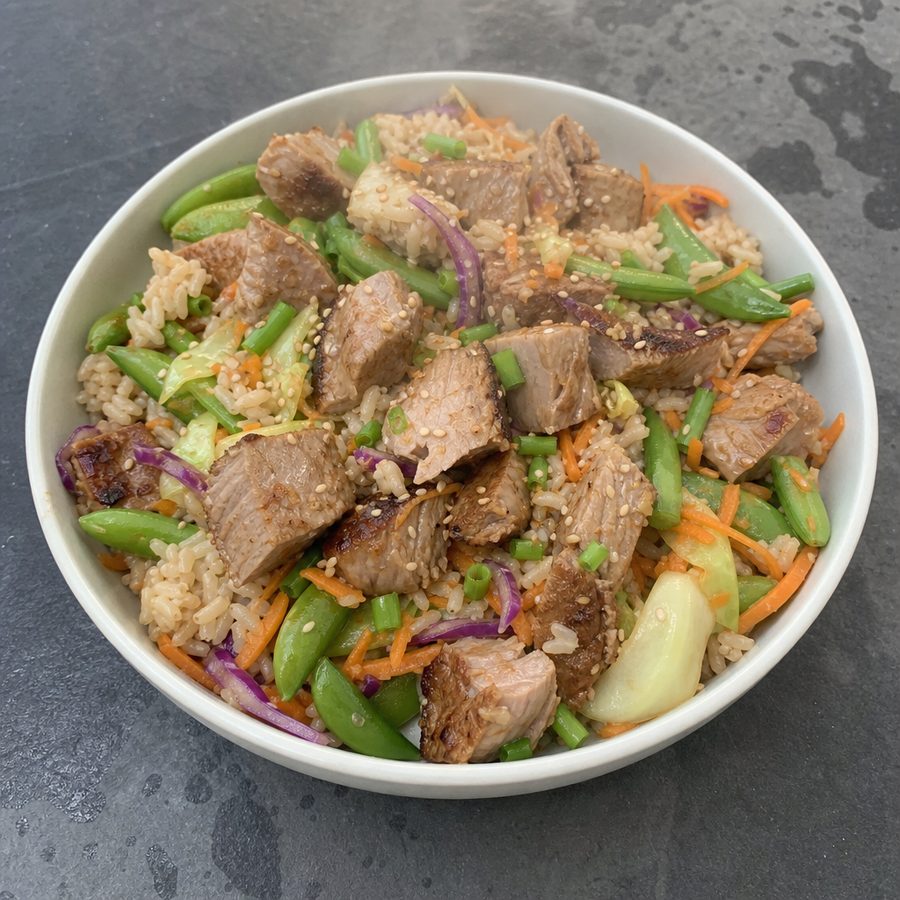
Quick-seared canned tuna glazed in a soy-ginger sauce piled over nutty brown rice with sauteed snap peas, julienned carrot, and shredded cabbage, finished with fresh scallions.
Why You'll Love This Recipe
This is a fast, weeknight-friendly bowl built around pantry canned tuna, which means real protein on the table without thawing, filleting, or a trip to the fish counter. It is for the cook who wants something warm, colorful, and balanced in about the time it takes the rice to finish, and it happily feeds people who are steering clear of land meat but still want a meal that eats like a full plate rather than a side salad.
One pan, and two distinct stages in it. Pressing the drained tuna into patties and searing it hard gives you browned, caramelized edges and a firm texture instead of the loose, watery flake canned tuna usually has, and tossing it with soy sauce and fresh ginger off that same hot surface turns the fond into a quick, glossy glaze. Sauteing the snap peas, carrot, and cabbage in the same skillet just until crisp-tender keeps them sweet and crunchy, so every bowl has a contrast of tender rice, snappy vegetables, and savory, glazed fish.
Chewy whole-grain rice and crisp vegetables give it the staying power, the tuna brings meaty protein, and the ginger glaze with raw scallions over the top adds the salty-fresh punch that makes a bowl feel finished. Searing canned tuna into patties is the part worth stealing for other dishes, since it turns something soft and mild into something with a browned crust and real texture.
Ingredients
- 3 cans tuna in water (about 480g), drained
- 3 1/2 cups cooked brown rice
- 2 cups snap peas
- 2 carrots, julienned
- 2 cups shredded cabbage
- 2 tbsp soy sauce
- 1 tbsp grated ginger
- 2 tbsp avocado oil
- 3 scallions, sliced
Instructions
- Cook the brown rice: Rinse the brown rice under cold water until the water runs clear. Simmer in a covered pot of water until the grains are tender and the water is absorbed, about 40 to 45 minutes. Fluff with a fork and set aside, since rice left packed in a covered pot sets into a solid layer as it cools.
- Prep the vegetables: While the rice cooks, julienne the carrots into thin matchsticks, shred the cabbage, trim the stem ends from the snap peas, grate the ginger, and thinly slice the scallions. Keep them in separate piles, because they go into the pan in order of how long each one takes and there is no time to be sorting once the wok is hot.
- Drain and sear the tuna: Drain the canned tuna well, pressing out the liquid. Heat avocado oil in a skillet over medium-high until it shimmers. Press the tuna into compact patties, place them in the pan, and sear undisturbed until deeply golden, about 2 minutes per side. Press them properly, since the searing is the only thing that gives canned tuna any browned flavor and a loose pile would simply fall through the pan.
- Glaze the tuna: Add the soy sauce and grated ginger to the pan and toss gently for about 1 minute, coating the tuna in the fragrant glaze. Do it off the highest heat, because soy sauce reduces fast and turns sharply salty in a pan this hot. The patties will break into large, glossy flakes. Transfer to a plate and set aside.
- Saute the vegetables: Add the remaining avocado oil to the same skillet over medium-high. Add the snap peas, carrot, and cabbage and saute, stirring often, for 3 to 4 minutes, until the vegetables are bright and crisp-tender with a little color.
- Assemble the bowls: Divide the brown rice among bowls. Top with the sauteed vegetables and the glazed tuna, then garnish with the sliced scallions, which go on raw, since they are the only sharp thing against a bowl that is otherwise soft and savory throughout.
Variations
- Spicy sriracha glaze: Stir a spoonful of sriracha or a pinch of red pepper flakes into the soy sauce and ginger for a glaze with real heat.
- Toasted sesame finish: Sprinkle toasted sesame seeds and a few drops of sesame oil over the finished bowls for a nuttier aroma; this adds seeds.
- Ginger-lime brightness: Add a squeeze of fresh lime and a little extra grated ginger to the glaze for a sharper, more citrusy edge.
- Edamame boost: Toss shelled edamame into the pan with the vegetables for extra plant protein and a pop of green; this adds soy.
- Cauliflower rice base: Swap the brown rice for sauteed cauliflower rice to make the bowl lighter and lower in carbohydrate while keeping the glazed tuna and vegetables.
Storage & Leftovers
Store leftovers in an airtight container in the refrigerator for up to three days. Keep the glazed tuna and the vegetables over the rice; they hold well together, though the cabbage and snap peas will soften a little as they sit.
Reheat gently in a skillet over medium with a splash of water to loosen the rice and revive the vegetables, or microwave in short bursts, stirring once, until just warmed through. Avoid overheating, which dries out the tuna and turns the vegetables limp.
To get ahead, cook the brown rice and julienne the carrots and shred the cabbage up to three days in advance and refrigerate them separately. With the rice and prep done, the sear, glaze, and saute come together in under ten minutes at mealtime.
Notes & Tips
- Drain the tuna thoroughly: Press the canned tuna firmly against the lid or in a strainer to remove as much water as possible; the drier it is, the better it browns and holds together as patties.
- Pick a solid tuna: Solid or chunk light tuna in water flakes into larger, meatier pieces than flaked tuna, which helps the patties stay intact during searing.
- Let the crust form: Resist stirring the patties as they sear; leave them undisturbed so a golden crust develops before you flip, or they will fall apart.
- Keep the vegetables crisp: Pull the snap peas, carrot, and cabbage from the heat while they still have snap and bright color; a few minutes is enough, and they keep their sweetness and crunch.
- Adjust the salt with the soy: The soy sauce is the main source of salt here, so taste before adding more; a low-sodium soy lets you control the seasoning without overwhelming the fish.
- Round it out: Serve with a wedge of lime or a small side of quick-pickled cucumber for acidity that cuts the richness of the glaze.
Nutrition & Mindful Eating
- Tuna, brown rice and a heap of raw vegetables are the three layers here. The fish brings the savory center, the rice gives the bowl its chew and its ballast, and the snap peas, carrot and cabbage keep everything above it crisp and cold.
- Tuna pressed into patties and seared fast stays moist through the middle and turns firm and meaty at the edges, and the omega-3 fats it carries are part of what makes the fish taste rich rather than plain.
- Brown rice keeps its bran, which is why the grains stay separate and slightly chewy and why they take up the ginger and soy while still holding their shape. That bran is also where the fiber and the B vitamins live.
- Snap peas, carrot and cabbage go in raw and shredded, and the point of them is the noise. The peas snap, the cabbage stays crisp for hours, and the carrot brings the sweetness and the beta-carotene that give the bowl its color.
- Fresh ginger grated into the dressing is warm and biting at once, the soy sauce brings a deep savory note that soaks into the rice, and raw scallions over the top are the last green thing before the bowl is done.
- As you eat, feel the temperature difference, warm rice under cold crunching vegetables, and let the bowl take your whole lunch break rather than half of it at a desk.
Frequently Asked Questions
Can I use fresh tuna instead of canned?
Yes. A fresh tuna steak seared to your liking and then flaked or sliced works well; sear it a couple of minutes per side for a rare-to-medium center, then toss it in the soy and ginger glaze the same way. Canned tuna simply makes this a faster, pantry-based meal.
Why does my tuna fall apart instead of forming patties?
Usually it is too wet or moved too soon. Drain and press the tuna hard first, pack it into firm patties, and let them sear undisturbed until a golden crust forms before flipping. Even if they break into large flakes, the flavor is the same.
Can I serve this cold as a grain bowl or meal prep?
Yes. It is good chilled or at room temperature, which makes it easy to pack for lunch. The glazed tuna and vegetables hold their flavor over the rice; just keep it refrigerated and eat within three days.
What can I use in place of snap peas?
Snow peas, green beans, or broccoli florets all saute well in the same time and keep the crisp-tender texture. Cut thicker vegetables small so they cook through in the few minutes the pan allows.