
Seared Turkey Lunch Patties
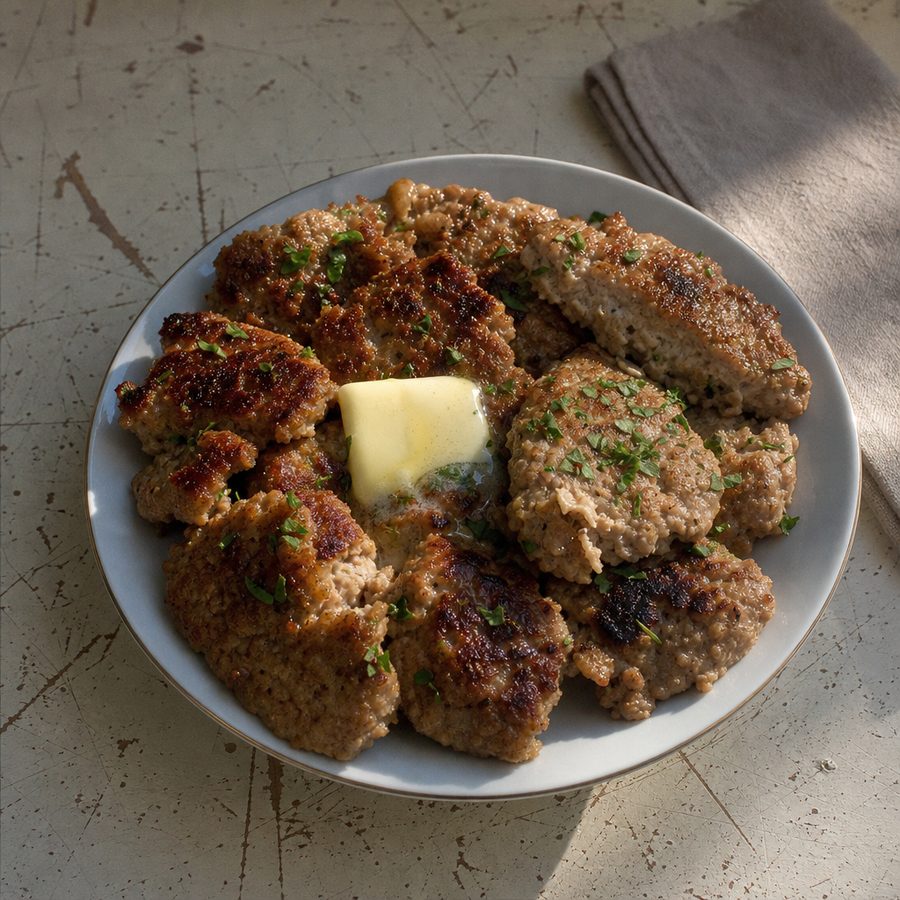
Ground turkey seasoned with salt, pressed into patties, and seared in butter until the outsides brown and the centers stay juicy.
Why You'll Love This Recipe
These are plain seared turkey patties built for a fast, filling midday meal when you want something hot and high in protein without any fuss. There is no binder, no breadcrumb, no sauce to make: just ground turkey, salt, and butter. That makes them a good fit for anyone who wants a straightforward lunch they can cook in one skillet in well under half an hour and eat with a knife and fork.
A hot pan of butter, and time to let the crust form. Turkey is mild, so the browned crust you build over medium heat is where the flavor comes from. The butter carries that browning across the whole surface and gives the meat a rich, nutty edge that salt alone could not. The center dimple keeps the patties flat instead of doming, so every part of the surface touches the pan and browns evenly, and cooking to a verified internal temperature keeps the meat safe without drying it out.
A lot of protein, and the richness of butter basted over the top. Protein is the most filling thing you can put on a plate, so these patties hold you through the afternoon, while the pan butter adds enough fat to keep them moist and tasty rather than plain. It is a quiet, honest lunch: browned meat, a little salt, and good butter, and nothing it does not need.
Ingredients
- 1 3/4 lb ground turkey
- 4 tbsp butter
- 1 tsp salt
Instructions
- Season and shape: Sprinkle the salt evenly over the ground turkey and mix it in gently with your hands, just until it is distributed. Divide the meat into equal portions and pat each into a flat, even patty a little wider than you want it to end up, since it will shrink slightly as it cooks.
- Dimple the centers: Press a shallow dimple into the middle of each patty with your thumb. Turkey puffs in the center as it heats, and the dimple keeps the patties flat so they sear and cook through evenly.
- Heat the butter: Set a heavy skillet over medium heat and add the butter. Let it melt and finish foaming, swirling to coat the pan; when the foam settles the pan is hot enough to give a good sear.
- Sear the patties: Lay the patties in the pan without crowding and cook undisturbed for 6 to 7 minutes, until the underside is deep golden brown. Flip once and cook the second side another 6 to 7 minutes, until browned and an instant-read thermometer reads 165°F (74°C) at the thickest point.
- Baste and rest: Tilt the pan and spoon the browned pan butter over the tops of the patties, then move them to a plate and rest 2 minutes before serving so the juices settle.
Variations
- Change the meat: Use ground beef, ground pork, or ground chicken in place of the turkey. Fattier meats like beef and pork brown faster and stay juicier, so watch the pan and still cook to a safe internal temperature.
- Cook in a different fat: Sear the patties in beef tallow, lard, or duck fat instead of butter for a different richness. Tallow and lard take higher heat well and give a deeply browned crust.
- Melt cheese on top: Lay a thin slice of a hard cheese over each patty in the last minute of cooking and cover the pan briefly to melt it. This adds dairy and a salty, savory finish.
- Top with a fried egg: Fry an egg in the same buttery pan and set it on top of each patty so the yolk runs into the meat. This adds an egg and turns the patties into a heartier plate.
- Fold in crisp bacon: Cook bacon until crisp, chop it, and mix the pieces into the turkey before shaping. This adds pork and gives the patties smoky, salty bits throughout.
Storage & Leftovers
Keep leftover patties in an airtight container in the refrigerator for up to three to four days. Let them cool for a few minutes before sealing so condensation does not build up inside the container and soften the crust.
Reheat gently to keep the patties from drying out. Warm the patties in a skillet over low to medium heat with a little butter, turning once, just until heated through, or cover and warm them in a low oven. Avoid a long spell in the microwave, which tends to toughen turkey and drive off moisture.
To get ahead, mix the salt into the turkey and shape the patties a day in advance, then keep them dimpled and covered in the refrigerator so they are ready to hit the pan. You can also cook the full batch, chill it, and reheat portions across the week for grab-and-go lunches.
Notes & Tips
- Choose the right grind: If you can find it, use ground turkey that includes dark meat rather than all breast. The dark meat keeps the patties moist and browns more readily; all-breast turkey cooks drier.
- Mix with a light hand: Work the salt in just until it disappears. Overworking ground turkey packs it dense and makes the patties springy and tough, so stop as soon as it holds together.
- Trust the thermometer: Turkey has to reach 165°F (74°C) to be safe, and it goes from done to dry fast. An instant-read thermometer at the thickest point is far more reliable than cutting in and guessing by color.
- Let the pan come up to heat: Wait for the butter to finish foaming before the patties go in. A pan that is not hot enough gives you gray, steamed meat instead of a browned crust.
- Do not press the patties: Resist flattening them with the spatula while they cook. Pressing squeezes out the juices you want to keep and gives you a drier patty.
- Adjust salt to your taste: Salt is the only seasoning here, so it carries the whole dish. Taste a small cooked pinch of the mixture before shaping if you like, and nudge the salt up or down to suit you.
Nutrition & Mindful Eating
- Turkey, butter and salt is the whole list, so everything comes down to how you cook them. The meat brings the substance, the butter browns the outside and keeps it from drying, and the salt pulls the savory flavor of the turkey forward.
- Ground turkey is mild and fine-textured, which means it takes on whatever it is cooked in, and it goes from done to dry quickly so the patties come off the heat early. The protein in them is dense enough to hold a lunch together on its own.
- Butter is doing more than greasing the pan. It browns the crust in a way the meat cannot manage alone, it carries vitamin A, and its fat is a large part of why a plain patty tastes rich.
- Salt mixed through the meat rather than sprinkled on afterward is what keeps the middle tasting like something. It draws moisture to the surface for browning and pulls the flavor out from the center of the patty.
- A couple of these hold you well past the middle of the afternoon, and the protein and the butterfat together are what do it, which is why something this plain still eats like a real lunch.
- As you eat, taste the browned edge and then the middle and see how far apart they are, and take the patties sitting down with a few minutes to spare so the meal registers as one.
Frequently Asked Questions
Why are my turkey patties coming out dry?
Turkey is delicate, so drying usually comes from overcooking or from using all-breast meat. Pull the patties as soon as they hit 165°F (74°C), avoid pressing them in the pan, and spoon the pan butter over the tops to add back richness. Choosing a grind that includes dark meat also helps.
Can I cook these from frozen?
It is better to thaw them fully in the refrigerator first. Searing from frozen browns the outside before the center is safe, giving you a burnt crust over an underdone middle. Thawed patties cook evenly and reach temperature predictably.
Do I really need a thermometer?
For turkey, yes. It is delicate and the safe temperature and the dry-out point are close together, so guessing by color often means overcooking. An instant-read thermometer at the thickest point takes the risk out of it.
What can I serve these with for a bigger meal?
A fried or soft-boiled egg alongside makes them heartier, and a slice of melted hard cheese laid over the top in the last minute adds a savory finish. Both keep the plate simple while turning the patties into a fuller lunch.