
Sesame-Ginger Salmon with Bok Choy
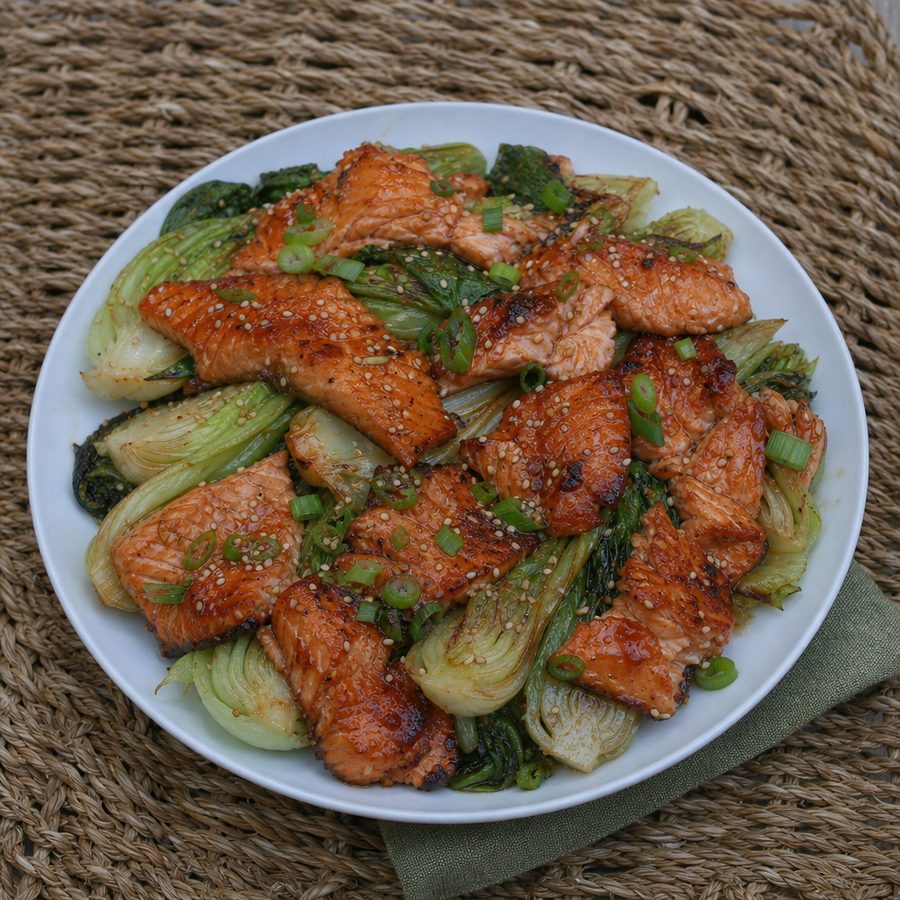
Salmon fillets are brushed with a glaze of coconut aminos, fresh ginger, garlic and toasted sesame oil, then roasted over halved baby bok choy and finished with sesame seeds and sliced scallions.
Why You'll Love This Recipe
Something that feels restaurant-nice on a weeknight, with almost no cleanup behind it. The salmon and bok choy cook together on a single sheet pan in the same window of time, so the whole meal comes out of the oven at once. It suits anyone looking for a protein-forward plate with real vegetables built in, and it is gentle enough in seasoning to win over people who think they do not like fish.
The glaze is what makes it work. Coconut aminos brings a savory, faintly sweet backbone in place of soy, toasted sesame oil adds nutty depth, and fresh ginger and garlic give it brightness and bite. Roasting at a hot 425°F (220°C) caramelizes the glaze on the fish and lets the cut sides of the bok choy pick up a little browning while the stems stay crisp-tender. Brushing the glaze on rather than marinating keeps the sugars from scorching and lets the salmon roast quickly.
Richness, freshness, and crunch all land together in one and the same single bite. Salmon is a rich source of protein and omega-3 fats that keep you full, the bok choy adds volume and a clean, mineral-y green flavor, and the sesame seeds and raw scallions on top give texture and a fresh finish. It eats light but does not leave you hungry an hour later.
Ingredients
- 4 salmon fillets (about 5 oz each)
- 4 heads baby bok choy, halved
- 4 tbsp coconut aminos
- 1 tbsp toasted sesame oil
- 2 tbsp avocado oil
- 1 tbsp grated fresh ginger
- 3 cloves garlic, minced
- 1 tbsp sesame seeds
- 4 scallions, sliced
Instructions
- Preheat the oven: Preheat the oven to 425°F (220°C) and pull the salmon out of the refrigerator so it can lose its deep chill while you prep. Line a rimmed sheet pan with parchment for easier cleanup.
- Make the glaze: Peel a knob of fresh ginger with the edge of a spoon and grate it finely on a rasp grater. Peel and mince the garlic. In a small bowl, whisk together the coconut aminos, toasted sesame oil, grated ginger and minced garlic until combined.
- Prep and season the bok choy: Trim the root ends off the baby bok choy and halve each head lengthwise through the core so the leaves stay attached. Rinse between the layers to flush out any grit, then shake dry. On the sheet pan, toss the bok choy with the avocado oil, then arrange the halves cut-side up in a single layer.
- Add the salmon and glaze: Pat the salmon fillets dry with a paper towel. Tuck them among the bok choy, skin-side down if the fillets have skin, leaving a little space around each so they roast rather than steam. Brush the glaze generously over the tops and sides of the salmon, then spoon or brush the rest over the bok choy.
- Roast: Roast for 12 to 14 minutes, until the salmon flakes easily when nudged with a fork and reaches 145°F (63°C) at the thickest part on an instant-read thermometer, and the bok choy stems are crisp-tender with lightly browned edges. Thicker fillets may need a minute or two longer.
- Finish and serve: Thinly slice the scallions. Sprinkle the sesame seeds and scallions over the salmon and bok choy and serve straight from the pan while hot.
Variations
- Add some heat: Whisk a pinch of red pepper flakes or a little grated fresh chili into the glaze for a warm, lingering kick that plays well against the ginger.
- Bright citrus finish: Add a squeeze of fresh lime juice and a little grated zest over everything just before serving to lift the richness of the salmon.
- Swap the greens: Trade the baby bok choy for another quick-roasting green such as gai lan or halved heads of romaine, arranging them the same way under the fish.
- Add mushrooms: Scatter halved shiitake or cremini mushrooms onto the pan with the bok choy; they soak up the glaze and turn meaty and savory as they roast.
- Use shrimp instead: Swap the salmon for peeled shrimp, tossing them in the glaze and roasting just until pink and opaque, about six to eight minutes; this changes the dish to shellfish.
Storage & Leftovers
Store leftovers in an airtight container in the refrigerator for up to three days. Keep the salmon and bok choy together; the greens will soften a little but hold their flavor well. Let the food cool before sealing it so condensation does not make the bok choy soggy.
Reheat gently to avoid drying out the fish. A low oven or toaster oven at around 300°F (150°C) for eight to ten minutes, loosely covered with foil, warms it through without toughening the salmon. A quick, low-heat pass in a covered skillet also works. Microwaving is fine in a pinch but do it in short bursts at reduced power, and expect the fish to firm up more. Salmon is also good cold, flaked over greens straight from the fridge.
To get ahead, whisk the glaze up to three days in advance and keep it in a sealed jar in the refrigerator; the ginger and garlic actually meld a little as it sits. You can also halve and rinse the bok choy earlier in the day and store it dry in a container so that at dinnertime you only have to toss, glaze and roast.
Notes & Tips
- Buy even fillets: Ask for center-cut salmon pieces of similar thickness so they finish roasting at the same time. Thin tail-end fillets cook faster and can overcook while a thick one is still underdone.
- Coconut aminos, not tamari: Coconut aminos is milder and a touch sweeter than soy-based sauces, so the glaze tastes balanced. If yours tastes very salty, use a little less and add a splash of water to the glaze.
- Dry the fish first: Patting the salmon dry before glazing helps the glaze cling and lets the surface take on color instead of steaming. Wet fish gives you a pale, washed-out top.
- Toast the sesame seeds: If your sesame seeds are raw, toast them in a dry skillet over medium heat for a couple of minutes until golden and fragrant before sprinkling; it deepens their nutty flavor considerably.
- Know when the fish is done: Salmon is perfect the moment it flakes but still looks slightly translucent in the very center; it keeps cooking off the heat. An instant-read thermometer at 145°F (63°C) takes the guesswork out.
- Round out the plate: Serve it alongside cauliflower rice or roasted sweet potato if you want a heartier meal.
Nutrition & Mindful Eating
- The salmon and the bok choy cook together and taste of each other by the end. The glaze runs off the fish onto the stems, the stems give off steam that keeps the salmon moist, and the sesame over the top ties them into one dish.
- Salmon is rich and soft and flakes into wide pieces the moment it is done, and the fat that makes it taste that way is where its omega-3s live, which is why a modest fillet still eats like plenty.
- Baby bok choy is two vegetables in one head. The stems stay crisp and slightly sweet while the leaves go dark and silky in the heat, and the vitamin C and vitamin K they carry come with that split texture.
- Fresh ginger and garlic in the glaze are what you smell when the pan comes out. The ginger is warm and biting, the garlic mellows in the oven, and coconut aminos underneath both give the whole thing a rounded, savory sweetness.
- Toasted sesame oil goes into the glaze, where the oven concentrates it, and the sesame seeds scattered over the fish at the end toast just enough to smell nutty, bringing their unsaturated fat and a little calcium along with the crunch.
- As you eat, break the salmon apart with the side of your fork and notice how differently the leaves and the stems eat, and let dinner run long enough to be an actual pause.
Frequently Asked Questions
Can I use skin-on or skinless salmon?
Either works. Skin-on fillets roast beautifully skin-side down and the skin helps hold the fish together; you can eat it or peel it off after cooking. Skinless fillets are just as good, so use whichever you prefer or can find.
My bok choy came out soggy. What went wrong?
Usually it is crowding or wet greens. Make sure the halves are patted dry after rinsing and arranged in a single layer with a little space so they roast instead of steam. A hot oven at 425°F (220°C) and not overloading the pan are the keys to crisp-tender stems.
Can I make this with frozen salmon?
Yes, just thaw it fully first, ideally overnight in the refrigerator, and pat it very dry before glazing. Roasting from frozen leads to uneven cooking and a watery top that will not take on color.
What can I use if I do not have coconut aminos?
Coconut aminos gives this dish its signature savory-sweet glaze, so it is worth seeking out. If you need a stand-in and the strict makeup of the dish is not a concern, tamari will work, though it is saltier and soy-based, so taste and thin it with a little water.