
Sheet-Pan Halibut With Sweet Potato and Cauliflower
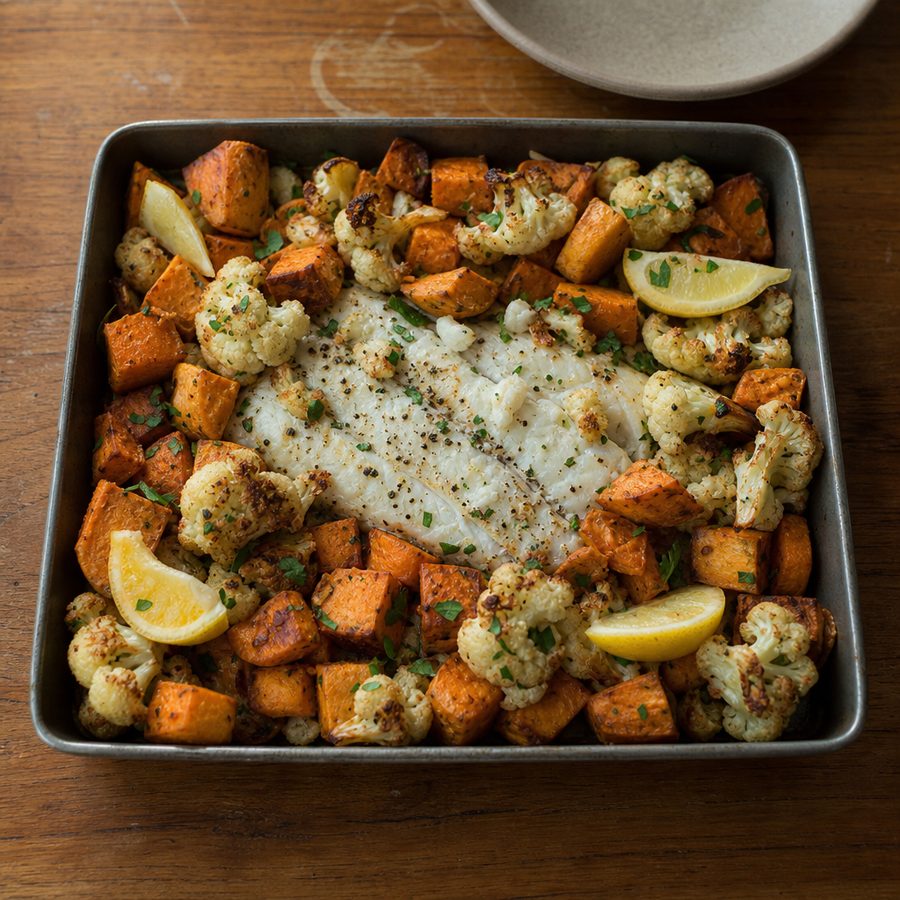
Mild halibut fillets roast on a single pan alongside paprika-spiced sweet potato and cauliflower, finished with garlic, fresh lemon juice, and parsley for a bright, colorful dinner.
Why You'll Love This Recipe
A complete, protein-forward plate that leaves you with no sink full of dishes. Everything cooks on one sheet pan: a firm white fish that stays mild and flaky, a sweet-and-savory root vegetable, and a hearty cruciferous vegetable that crisps at the edges. It suits cooks who are still nervous about cooking fish, because the timing is forgiving and the visual cues are easy to read.
The technique works because the vegetables get a head start. Sweet potato and cauliflower need longer in the oven than a delicate fillet, so roasting them first lets them soften and caramelize before the halibut ever touches the pan. By the time the fish goes in, the pan is hot and the vegetables are nearly done, so the fillets need only a short final roast. The lemon juice and garlic season the fish as it cooks, and the paprika deepens the color and adds a gentle warmth to the vegetables.
What makes the plate satisfying is the balance of textures and the staying power of its components. Halibut is a firm, high-protein fish, so it fills you up without heaviness. The sweet potato brings natural sweetness and fiber, the cauliflower adds bulk and a roasted, nutty flavor, and olive oil ties it together with richness. The finishing squeeze of fresh lemon and the parsley keep everything tasting bright rather than flat, so a simple meal feels finished.
Ingredients
- 4 halibut fillets (about 5 oz each)
- 2 medium sweet potatoes, cubed
- 1 small head cauliflower, in florets
- 4 tbsp olive oil
- 2 tbsp fresh lemon juice
- 3 garlic cloves, minced
- 1 tsp paprika
- 1/4 cup chopped parsley
- 1/2 tsp salt
Instructions
- Preheat and prep: Preheat the oven to 425°F (220°C). Peel the sweet potatoes and cut them into even, bite-sized cubes so they cook at the same rate. Cut the cauliflower into small, evenly sized florets. Mince the garlic and chop the parsley; set the parsley aside for serving.
- Season the vegetables: On a large rimmed sheet pan, toss the cubed sweet potato and cauliflower florets with most of the olive oil, the paprika, the minced garlic, and the salt until everything is evenly coated. Spread the vegetables in a single layer with a little space between the pieces so they roast rather than steam.
- Roast the vegetables: Roast in the center of the oven for about 20 minutes, until the sweet potato is beginning to soften and the cauliflower edges are turning golden. Stir once halfway through for even browning.
- Add the halibut: Pat the halibut fillets dry with a paper towel. Slide the vegetables to the sides of the pan to clear space and set the fillets directly on the hot pan. Drizzle the fish with the remaining olive oil and the fresh lemon juice, then season lightly with salt.
- Finish roasting: Return the pan to the oven and roast for 10 to 12 minutes, until the fish is opaque and flakes easily when pressed with a fork; it reaches doneness at an internal temperature of 145°F (63°C) at the thickest part.
- Garnish and serve: Sprinkle the chopped parsley over the fish and vegetables. Serve hot with extra lemon wedges on the side.
Variations
- Swap the fish: Use cod, haddock, or another firm white fillet in place of halibut. Adjust the final roasting time to the thickness of the fillet, cooking until it flakes easily.
- Herb finish: Trade the parsley for chopped dill or cilantro, or add a little fresh thyme to the vegetables before roasting for a more aromatic result.
- Add heat: Sprinkle red pepper flakes or a pinch of cayenne over the vegetables with the paprika for a spicier plate.
- Different vegetables: Replace the cauliflower with broccoli florets or halved Brussels sprouts, keeping the pieces small so they finish in the same time as the sweet potato.
- Briny accent: Scatter a few pitted olives or capers over the pan when you add the fish for a saltier, more savory finish; this adds sodium.
Storage & Leftovers
Store leftover halibut and vegetables together in an airtight container in the refrigerator for up to three days. Because the fish is delicate, it is best eaten sooner rather than later, while it is still moist.
Reheat gently to keep the fish from drying out. Warm portions in a 300°F (150°C) oven or toaster oven until just heated through, about 8 to 10 minutes; a lower temperature protects the delicate fish. If you use a microwave, cover the plate and heat in short bursts, stopping as soon as it is warm.
To get ahead, cube the sweet potato and cut the cauliflower into florets a day in advance and keep them in a sealed container in the refrigerator, and mince the garlic and chop the parsley at the same time. With the prep done, the pan goes into the oven in minutes on the night you cook.
Notes & Tips
- Choose good halibut: Look for fillets that are firm, moist, and evenly thick, with a clean, mild smell. Evenly thick pieces cook at the same rate, so avoid thin tail-end fillets if you can.
- Cut for even roasting: Sweet potato takes longer to soften than cauliflower, so cut the potato cubes on the small side and keep the cauliflower florets a little larger; this helps everything finish together.
- Dry the fish first: Patting the fillets dry before they go on the pan helps the surface firm up in the oven instead of steaming, and it lets the lemon and oil cling better.
- Do not crowd the pan: Spread the vegetables in a single layer with space between the pieces. Packed too tightly, they release steam and turn soft instead of browning at the edges. Use two pans if needed.
- Know when the fish is done: Halibut is delicate and dries out quickly once overcooked. Pull it as soon as it turns opaque and flakes with light pressure, or when it reaches 145°F (63°C) at the thickest point.
- Serve it with a starch or grain: The plate is complete on its own, but a spoonful of cooked quinoa, brown rice, or a wedge of crusty bread rounds it out if you want a larger meal.
Nutrition & Mindful Eating
- Halibut, sweet potato and cauliflower go into the same oven and finish at the same moment, which is the whole trick of the dish. Protein, whole-food carbohydrate and a tray of vegetables all land on the plate at once.
- Halibut is a firm, close-grained white fish that holds its shape on a hot pan and then breaks into big clean flakes under a fork. It is mild enough to take the garlic and paprika easily, and it brings protein and selenium with it.
- Sweet potato caramelizes where the cut faces meet the pan, soft in the middle and almost candied at the corners, and the deep orange of it is beta-carotene.
- Cauliflower is the piece people are surprised by. Dry oven heat browns the surface until it turns nutty and faintly sweet, softer and rounder than it is raw, and it carries fiber along with the plant compounds that run through the cabbage family.
- Lemon, garlic and parsley go on at the end so the acid stays sharp and the parsley stays green. That squeeze of lemon over hot fish is what pulls the tray together, and the paprika underneath gives it warmth and color.
- As you eat, look for a forkful that has all three textures on it, the flaking fish, the soft potato and a browned cauliflower edge, and let the lemon reset your mouth between bites so you stay with the meal.
Frequently Asked Questions
Can I use frozen halibut?
Yes. Thaw it fully in the refrigerator first, then pat the fillets very dry before they go on the pan, since frozen fish releases extra water that can keep it from cooking evenly.
How do I keep the halibut from drying out?
Add the fish only for the final stretch of roasting and pull it the moment it turns opaque and flakes easily, or when it reaches 145°F (63°C) at the thickest point. Its firm, close-grained flesh means a few extra minutes is the difference between moist and dry.
My vegetables were still firm when the fish was done. What happened?
The vegetables likely needed a longer head start, or the pieces were cut too large. Give the sweet potato and cauliflower their full roasting time before adding the fish, and cut the sweet potato into smaller cubes next time.
Can I make this on two pans if I am cooking a lot?
Yes, and it is a good idea when the vegetables would otherwise be crowded. Spread everything in single layers across two pans and rotate them between the racks partway through so they brown evenly.