
Sheet-Pan Mediterranean Salmon with Zucchini
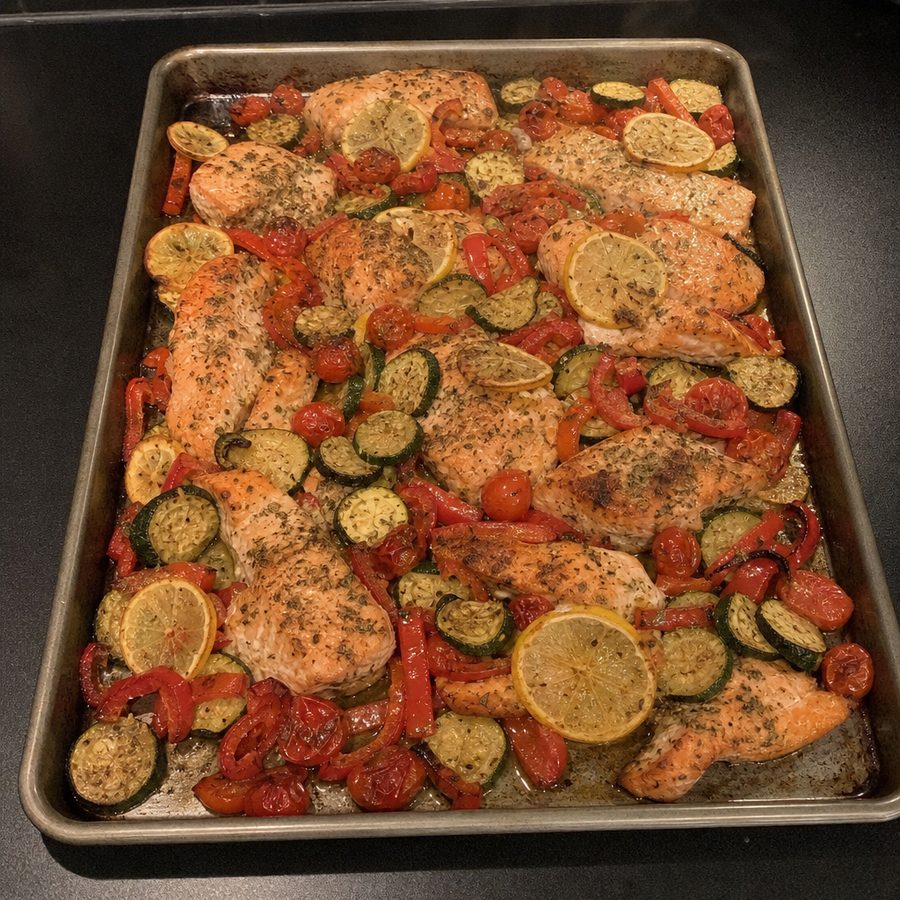
Flaky roasted salmon fillets roasted among tender zucchini coins, sweet red bell peppers, and blistered cherry tomatoes, all brightened with garlic, lemon juice, and olive oil on a single pan.
Why You'll Love This Recipe
Nourishing, and it leaves the sink almost empty. Everything cooks together on one sheet pan: rich, flaky salmon and a tumble of colorful vegetables that practically cook themselves while the oven does the work. It suits cooks who are short on time but still want a plate that feels like a real, sit-down meal. Line the pan before anything goes on it, since salmon skin welds itself to bare metal and the washing up is the whole reason you chose a sheet pan in the first place.
The zucchini and peppers get their ten minutes first. The zucchini and peppers get a ten-minute head start so they soften and begin to caramelize, then the salmon goes in for the final stretch, just long enough to cook through without drying out. Roasting the cherry tomatoes alongside is the quiet hero here: their skins burst and their juices mingle with the olive oil, garlic, and lemon to make a light pan sauce that dresses everything without any extra step.
A substantial, protein-rich fillet against vegetables that stay bright and a little sweet from the high heat. The salmon delivers heart-friendly omega-3 fats, the olive oil carries flavor and richness, and the lemon keeps the whole plate feeling fresh rather than heavy. The pan juices are worth spooning over everything, since they are where the garlic, the lemon, and the burst tomatoes have collected. You finish the meal full and steady, not weighed down.
Ingredients
- 4 salmon fillets (about 5 oz each)
- 2 zucchini, sliced into coins
- 1 1/2 red bell peppers, sliced
- 1 1/2 cups cherry tomatoes
- 3 cloves garlic, minced
- 3 tbsp olive oil
- 2 tbsp lemon juice
- 3/4 tsp sea salt
Instructions
- Preheat and line the pan: Preheat the oven to 425°F (220°C) and line a large rimmed sheet pan with parchment, or oil it lightly so nothing sticks. The high heat is the whole point here, because a slower oven only steams the zucchini in its own moisture instead of browning the edges.
- Cut the vegetables: Slice the zucchini into coins about a quarter-inch thick and cut the red bell peppers into thin strips, discarding the stems and seeds. Leave the cherry tomatoes whole so they hold onto their juice until the skins split in the oven. Peel and mince the garlic last, since minced garlic loses its edge quickly once it is cut.
- Roast the vegetables: Spread the zucchini, peppers, tomatoes, and garlic across the pan, drizzle with half the olive oil, and toss to coat. Arrange everything in a single layer, because crowded vegetables trap steam and go soft rather than caramelized, then roast for 10 minutes, until they are just beginning to soften.
- Add the salmon: Pull the pan out and push the vegetables to the edges to clear four spaces. Pat the salmon fillets dry, since a wet surface will not take on any color, and set them skin-side down in the cleared spots. Drizzle with the rest of the olive oil and the lemon juice, then sprinkle the whole pan with the sea salt.
- Finish roasting: Return the pan to the oven for 8 to 10 minutes more, until the salmon flakes easily with a fork and reads 125 to 130°F (52 to 54°C), which is medium-rare rather than the 145°F (63°C) the FDA gives for seafood, at the thickest part. Check the thin tail end of each fillet first if they are not an even thickness, since that end always finishes ahead of the rest. The tomatoes should have burst and the zucchini should be fork-tender.
- Rest and serve: Let the salmon rest on the pan for 2 to 3 minutes so the juices settle back into the fish instead of running out across the plate. Serve each fillet with a generous helping of the roasted vegetables and the pan juices spooned over the top.
Variations
- Herb-forward: Sprinkle fresh chopped dill, parsley, or basil over the salmon just before serving for a garden-fresh lift that plays off the lemon.
- Briny and bold: Add pitted olives and capers to the pan with the vegetables for a salty, savory edge; this adds sodium, so you may want to ease back on the added salt.
- A little heat: Toss the vegetables with a pinch of red pepper flakes, or lay thin chili slices over the fish before its final roast for gentle warmth.
- Creamy finish: Crumble feta or dollop a spoonful of Greek yogurt over each plated fillet; note that this adds dairy.
- Swap the vegetables: Trade the zucchini for asparagus spears or green beans, keeping the peppers and tomatoes, and adjust the first roast so the swapped vegetable is just tender before the salmon goes in.
Storage & Leftovers
Refrigerate leftovers in an airtight container for up to three days. Keep the salmon and vegetables together so the fish soaks up a little more of the lemon and pan juices as it sits.
Reheat gently to protect the texture of the fish. Warm portions in a 275°F (135°C) oven or toaster oven until just heated through, about eight to ten minutes, or use short bursts in the microwave at reduced power. High, fast heat overcooks salmon and turns it dry, so go low and slow.
To get ahead, slice the zucchini and peppers and mince the garlic up to a day in advance and store them in the fridge. The cooked salmon is also excellent cold, flaked over greens or grains straight from the container for a quick next-day lunch.
Notes & Tips
- Buy even fillets: Ask for center-cut salmon pieces of similar thickness so they finish cooking at the same time. Thin, tapered tail pieces cook faster and can dry out before the thicker ones are done.
- Check doneness by feel: Salmon is ready when it flakes with light pressure from a fork and looks just opaque in the center. An instant-read thermometer pulled at 125 to 130°F (52 to 54°C) gives you a moist, tender fillet, since it climbs a few degrees while resting.
- Dry the fish first: Blot the fillets with a paper towel before they go on the pan. A dry surface takes on color better and keeps the fish from steaming in its own moisture.
- Do not crowd the pan: Give the vegetables room in a single layer. Piled up, they steam and turn soft; spread out, they caramelize at the edges and taste sweeter.
- Fresh lemon matters: Squeeze the lemon juice fresh rather than using bottled. The brightness is the backbone of this dish, and fresh juice tastes cleaner and more floral.
- Round out the plate: Serve alongside cooked farro, orzo, couscous, or a hunk of crusty bread to catch the garlicky, tomato-lemon pan juices so none of that flavor goes to waste.
Nutrition & Mindful Eating
- The exchange on this tray goes both ways. The salmon gives up its rich fat into the vegetables while their juices keep the fillet moist, so the pan tastes like one dish rather than four things cooked side by side.
- Salmon is buttery and forgiving, cooking to a soft, silky center in roughly the time the vegetables need to blister. That richness is largely omega-3 fat, and it is why a modest fillet eats as satisfyingly as it does.
- Tomatoes collapse in the oven into something jammy and concentrated, and cooking them in oil makes their lycopene easier for your body to take up. The bell peppers hold more of their shape, staying sweet and a little snappy at the edges.
- Zucchini is mostly water, which is exactly why it belongs here. It softens fast, drinks up the olive oil and the salmon juices, and turns into the tender base the fish sits on.
- Olive oil, garlic and a hard squeeze of lemon are the entire seasoning story. The oil carries the garlic across everything on the tray, and the lemon cuts through the salmon so the last bite tastes as bright as the first.
- As you eat, pay attention to how the lemon lifts the salmon and how much of the pan juice the zucchini has taken in, and give yourself long enough at the table to notice when you have had enough.
Frequently Asked Questions
Can I use frozen salmon?
Yes. Thaw the fillets fully in the refrigerator overnight, then pat them very dry before they go on the pan. Cooking from frozen makes the timing uneven and releases extra water that steams the fish instead of roasting it.
My vegetables release a lot of liquid. How do I avoid soggy results?
Spread the zucchini, peppers, and tomatoes in a single uncrowded layer and give them their full head start before the salmon goes in. A hot 425°F (220°C) oven and space between the pieces let moisture evaporate so the vegetables roast rather than stew.
Should I cook the salmon skin-on or skin-off?
Either works. Skin-on holds the fillet together nicely and peels off easily after cooking if you prefer not to eat it. Set it skin-side down on the pan so the flesh gets direct heat from above.
How do I keep the salmon from drying out?
Pull it from the oven the moment it flakes and reaches about 125 to 130°F (52 to 54°C) in the center, then let it rest a couple of minutes. Salmon goes from perfect to dry quickly, so it is better to check a minute early than a minute late.