
Shrimp and Okra Seafood Gumbo
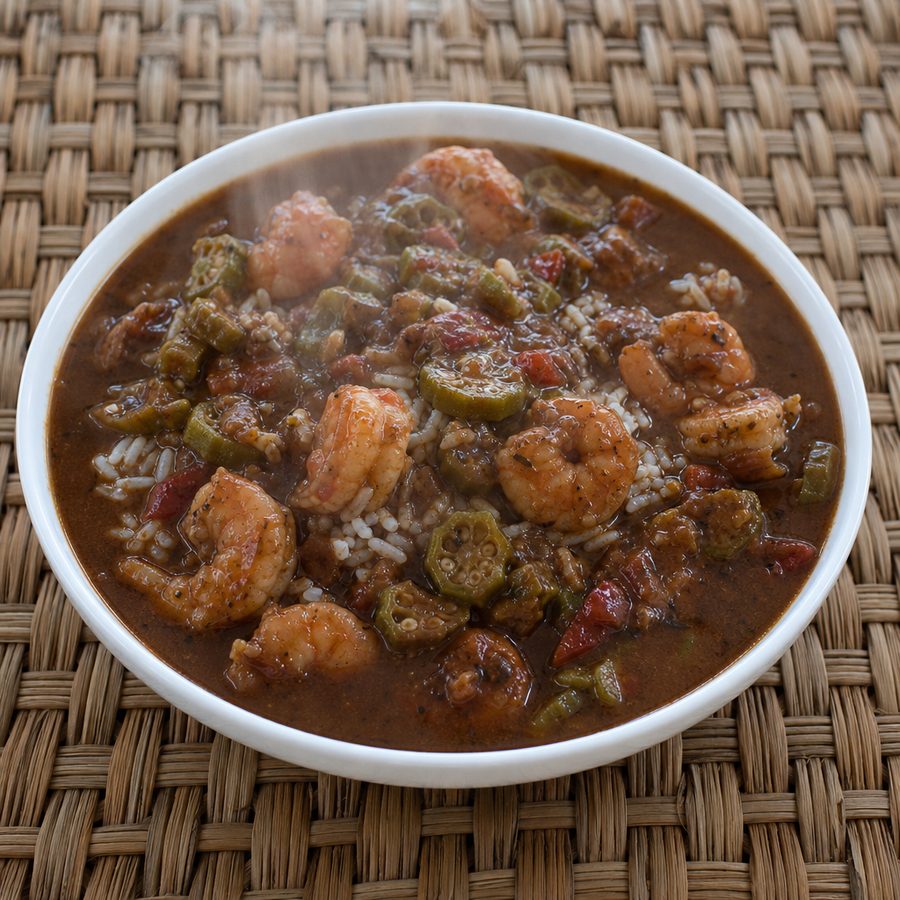
A soulful Louisiana-style stew of shrimp and tender okra simmered with red bell pepper, celery, onion and garlic in a spiced crushed-tomato broth and spooned over white rice.
Why You'll Love This Recipe
This is a warming one-pot seafood stew for anyone who wants the deep, savory comfort of a Louisiana gumbo without a long day at the stove. It leans on shrimp and a base of okra, peppers, celery, and onion, so it feels hearty and generous while staying light. It suits a cook who wants something with real character on a weeknight and does not mind a gentle kick of heat.
The flavor is built in the first step, where the onion, bell pepper, celery and garlic soften slowly in oil with paprika, thyme and cayenne so the spices bloom in the fat and turn fragrant before any liquid goes in. The okra does double duty: as it simmers it releases a natural body that thickens the stew, which is why this version needs no flour-and-oil roux to feel substantial. Adding the shrimp only at the end, off a hard boil, keeps it tender rather than tough.
Protein from the shrimp, fiber from the okra and vegetables, and enough rice to make it a full, sit-down meal. The crushed tomatoes bring brightness and acidity that keep each spoonful lively, while the cayenne and paprika give warmth without heaviness. It reheats well too, and a day in the refrigerator only deepens the spice, so a pot made on Sunday is worth counting on for lunch later in the week.
Ingredients
- 560 g cooked shrimp, peeled
- 2 1/2 cups cooked white rice
- 2 cups okra, sliced
- 1 1/2 cups crushed tomatoes
- 1 red bell pepper, diced
- 2 celery stalks, diced
- 1 onion, diced
- 3 cloves garlic, minced
- 2 tbsp olive oil
- 1 tbsp paprika
- 1 tsp dried thyme
- 1/2 tsp cayenne
- 1/4 tsp salt
Instructions
- Prep everything first: Dice the onion, red bell pepper, and celery, mince the garlic, and slice the okra crosswise into rounds about half an inch wide. Have the cooked shrimp and the cooked rice within reach as well, because once the vegetables hit the oil this pot moves quickly and there is no good moment to stop and chop.
- Soften the trinity: Heat the olive oil in a large heavy pot over medium heat, then add the onion, bell pepper, celery, and garlic along with the paprika, thyme, and cayenne. Cook, stirring often, until the vegetables are soft and glossy and the spices smell toasted, about 8 minutes, because blooming them in the fat pulls far more out of them than stirring them into liquid later does.
- Simmer the stew: Stir in the sliced okra and the crushed tomatoes, then add water a splash at a time until the pot is stew-like and loose. Bring it to a gentle simmer and cook, stirring now and then, until the okra is tender and the pot has thickened, about 12 minutes. The okra is doing the job a flour-and-oil roux would do in a longer recipe, which means it needs that full stretch to break down and lose its rope-like stringiness.
- Warm the shrimp through: Stir in the cooked shrimp and the salt and cook just until it is hot all the way through, about 3 minutes. Keep the pot below a hard boil, because shrimp that has already been cooked once tightens and turns rubbery fast in a rolling one. Taste and adjust the salt and the cayenne.
- Heat the rice: If the cooked rice is coming out of the refrigerator, warm it with a spoonful of water in a covered pot until it steams, since cold rice pulls the heat straight out of the gumbo poured over it. Starting from dry instead, 1 cup of white rice simmered in 2 cups of water takes about 15 minutes and gives you what this calls for.
- Serve: Spoon the rice into each bowl and ladle the gumbo over the top so the grains soak up the broth from underneath. Let the bowls sit for a minute before anyone digs in, because the stew comes off the stove a good deal hotter than it looks.
Variations
- Smoky depth: Swap the paprika for smoked paprika to give the broth a slow-cooked, over-the-fire aroma without any change to the method.
- Crab addition: Fold in a little lump crabmeat when you add the shrimp for a richer seafood flavor; this adds more shellfish.
- Green onion finish: Sprinkle sliced green onions and chopped parsley over each bowl at the table for a fresh, sharp lift against the warm spices.
- Extra-thick style: Use more okra and a little less water so the stew sets up thicker and clings to the rice like a stew rather than a soup.
- Brown rice base: Serve it over cooked brown rice instead of white for a nuttier grain with more fiber; simmer the brown rice longer, about 40 minutes.
Storage & Leftovers
Keep leftover gumbo in an airtight container in the refrigerator for up to three days. Store the rice separately if you can, so it does not soak up the broth and go soft.
Reheat gently in a saucepan over medium-low heat, adding a splash of water to loosen it back to a stew, and warm just until the shrimp is hot through. Avoid a rolling boil, which toughens the shrimp; the microwave works too in short bursts with a stir between.
To make ahead, cook the vegetable and okra stew through the simmer step and refrigerate it without the shrimp. When you are ready to eat, reheat the base, stir in the shrimp to warm through, and serve over freshly cooked rice.
Notes & Tips
- Managing okra slime: Okra releases a natural stringy liquid as it cooks that thickens the stew; giving it the full simmer with the acidic tomatoes helps that mellow so the finished gumbo is silky rather than ropey.
- Choosing the okra: Fresh pods should be firm and bright with no dark soft spots; if fresh is scarce, frozen sliced okra works well and can go in straight from the freezer.
- Buying the shrimp: Peeled cooked shrimp keeps this quick, but if you can only find raw, add it a couple of minutes earlier and cook just until it turns pink and opaque and curls into a loose C.
- Dialing the heat: The cayenne is where the kick lives; start light and taste at the end, since you can always stir in more but cannot pull it back once it is in.
- Season at the finish: Salt the stew after it has reduced rather than at the start, because the flavors concentrate as it thickens and it is easy to oversalt early.
- What to serve alongside: A wedge of crusty bread or a simple green salad rounds out the bowl and is nice for mopping up the last of the spiced broth.
Nutrition & Mindful Eating
- Onion, celery and bell pepper cooked down together are the foundation everything else is built on. The okra and tomato thicken the pot as it simmers, the shrimp go in at the very end, and the rice underneath catches all of it.
- Shrimp are added last and cook for only a couple of minutes, which is how they stay sweet and firm in a pot that has been going for an hour. They carry selenium, iodine and protein into a bowl full of vegetables.
- Okra is the ingredient that divides people, and long cooking is what wins the argument. Simmered in the tomato it softens and gives up the soluble fiber that gives gumbo its body, thickening the pot from the inside out.
- Rice under the gumbo is not a formality. It soaks up everything the pot has thrown off, spreads the heat of the cayenne evenly across the bowl, and brings the whole-food carbohydrate that makes this genuinely filling.
- Paprika, cayenne, thyme and garlic are what you smell before you taste anything, smoky and green and warm at the back of the throat. The heat builds across the bowl rather than hitting all at once, and salt is what keeps the tomato from tasting thin.
- As you eat, register how much the okra has thickened the pot and how the heat climbs a little with each spoonful, and let the slowness of the cooking set the pace at which you work through the bowl.
Frequently Asked Questions
How spicy is this gumbo?
With the cayenne and paprika it lands at a gentle, warming heat rather than fiery. You control it entirely with the cayenne, so reduce it for a milder bowl or add more at the end for a stronger kick.
Can I use frozen okra instead of fresh?
Yes. Frozen sliced okra works well and goes straight into the pot from frozen. It may give off a bit more liquid, so let the stew simmer until it thickens to the body you want.
My gumbo came out stringy. What happened?
That is the okra's natural texture, and it usually softens with a full simmer in the acidic tomato broth. Cooking it a few minutes longer and making sure the tomatoes are well incorporated helps it turn silky.
Do I have to serve it over rice?
Rice is traditional and soaks up the broth beautifully, but the stew is satisfying on its own or ladled over another cooked grain if you prefer. Keeping the rice separate until serving keeps it from going soft in leftovers.