
Simple Salted Roast Turkey Breast
Bone-in turkey breast rubbed with softened butter and salt, then roasted until the skin is golden and the meat carves into juicy, tender slices bathed in pan butter.
Why You'll Love This Recipe
This is a plainly cooked, deeply savory main built around one good cut of turkey and very little else. It suits anyone who wants a straightforward, high-protein centerpiece without a long ingredient list or fussy technique, and it is forgiving enough for a first-time roaster while still delivering the kind of golden, sliceable bird you would put out for company. A breast is also the sensible cut for four people, since a whole bird gives you far more than that and a good deal of it dark meat that nobody asked for.
The technique doing the work here is simple but deliberate. Patting the breast completely dry before it goes in the oven is what allows the skin to brown and crisp rather than steam. Working the softened butter under the skin as well as over it seasons the meat itself and keeps the breast from drying out during the roast, while the salt draws out surface moisture and builds flavor. Roasting at a steady moderate-high heat and pulling the breast at 165°F (74°C) in the thickest part, then resting it, gives you meat that carves cleanly and stays juicy.
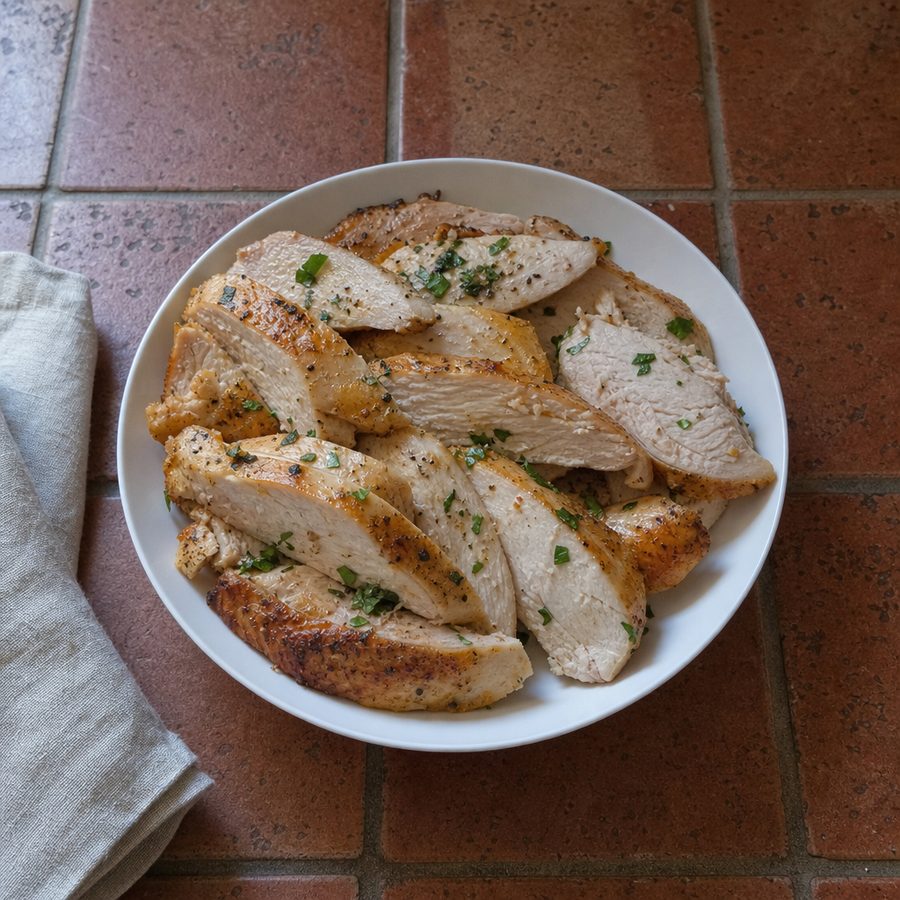
Burnished, salty skin over mild, tender meat, all finished with the rich pan butter spooned back over the slices. Turkey breast is mild and protein-dense, so a portion is filling and stays with you, and the butter adds enough richness that the plate feels like a real meal rather than a diet plate. It reheats well and carves into clean slices, which makes it as useful for the week ahead as it is for the night you cook it.
Ingredients
- 1 bone-in turkey breast (about 3 lb)
- 5 tbsp butter, softened
- 1 tsp salt
Instructions
- Preheat and dry the turkey: Preheat the oven to 400°F (200°C). Pat the turkey breast thoroughly dry on all sides with paper towels, including the cavity and under the skin where you can reach; a dry surface is what lets the skin brown and crisp instead of steaming.
- Butter the breast: With softened butter, gently loosen the skin from the meat by sliding your fingers underneath, then spread a layer of butter directly onto the meat under the skin. Rub the remaining butter over the outside of the skin so the whole breast is coated.
- Season: Sprinkle salt evenly over the entire outside of the breast, pressing it lightly onto the buttered skin so it adheres.
- Roast: Set the breast bone-side down in a roasting pan or oven-safe skillet and roast for 70 to 75 minutes. It is done when the skin is deep golden and an instant-read thermometer pushed into the thickest part of the breast, without touching bone, reads 165°F (74°C).
- Rest and slice: Move the breast to a cutting board and let it rest for 15 minutes so the juices settle and the slices stay moist. Carve the meat off the bone, slice across the grain into even pieces, and spoon the buttery pan juices over the top before serving.
Variations
- Brown butter finish: Instead of spooning the pan butter over as-is, pour it into a small pan and cook it a minute longer until it smells nutty and turns amber, then drizzle it over the slices for a deeper, toastier richness. This keeps the dish all animal fat and adds no new ingredient.
- Crisp-skin blast: For shatteringly crisp skin, roast as directed, then run the breast under the broiler for the last couple of minutes, watching closely so the buttered skin browns but does not burn.
- Ghee rub: Swap the softened butter for ghee, which has the milk solids cooked out. It withstands the oven heat with less chance of the surface browning too fast and gives a cleaner, more roasted flavor. This still adds dairy.
- Duck fat rub: Rub the breast with softened duck fat in place of the butter for a richer, more savory roast. This swaps the dairy for rendered poultry fat.
- Egg-basted gloss: Brush the skin with a little beaten egg yolk halfway through roasting for extra color and a burnished sheen. This adds egg.
Storage & Leftovers
Store leftover sliced or whole turkey breast in an airtight container in the refrigerator for up to four days. Spoon any leftover pan butter over the meat before sealing it, so the slices stay moist in the fridge.
To reheat without drying it out, arrange slices in a covered dish with a spoonful of the reserved pan butter or a splash of water, and warm in a low oven, around 300°F (150°C), just until heated through. Gentle, covered heat keeps the sliced breast tender; blasting it at high heat or in long microwave bursts will toughen it.
To get ahead, you can dry the breast, work the butter under and over the skin, and salt it up to a day in advance, then keep it uncovered in the fridge. The dry, seasoned surface roasts up even browner, and you simply put it straight into the preheated oven when you are ready.
Notes & Tips
- Buy bone-in on purpose: The bone insulates the meat and helps it cook evenly, and it holds the breast up off the pan. If your market only has boneless, it will cook faster, so start checking the temperature ten to fifteen minutes earlier.
- Let the butter truly soften: Cold, firm butter tears the delicate skin when you try to spread it. Leave it at room temperature until it gives easily to a fingertip, or it will bunch up instead of coating evenly.
- The thermometer is the only doneness cue that matters: Skin color tells you about browning, not doneness. Push an instant-read thermometer into the thickest part of the breast without touching bone and pull it at 165°F (74°C); a breast like this goes from juicy to dry quickly if you guess.
- Do not skip the rest: Fifteen minutes on the board lets the juices redistribute so they end up on your plate instead of running out the moment you cut in. Tent it loosely if your kitchen is cold.
- Save every drop of pan butter: The seasoned fat left in the pan is the best sauce this dish has. Tip the pan and spoon it over the slices, and refrigerate any extra to reheat the leftovers in.
- Season with a light hand if your butter is salted: Salted butter already brings its own salt to the party, so taste your usual amount in mind and go a little easier on the added salt to keep the skin from turning too salty.
Nutrition & Mindful Eating
- Turkey, butter and salt work as a trio here. The salt goes on early and draws moisture to the surface so the skin dries and browns, the butter bastes the meat as it melts, and the turkey brings the dense protein that makes this a centerpiece.
- Turkey breast is close-grained and mild, which is why it takes on butter and salt so readily. That fine texture holds a great deal of protein, and the B vitamins and selenium that come with any roasted bird ride along with it.
- Butter is doing more than flavor. Rubbed under and over the skin, it keeps the surface from drying as the oven works, browns into that nutty roasted smell, and carries fat-soluble vitamins A and D into the meat.
- Salt is what wakes the turkey up. Applied ahead of time it seasons past the surface, drawing out the sweetness already in the meat and giving the skin the savory edge you notice first.
- Resting the breast before slicing is the part people skip. Ten quiet minutes on the board stop the juices from running out onto the cutting surface, so the slices stay glossy and the roast still tastes of itself the next day.
- As you eat, pay attention to the salted, buttery skin against the soft slices underneath, and give the plate a few unhurried minutes so you notice when you are comfortably satisfied.
Frequently Asked Questions
My turkey breast browned before it hit 165°F (74°C). What do I do?
If the skin is getting dark but the center is not yet up to temperature, loosely tent a piece of foil over the breast and keep roasting until the thickest part reads 165°F (74°C). The foil slows the browning while the inside catches up.
Can I use a boneless turkey breast instead?
Yes. Butter and salt it the same way, but expect it to cook faster since there is no bone insulating it. Start checking the internal temperature about ten to fifteen minutes sooner and pull it at 165°F (74°C).
How do I keep the breast from drying out?
Three things: work butter under the skin as well as over it, cook to temperature rather than to a clock and stop right at 165°F (74°C), and give it a full fifteen-minute rest before slicing so the juices settle back into the meat.
Why pat the turkey dry if I am rubbing it with butter anyway?
A dry surface is what lets the skin brown and crisp; a wet one steams. You dry it first, then add the butter, so you get both the browning and the richness the butter brings.