
Skillet Butter Shrimp
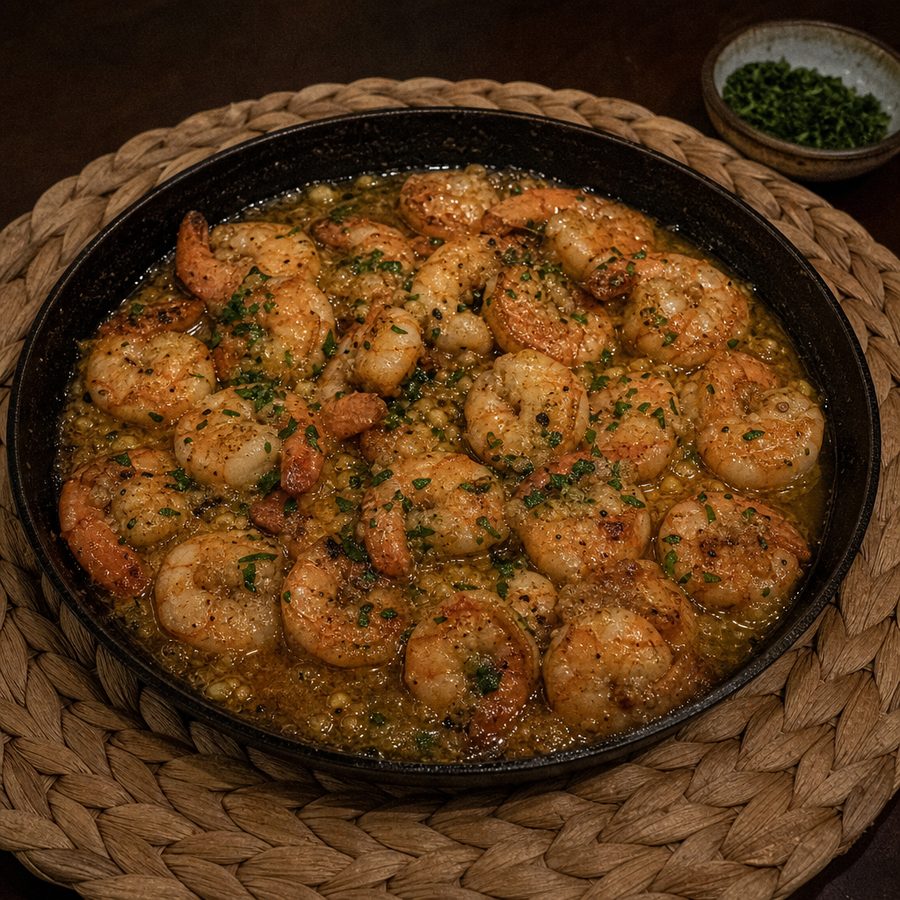
Plump, quickly seared shrimp tossed in foaming salted butter until pink, glossy, and glazed in their own rich, savory pan sauce.
Why You'll Love This Recipe
This is a fast, honest lunch built around one great ingredient: sweet, tender shrimp cooked in nothing but butter and salt. It comes together in under ten minutes of active cooking, which makes it an option on a busy midday when you want something hot and substantial rather than another cold plate. It suits anyone who wants a clean, protein-forward meal with almost no fuss and very little to clean up afterward.
The butter goes in twice, not once. The first portion goes into a hot pan and is allowed to foam and just begin to brown, which gives the shrimp a savory, lightly caramelized sear in the short window before they overcook. The second portion is added off the heat, where the gentler warmth lets it melt into the shrimp's released juices without breaking, creating a glossy sauce that clings to each piece. Patting the shrimp dry and salting them first is what allows that sear to happen instead of a wet steam.
The result is deeply satisfying because it leans on richness and clean flavor rather than volume. Shrimp is a sweet, high-quality protein that keeps you full and steady, and the butter carries that gentle sweetness while making the dish feel indulgent. With this little in the pan the shrimp themselves are the whole dish, so it is worth buying the best you can and thawing them slowly in the refrigerator rather than under a hot tap. There is nothing to distract from the shrimp itself, which is exactly the point.
Ingredients
- 2 lb large shrimp, peeled and deveined
- 8 tbsp (1 stick) butter
- 1 tsp salt
Instructions
- Thaw and prep the shrimp: If your shrimp are frozen, thaw them first by setting them in a colander under cold running water for a few minutes until pliable, or overnight in the refrigerator. Peel away the shells and, using a small paring knife, make a shallow cut down the back of each shrimp to lift out the dark vein. Lay the shrimp out on paper towels and pat them thoroughly dry on both sides, then sprinkle them lightly all over with salt. Drying is what lets them sear rather than steam.
- Melt the first of the butter: Set a large skillet over medium-high heat and add half of the butter. Let it melt and foam. When the foam subsides and the butter smells nutty and just begins to turn golden, the pan is hot enough to sear.
- Sear the shrimp: Lay the shrimp into the skillet in a single, uncrowded layer so each one touches the metal; work in batches if your pan is small rather than piling them in. Cook without moving them for 1 to 2 minutes, until the underside turns pink and the edges look opaque, then flip each shrimp and cook the second side for about 1 minute more. They are done when they are pink throughout, opaque in the center, and curled into a loose C shape. Avoid overcooking, which tightens them into rubbery O shapes.
- Pull them at the C, not the O: Shrimp tell you when they are done by their shape. A raw one is straight, a cooked one curls into a loose C, and one that has tightened into a closed O has gone rubbery and there is no way back. Watch the color as well: opaque and pink through the thickest part, with no gray translucence left where the vein was. That is two to three minutes a side at this heat, and the second side always goes faster than the first.
- Glaze off the heat: Pull the skillet off the burner. Add the remaining butter and swirl the pan so it melts slowly into the shrimp and their juices, emulsifying into a glossy, spoonable sauce that coats every piece. Serve right away with the pan sauce poured over the top.
Variations
- Browned butter finish: Let the first portion of butter cook a little further, until it turns amber and smells toasty, before adding the shrimp. This deepens the flavor into something nuttier and more savory without adding anything new.
- Extra-crisp edges: Cook the shrimp a touch longer on the first side, until the seared edge takes on a golden-brown color, for a firmer, more caramelized bite while keeping the centers just opaque.
- Hard cheese finish: Grate a fine dusting of a hard aged cheese over the shrimp just before serving so it melts into the warm butter. This adds dairy and a salty, savory edge.
- Egg-enriched sauce: Whisk a beaten egg yolk into the off-heat butter and swirl constantly as it warms, thickening the pan sauce into something closer to a rich, clinging glaze. This adds egg.
- Butter-poached and gentle: Melt all of the butter over low heat and let the shrimp cook slowly submerged in it, turning them until just opaque, for an especially soft, delicate texture rather than a seared one.
Storage & Leftovers
Cooked shrimp keep in an airtight container in the refrigerator for up to two days. Spoon the buttered pan sauce over them before sealing so they stay moist, and let them cool for only a short while before refrigerating rather than leaving them out at room temperature.
Reheat gently, because shrimp turn rubbery when blasted with high heat a second time. Warm them in a skillet over low heat just until heated through, or cover and use short bursts in the microwave at reduced power, stopping as soon as they are warm. The butter will re-melt and re-coat them as they heat.
To get ahead, peel, devein, and pat the shrimp dry a day in advance and keep them salted and covered in the refrigerator, so all that is left at mealtime is the quick sear and glaze. You can also cook the whole dish and serve it chilled straight from the refrigerator, where the shrimp are firm and the butter sets into a soft glaze.
Notes & Tips
- Buy the right size: Look for shrimp labeled large or jumbo, sold by a count like 16 to 20 per pound. Bigger shrimp are far more forgiving of the fast, hot sear and are less likely to overcook before they brown.
- Dry shrimp sear, wet shrimp steam: The single most important step is patting the shrimp completely dry before they hit the pan. Surface moisture drops the pan temperature and gives you pale, steamed shrimp instead of a golden sear.
- Read the shape for doneness: A loose C shape means the shrimp is perfectly cooked; a tight O shape means it has gone past done and will be chewy. Pull them the moment they curl gently and turn opaque.
- Do not crowd the pan: Shrimp packed together release moisture and steam one another. If your skillet is not large, cook them in two batches so each piece gets direct contact with the hot metal.
- Keep the glaze from breaking: Add the finishing butter only after the pan is off the heat. If the skillet is too hot, the butter separates into greasy oil instead of melting into a smooth, glossy sauce.
- Save the shells for later: The peeled shells freeze well in a bag and can be simmered another day into a shrimp stock, so nothing goes to waste.
Nutrition & Mindful Eating
- Three ingredients and a hot pan. The shrimp cook in roughly two minutes, the butter browns just behind them, and the salt draws the sweetness out of the shellfish so the whole skillet tastes bigger than its parts.
- Shrimp are firm and faintly sweet, and they go from translucent to opaque in a blink. That quick-cooking flesh is dense with protein and carries selenium and B12, which is why a small skillet of them eats like a full meal.
- Butter is the entire sauce. As it foams and then turns nutty it coats every shrimp in something glossy, and it brings the fat-soluble vitamin A that gives it its color.
- The trick is pulling the pan off the heat a moment early, because the shrimp keep cooking in the residual butter. Stopping there is the difference between a snappy bite and a rubbery one.
- A skillet of these eats richer than its size suggests. The protein is doing most of that work and the butter does the rest, coating your mouth in a way that makes a small plate feel generous.
- As you eat, notice how the browned butter smells before you taste it and how cleanly each shrimp gives under your teeth, and let the short cooking time be a reason to sit down for it.
Frequently Asked Questions
Can I use frozen shrimp instead of fresh?
Yes, and much of the shrimp sold as fresh at the counter was previously frozen anyway. Thaw it under cold running water or overnight in the refrigerator, then pat it very dry before cooking, since thawed shrimp hold extra water that will keep them from searing.
How do I know when the shrimp are done without cutting one open?
Watch the color and the shape. The shrimp is cooked when it turns pink and opaque all the way through and curls into a loose C. If it tightens into a closed O, it has overcooked and will be chewy, so pull them just as they curl gently.
Why did my butter turn greasy instead of making a smooth sauce?
The pan was too hot when the finishing butter went in. Take the skillet fully off the heat first and swirl the butter in slowly so it emulsifies with the shrimp juices into a glossy glaze rather than splitting into oil.
Can I cook the shrimp with the shells still on?
You can, and the shells add flavor, but they make the shrimp harder to eat and keep the butter from glazing the meat directly. For this dish, peeling and deveining first gives you the tender, fully coated result the recipe is after.