
Skyr Breakfast Bowl
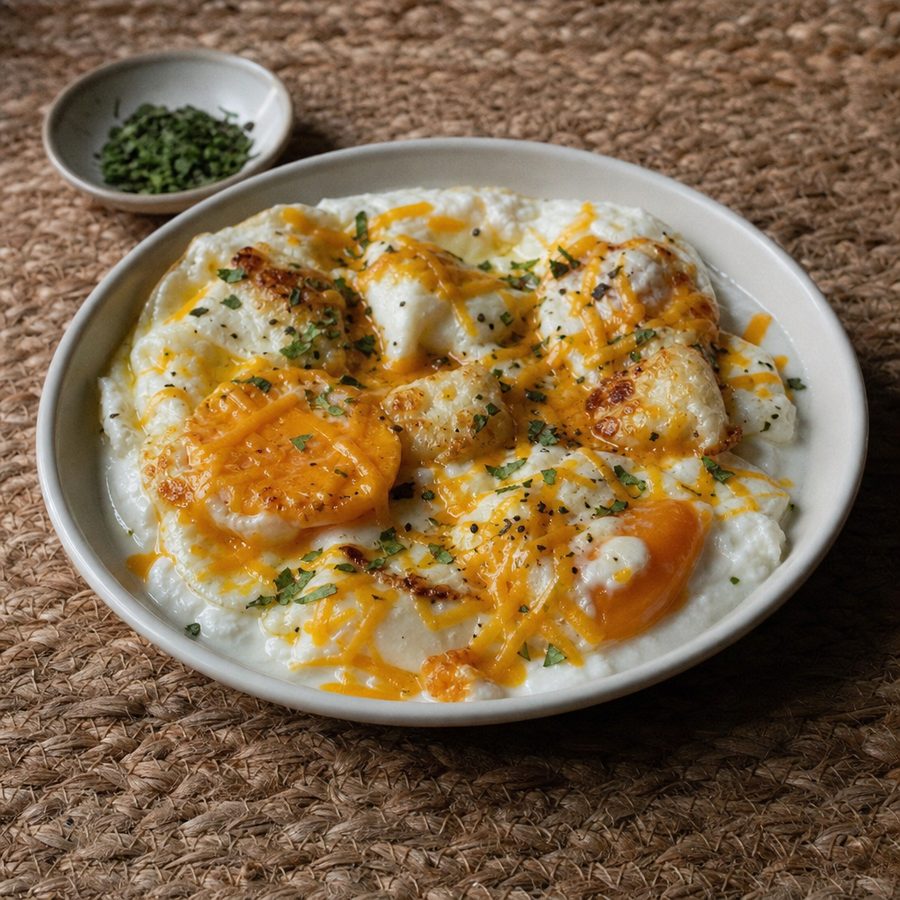
A warm bowl of gently heated plain skyr crowned with buttery soft-scrambled eggs and melted shredded cheddar, all eaten together while it is still warm.
Why You'll Love This Recipe
A filling morning meal made entirely from a few animal foods and a little salt, and from nothing else at all. It comes together in one small saucepan and one skillet in well under fifteen minutes, which makes it realistic on a weekday. It suits anyone cutting back on sugary or starchy breakfasts who still wants something that tastes rich and holds them until lunch.
Both components are warm, and that is the surprise. Barely warming the skyr instead of eating it cold softens its tang and gives it a loose, custard-like body that behaves like a sauce under the eggs, so each spoonful mixes the cool-tasting cultured dairy with hot, buttery egg. Soft-scrambling the eggs slowly over gentle heat keeps the curds tender rather than dry, and stirring the cheddar in off the heat lets it melt without seizing or turning oily.
Protein comes from three different sources at the same time, and that density is what makes a breakfast like this actually keep you full. The skyr brings a thick, creamy tang; the eggs bring soft richness; the cheddar brings a salty, savory finish that ties them together. Butter rounds out the eggs and carries flavor, so the bowl tastes indulgent while staying simple and clean.
Ingredients
- 2 cups plain skyr
- 12 large eggs
- 3/4 cup shredded cheddar
- 1 1/2 tbsp butter
- 1/2 tsp salt
Instructions
- Shred the cheddar: If you are working from a block, shred the cheddar on the large holes of a box grater so it melts quickly and evenly into the hot eggs. Set it aside within easy reach of the stove, since it goes in off the heat and there is no time to be grating cheese with soft eggs in the pan.
- Warm the skyr: Spoon the plain skyr into a small saucepan and set it over the lowest heat. Stir it constantly and gently, warming it only until the chill is gone and it feels barely warm to the touch, no more than a minute or two. Do not let it approach a simmer, or it can turn grainy and separate. Divide the warmed skyr among your serving bowls.
- Beat the eggs: Crack the eggs into a bowl, add the salt, and beat with a fork until the yolks and whites are fully blended and slightly frothy. The salt goes in now rather than at the end, because it seasons the eggs the whole way through where a sprinkle on top only seasons the first bite.
- Soft-scramble the eggs: Melt the butter in a nonstick skillet over medium-low heat until it foams but has not browned, since browned butter would take the eggs somewhere nutty and this bowl wants them plain and soft. Pour in the beaten eggs and let them sit for a few seconds, then push them slowly across the pan with a silicone spatula, folding the set curds toward the center. Keep the heat gentle and the eggs moving until they form soft, glossy curds that are just set and still look slightly wet, about 3 to 5 minutes.
- Melt in the cheddar: Take the skillet off the heat and stir the shredded cheddar into the warm eggs. The residual heat will melt it into the curds in under a minute; stir just until it turns creamy and stringy.
- Assemble and serve: Spoon the cheesy eggs over the warmed skyr in each bowl and serve immediately, because the eggs keep firming in their own heat and the whole point is that they are still soft when you sit down, while the eggs are soft and the cheese is still melted.
Variations
- Sharper cheese: Swap the mild cheddar for an aged sharp cheddar or a nutty gruyere for a deeper, saltier melt. This keeps it a cheese-forward bowl with a stronger finish.
- Add crisp bacon: Cook strips of bacon until crisp, crumble them, and fold them into the eggs or sprinkle them over the top. This adds cured pork and a smoky, salty crunch.
- Fold in smoked salmon: Flake cold smoked salmon into the soft eggs just before the cheese melts. This adds fish and a silky, briny note that plays against the tangy skyr.
- Cottage cheese base: Use warmed small-curd cottage cheese in place of the skyr for a milder, lumpier base. This swaps one cultured dairy for another and gives a less tangy bowl.
- Richer eggs: Stir a spoonful of cream cheese into the eggs as they finish scrambling. This adds extra dairy and makes the curds especially soft and custardy.
Storage & Leftovers
Store leftovers in an airtight container in the refrigerator for up to three days. Keep the components together or separate; either way the eggs will firm up and the cheese will set as they chill.
Reheat gently. Warm the bowl in short bursts in the microwave at reduced power, stirring between each, or set it in a small pan over low heat and stir just until warmed through. High heat will make the eggs rubbery and can cause the warmed skyr to separate, so stop as soon as it is hot.
To get ahead, you can shred the cheddar and beat the eggs with the salt the night before and keep both covered in the refrigerator. Warming the skyr and scrambling the eggs take only minutes, so those are best done fresh in the morning for the softest texture.
Notes & Tips
- Guard the skyr from heat: The single most common misstep is overheating the skyr. Cultured dairy this thick will turn grainy and weep if it gets too hot, so warm it only to take off the chill and pull it off the heat the moment it feels barely warm.
- Choose a skyr you like plain: Because it is warmed and eaten as-is, the skyr's own flavor carries the bowl. Taste your brand cold first; pick one whose tang and thickness you enjoy, since a thin or overly sour one will show through.
- Shred your own cheese: Pre-shredded cheddar is coated with starch to keep it from clumping, which can make it melt greasy or gritty. A block shredded fresh melts into the eggs far more smoothly.
- Pull the eggs early: Eggs keep cooking from residual heat after they leave the pan. Take them off while they still look slightly wet and glossy; by the time you stir in the cheese and plate them, they will be perfectly set, not dry.
- Melt the cheese off the heat: Adding the cheddar after the pan is off the burner lets it melt from the eggs' own warmth instead of scorching. This keeps it creamy and stringy rather than tough or oily.
- Season to taste at the end: The cheddar already brings salt, so taste a bite before adding more. If the bowl needs lift, a small extra pinch of salt on the eggs does more than salting the mild skyr.
Nutrition & Mindful Eating
- Skyr, eggs and cheddar are what make this bowl work. The skyr is cool and sharp, the eggs are soft and warm, the cheese melts into the middle, and between them the bowl carries the kind of protein that sits with you all morning.
- Skyr is strained until it is closer to a soft cheese than a yogurt, thick enough to hold a spoon upright. That straining concentrates its protein and calcium, and because it is cultured it brings live bacteria along with its clean sour tang.
- Eggs cooked slowly in butter stay in soft curds rather than firming into rubber, and they fold back into the skyr and go creamy. The yolks are where the choline is, and where most of the richness comes from.
- Cheddar sharpens everything around it. Grated over hot eggs it melts into strings and gives the bowl a salty, savory edge, and it adds calcium and B12 while it is at it.
- Half of what makes this good is temperature. Cold tangy skyr against hot eggs is a contrast you feel on the first spoonful, and a little salt over the top keeps the dairy from tasting one-note.
- As you eat, take the first spoonful with both the warm eggs and the cold skyr on it, and let the bowl be a proper sit-down start to the day rather than something finished on the way out.
Frequently Asked Questions
Why warm the skyr instead of just eating it cold?
Warming it takes the edge off its tang and loosens it into a smooth, sauce-like base that mingles with the hot eggs. A cold, stiff scoop under warm eggs stays separate and firm, while a barely warmed one blends into every bite.
My skyr turned grainy when I heated it. What went wrong?
It got too hot. Thick cultured dairy separates and turns grainy near a simmer. Keep it on the lowest heat, stir constantly, and stop as soon as the chill is gone, which usually takes only a minute or two.
How do I keep the scrambled eggs from turning dry and rubbery?
Cook them slowly over medium-low heat, keep the curds moving, and take them off the pan while they still look slightly wet. They finish setting from their own heat as you stir in the cheese and plate the bowl.
Can I make this ahead for busy mornings?
You can shred the cheddar and beat the eggs with the salt the night before and refrigerate them. The eggs scramble in a few minutes and the skyr warms almost instantly, so it is quick to finish fresh, which gives the best texture.