
Smoked Salmon and Ricotta Scramble Plate
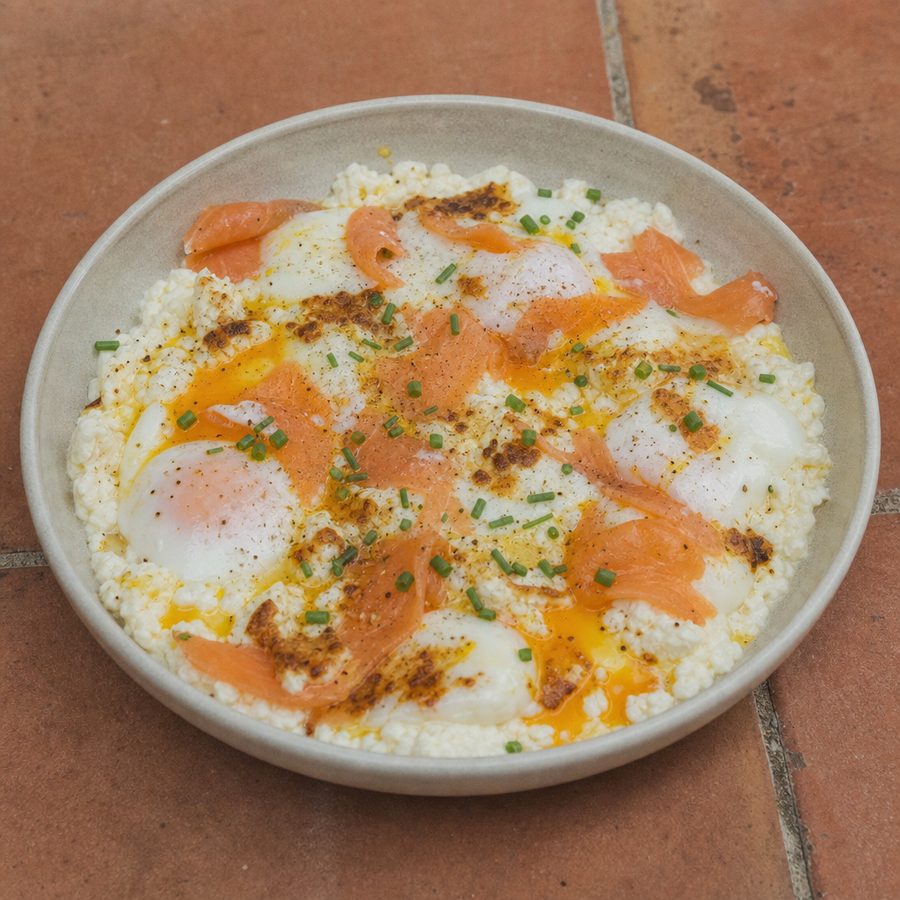
Soft, buttery scrambled eggs spooned over a warm layer of ricotta and finished with flakes of smoked salmon, which season the plate on their own.
Why You'll Love This Recipe
A rich, protein-heavy start with no bread and no bowl of cereal. It layers three simple animal foods so every forkful pulls creamy ricotta, soft egg, and savory salmon together at once. Because there is no chopping, no oven, and no long ingredient list, it comes together in the time it takes to soft-scramble a pan of eggs, which makes it as workable on a rushed weekday as it is on a slow weekend.
Temperatures and textures pull apart and hold each other steady. The ricotta is warmed only until it slackens into a silky bed, not cooked, so it stays fresh and cool-tasting against the hot eggs. The eggs are pulled from low heat while still glossy and barely set, which keeps them soft and custardy rather than dry and rubbery. The salmon goes on last and uncooked, so its cured, smoky flavor stays bright and its flakes keep their shape instead of turning to paste.
It satisfies because fat and protein arrive together in a form that feels indulgent. The butter carries flavor through the eggs, the ricotta adds a mild tang and body, and the salmon brings a savory, almost briny depth that keeps the plate from tasting flat. It is filling in a steady, unfussy way, and it eats like something richer than its short ingredient list would suggest.
Ingredients
- 8 oz smoked salmon, flaked
- 1 cup ricotta
- 6 large eggs
- 2 tbsp butter
Instructions
- Flake the salmon: Run your fingers over the salmon and pull out any stray pin bones, then peel away and discard the skin if it is still attached. Break the flesh into bite-size flakes and set aside so it is ready to drape at the end.
- Warm the ricotta: Set the ricotta in a small pan over low heat, or in a bowl in the microwave, and warm it just until it loosens and turns silky and spreadable, stirring once or twice. Do not let it come to a simmer or the curds will tighten and weep. Spread the warm ricotta across the plates in an even layer.
- Beat the eggs: Crack the eggs into a bowl and beat with a fork until the yolks and whites are fully blended and slightly frothy, with no ropes of white remaining.
- Soft-scramble the eggs: Melt the butter in a nonstick skillet over medium-low heat until it foams but does not brown. Pour in the eggs and let them sit for a few seconds, then push them slowly across the pan with a spatula, folding the set curds into the loose egg. Keep the heat gentle and the eggs moving until they form soft, glossy folds that are barely set and still look a touch wet, about 2 to 3 minutes. Pull the pan off the heat while they are slightly underdone, since they keep cooking from residual heat.
- Assemble the plates: Spoon the soft eggs over the warm ricotta. Drape the flaked salmon over the top and serve right away, while the eggs and ricotta are still warm.
Variations
- Change the fish: Swap the smoked salmon for smoked trout, flaked cooked mackerel, or hot-smoked salmon for a firmer, meatier flake and a deeper smoke.
- Add crisp bacon: Cook bacon until crisp, crumble it, and scatter it over the top for a salty crunch; this adds pork.
- Hard cheese finish: Grate a little aged hard cheese over the warm eggs so it melts into them; this adds more dairy and a sharper, nuttier note.
- Richer curd: Use mascarpone or crème fraîche in place of the ricotta for a looser, tangier, more luxurious base; this keeps it dairy but changes the texture.
- Silkier eggs: Beat in an extra egg yolk before scrambling for eggs that set even softer and taste richer; this adds egg.
Storage & Leftovers
Store leftovers in an airtight container in the refrigerator for up to three days. Keep the components together on the plate or packed side by side; the salmon is already cured or cooked and holds well, while the eggs are the part most worth eating sooner rather than later.
Reheat gently. Warm the eggs and ricotta in a covered pan over low heat or in short bursts in the microwave, stirring once, just until heated through, and stop before the eggs firm up or the ricotta separates. Add the salmon after reheating so it warms from the residual heat and keeps its flakes rather than drying out.
To get ahead, warm and spread the ricotta and flake the salmon in advance and keep both chilled. That leaves only the eggs to scramble in the morning, so a fresh, soft-set plate is only a few minutes away.
Notes & Tips
- Buy the right ricotta: Choose a fresh, whole-milk ricotta with a thick, creamy body rather than a thin, watery one; if yours is loose, let it drain in a fine sieve for a few minutes so the bed does not turn runny under the eggs.
- Cold-smoked versus hot-smoked: Silky cold-smoked salmon drapes in translucent sheets, while hot-smoked salmon breaks into firmer flakes. Either works; pick the texture you prefer and flake hot-smoked more coarsely so it does not disappear into the eggs.
- Taste the salmon first: Cured and smoked salmon is already salty, so taste a flake of the fish before deciding whether the finished plate needs any seasoning at all.
- Pull the eggs early: The eggs are done when they still look slightly wet and glossy and hold soft folds; carryover heat finishes them on the plate, so waiting for them to look fully set means overcooking.
- Warm, do not cook, the ricotta: You want it just loosened and spreadable. Overheating drives out the whey and leaves you with a grainy, weeping layer instead of a smooth one.
- Double the batch smartly: Scale everything and warm all the ricotta at once, but scramble the eggs in two smaller pans rather than one crowded skillet, so they stay soft instead of steaming and turning tough.
Nutrition & Mindful Eating
- Eggs, ricotta and salmon put three different softnesses on one plate. The eggs set into curds, the ricotta stays in loose milky pockets, the salmon drapes across the top, and between them there is a lot of protein for a breakfast this gentle.
- Ricotta is made from the whey left behind by other cheeses, which is why it is so mild and pleasantly grainy. Dropped into hot eggs it barely melts, adding cool patches of milkiness along with calcium and an easily used protein.
- Eggs cooked in butter over low heat stay in soft folds, and the yolks hold most of the character: the color, the richness and the choline that comes with them.
- Smoked salmon is laid over the finished eggs rather than cooked into them, so it stays cool and silky against the warm scramble. The fat that lets it drape that way is where its long-chain omega-3 fats and vitamin D sit.
- Butter is the only fat in the pan and it does two jobs, keeping the eggs from catching and carrying the vitamins A and K2 that come with it. A plate like this eats slowly and holds you longer than the small pile on it suggests.
- As you eat, hunt for the bites that catch a pocket of ricotta along with the egg and the salmon, and let the warm and cool parts of the plate register separately before you go back for more.
Frequently Asked Questions
Can I use raw salmon instead of smoked or cooked?
Yes. Cut skinless salmon into pieces, cook it gently in a little butter or by poaching until it turns opaque and flakes easily, then break it into flakes and cool it before draping it over the eggs. It will taste milder and less smoky than cured salmon, so you may want a touch more salt.
My ricotta turned grainy and watery. What happened?
It was heated too hard. Ricotta only needs to be warmed until it loosens; once it approaches a simmer the curds tighten and squeeze out their whey. Warm it gently over low heat or in short microwave bursts, and drain a watery ricotta in a sieve first.
Why are my eggs coming out dry?
They cooked too long or too hot. Keep the heat at medium-low, move the eggs slowly, and take the pan off the heat while they still look glossy and a little wet. They firm up from residual heat, so fully set eggs in the pan end up overdone on the plate.
Can I make the whole plate ahead for the week?
Prep the parts ahead rather than the finished plate. Warm and spread the ricotta and flake the salmon, then refrigerate both; scramble the eggs fresh each morning so they stay soft. Fully assembled and reheated, the eggs lose their custardy texture.