
Soy-Glazed Salmon With Greens
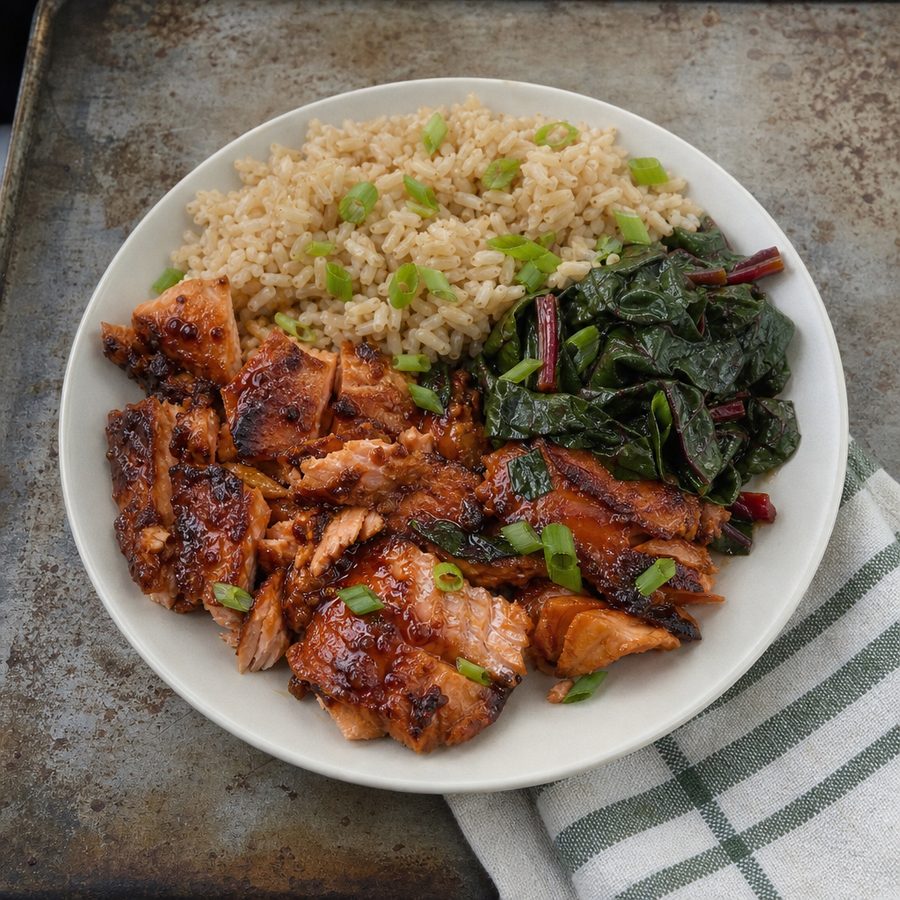
Seared salmon fillets lacquered with a savory soy-ginger glaze, plated over brown rice with garlicky sauteed swiss chard and a sprinkle of fresh scallions.
Why You'll Love This Recipe
A restaurant-style piece of fish, with no long ingredient list and no sink full of pans at the end. The salmon carries a glossy, savory-sweet glaze; the greens go in the same skillet; and the brown rice rounds it into a full plate. It suits a busy weeknight when you want something that feels considered but comes together in the time it takes the rice to finish.
The magic is in reducing the soy sauce, coconut aminos, and ginger into a real glaze before it ever touches the fish. Simmering drives off water so the sauce thickens and clings instead of sliding off, and the coconut aminos bring a gentle, almost caramelized sweetness that balances the salt of the soy. Brushing it on at the very end, rather than the start, keeps the sugars from scorching over the high heat used to sear the fillets, so you get lacquer and shine instead of burnt bitterness. Cooking the garlicky chard in the same skillet lets the greens pick up the fond and glaze left behind.
It is a nourishing plate. Salmon is rich in long-chain omega-3 fats and high-quality protein, the brown rice and chard add fiber and staying power, and the ginger, garlic, and scallions layer in flavor without leaning on heavy sauces. The result is filling and warming, with the kind of umami depth that makes vegetables and whole grains taste like the point of the meal rather than an afterthought.
Ingredients
- 4 salmon fillets (about 600 g)
- 6 cups chopped swiss chard
- 4 tbsp soy sauce
- 3 tbsp coconut aminos
- 1 tbsp grated fresh ginger
- 4 garlic cloves, minced
- 2 tbsp avocado oil
- 3 scallions, sliced
- 3 cups cooked brown rice
Instructions
- Cook the brown rice: Rinse the brown rice under cool water until it runs mostly clear, then combine with water in a saucepan, bring to a boil, cover, and simmer over low heat until the grains are tender and the water is absorbed, about 40 minutes. Turn off the heat and let it steam, covered, while you make the rest of the dish.
- Prep the aromatics and greens: Peel and finely grate the fresh ginger, mince the garlic, and thinly slice the scallions. Rinse the swiss chard, strip the leaves from the thickest stems, and roughly chop the leaves. Slice the tender stems thin, so that they soften in the same three minutes the leaves need.
- Make the glaze: In a small saucepan, combine the soy sauce, coconut aminos, grated ginger, and half of the minced garlic. Simmer over medium heat until it turns glossy and slightly syrupy, about 3 minutes, since a thin glaze runs straight off the fish and pools on the plate.
- Sear the salmon: Pat the salmon fillets dry. Heat the avocado oil in a skillet over medium-high heat until it shimmers, then lay the fillets in skin-side down. Cook without moving them for 3 to 4 minutes until the underside is browned, flip, and cook 3 to 4 minutes more until the flesh is opaque and flakes easily and the thickest part reaches 145°F (63°C). Brush the fillets generously with the glaze in the last minute rather than the first, because it has sugar in it and would be black long before the salmon was done.
- Saute the greens: In the same skillet, add the remaining minced garlic and cook until fragrant, about 30 seconds. Add the chopped swiss chard and cook, tossing, until the leaves are wilted and the stems are tender, about 3 minutes. If the pan looks dry, add a splash of water, since the stems need a little moisture to go tender and there is glaze on the bottom of the pan that will scorch without it.
- Plate and finish: Spoon the brown rice onto plates, top with the sauteed chard and a glazed salmon fillet, then garnish with the sliced scallions and drizzle any remaining glaze over the top.
Variations
- Swap the greens: Use spinach, baby kale, or bok choy in place of the swiss chard. Tender leaves like spinach wilt in about a minute, so add them near the end and pull the pan off the heat as soon as they collapse.
- Add some heat: Stir a spoonful of chili crisp or a pinch of red pepper flakes into the glaze, or finish the plate with a drizzle of sriracha for a warming background heat that plays off the ginger.
- Trade the fish: Arctic char, steelhead trout, or a thick cod loin all take the glaze well. Adjust the cooking time for thickness and pull the fish when it flakes and reaches 145°F (63°C).
- Sweeter, stickier glaze: Whisk a little honey or maple syrup into the glaze while it simmers for a deeper, more lacquered finish; note that this adds sugar to the dish.
- Toasted sesame finish: Sprinkle toasted sesame seeds over the plated salmon and a few drops of toasted sesame oil into the greens for a nutty aroma; this adds seeds.
Storage & Leftovers
Store leftovers in an airtight container in the refrigerator for up to 3 days. Keep the salmon, greens, and rice together or separate; either works, though the fish stays firmest when it is not sitting in liquid. Cooked salmon can develop a stronger aroma by day three, which is normal.
Reheat gently to keep the fish moist. Warm a covered plate in short bursts in the microwave at reduced power, or set the salmon and greens in a skillet over low heat with a splash of water to create steam. Avoid high heat or long reheating, which dries out the fish and turns the glaze gummy. The rice reheats best with a sprinkle of water and a lid to steam it back to softness.
To get ahead, cook the brown rice and simmer the glaze up to 3 days in advance and refrigerate both separately. With those done, the fish and greens take only minutes, so dinner comes together on demand. Grate the ginger and mince the garlic ahead too, and keep them covered in the fridge.
Notes & Tips
- Buy the right fillets: Look for center-cut fillets of even thickness so they cook at the same rate. If you buy skin-on, leave the skin on for searing; it protects the flesh and crisps up nicely, and it slips off easily after cooking if you prefer to remove it.
- Dry fish sears better: Patting the fillets completely dry before they hit the oil is what gives you a browned crust instead of steamed, pale fish. A wet surface will not color no matter how hot the pan is.
- Judge doneness by flake: Salmon is done when it turns from translucent to opaque and the flakes separate with gentle pressure from a fork. A thermometer reading of 145°F (63°C) at the thickest point takes the guesswork out.
- Watch the glaze near the end: Because the glaze has natural sugars, brush it on only in the last minute of cooking. Over high heat for too long it can catch and turn bitter, so save the bulk of it for drizzling at the table.
- Season with the label in mind: Soy sauce and coconut aminos are both salty, so taste before adding any extra salt to the greens. If you want a lower-sodium plate, dilute the finished glaze with a splash of water rather than reaching for more soy sauce.
- Round out the plate: A squeeze of lime or a handful of quick-pickled cucumber alongside cuts the richness of the salmon and refreshes the palate between bites.
Nutrition & Mindful Eating
- Fish, greens and rice each take the glaze differently. The salmon holds it as a shine on the surface, the chard drinks it up into the leaves, and the brown rice sits underneath collecting whatever is left in the pan, which is arguably the best part of the plate.
- Salmon cooked to just past translucent stays moist and separates into large soft flakes under a fork. The fat marbled through it is where the long-chain omega-3s are, and it is also why the fish takes a sweet salty glaze so well.
- Swiss chard wilts in about a minute, the leaves collapsing into silk while the stems stay crunchy and faintly beet-sweet, so one vegetable gives you two textures. Vitamin K and magnesium ride along inside the greens.
- Brown rice keeps its bran, so the grains stay a little chewy and taste faintly of nuts, and that intact outer layer is where its fiber sits. It is the slow steady part of the plate and it holds the whole meal up.
- Ginger and garlic hit the hot avocado oil first and the entire kitchen knows about it, and the soy sauce and coconut aminos reduce around them into a syrup. Scallions are scattered over at the end, raw and sharp against all that sweetness.
- As you eat, look at the glaze on the fish before you break it, notice the ginger in the steam, and give the meal your full attention in its first few minutes rather than only its last.
Frequently Asked Questions
What is coconut aminos and can I leave it out?
Coconut aminos is a savory, slightly sweet sauce made from fermented coconut sap. Here it softens and rounds the saltiness of the soy sauce. If you skip it, the glaze will be sharper and saltier, so cut back on the soy sauce and add a small amount of water or a touch of sweetener to balance it.
How do I keep the salmon from sticking to the pan?
Make sure the oil is shimmering-hot before the fish goes in, then lay the fillets down and leave them undisturbed. Salmon releases naturally once a crust forms; if it resists when you try to flip, give it another thirty seconds and it will let go on its own.
Can I use frozen salmon?
Yes. Thaw it fully in the refrigerator overnight, then pat it very dry before searing. Excess water from frozen fish is the main thing that keeps it from browning, so drying is the key step.
My glaze turned out thin. What happened?
It most likely did not simmer long enough. Let it bubble until it looks glossy and coats the back of a spoon; it will thicken further as it cools. If it is still loose, return it to the heat for another minute or two to drive off more water.