
Spiced Red Lentil Hummus
A smooth, no-cook dip that swaps chickpeas for cooked red lentils, blended with tahini, olive oil, lemon, cumin, and garlic into a soft, savory spread.
Why You'll Love This Recipe
Chickpeas want soaking overnight, or a can. Red lentils want fifteen minutes on the stove and no forethought at all, which is the whole reason this exists: they blend down softer and looser than chickpeas ever do, so the spread turns smooth without a fight. Lentils carry the kind of fiber that supports steady digestion and helps a snack hold you over, and they bring plant protein with them, so this does more than fill a gap between meals.
The flavor leans firmly Mediterranean. Tahini adds a nutty richness and its own dose of sesame minerals, while extra-virgin olive oil brings polyphenols, the plant compounds tied to the olive oil that anchors so much of this way of eating. Lemon juice cuts the richness, garlic gives it backbone, and cumin warms the whole thing. Together they turn a humble legume into something you will want to keep scooping.
What makes this practical is how little it asks of you. There is no cooking beyond having lentils ready, and everything goes into one processor and blends in a couple of minutes. It keeps for days, travels well, and pairs with raw vegetables, whole-grain crackers, or warm pita. For a snack that fits a plant-forward pattern and delivers real fiber without much effort, it is hard to beat the reward you get here for so little work.
Ingredients
- 2 cups cooked red lentils
- 3 tbsp tahini
- 2 tbsp olive oil
- 2 tbsp lemon juice
- 1 1/2 tsp cumin
- 3 cloves garlic
- 1/3 tsp salt
Instructions
- Let the lentils cool before they go in: If the red lentils have just come off the stove, spread them on a plate and give them ten minutes. Warm lentils loosen the tahini and thin the whole bowl, so a hummus that seemed right in the processor sets much stiffer in the refrigerator than you intended. Cooled first, what you taste is what you get. Drain off any liquid still sitting with them, since red lentils hold more water than they look like they do.
- Start the tahini with the lemon juice, not the oil: Put the tahini and the lemon juice in the processor together with the garlic and run it for twenty seconds before anything else joins them. Tahini seizes when acid hits it, going thick and pale and slightly grainy, and it comes back smooth again if you keep working it. Doing that first, on its own, means the seizing happens where you can see it rather than halfway through the finished hummus.
- Add the lentils, cumin, salt, and oil: Add the cooled lentils, the cumin, the salt, and the olive oil, and run the processor for about a minute, stopping once to scrape down the sides. Red lentils are soft to begin with and they need far less time than chickpeas do, so this comes together quickly. Watch it rather than timing it: what you want is even and creamy, with no separate flecks of lentil left in it.
- Stop before it turns gluey: Red lentils have enough starch to go from creamy to pasty if the machine keeps running, in the way overworked potato does. If the hummus starts to look shiny and stretch behind the blade rather than falling from it, stop immediately; a tablespoon of cold water and a short pulse loosens it. This is the one way this recipe goes wrong, and it happens in the last thirty seconds rather than anywhere earlier.
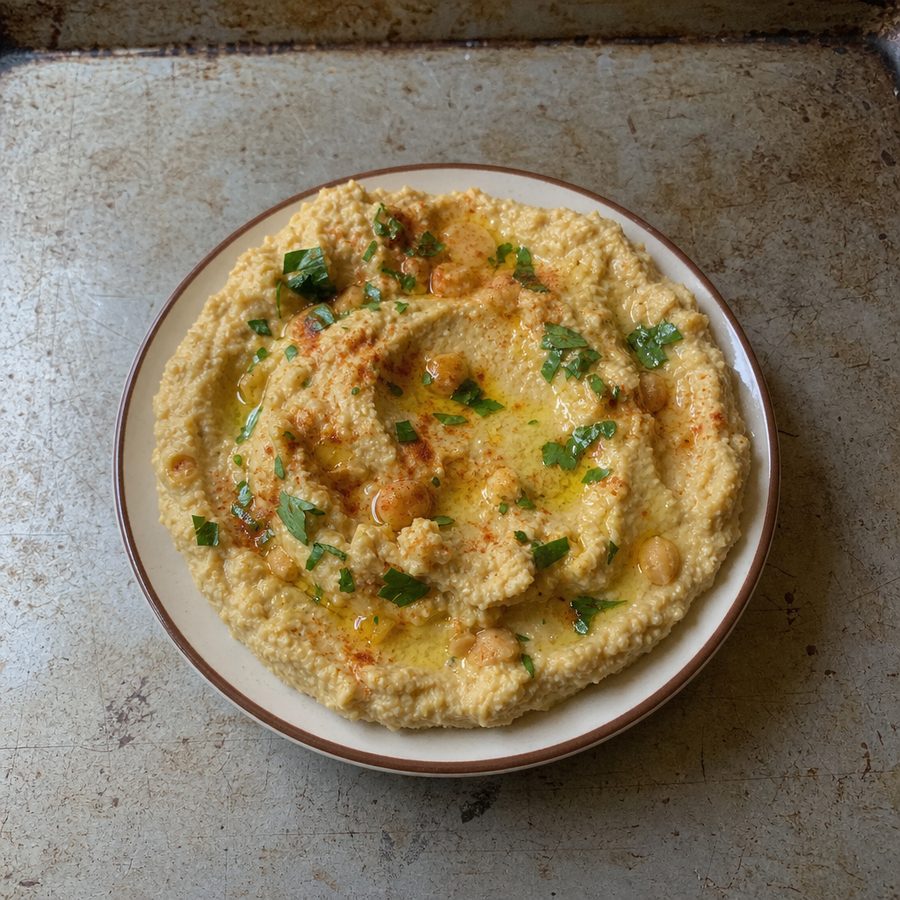
- Taste it cold and finish the bowl: Taste it after it has sat for a few minutes, because cold and rest both mute salt and acid and a hummus tasted straight off the blade always seems better seasoned than it is. Adjust with lemon first and salt second. Scrape it into a bowl, press a hollow across the middle with the back of a spoon, and pour a little olive oil into it just before it goes to the table.
Variations
- Extra smoky: Stir in half a teaspoon of smoked paprika for a deeper, gently smoky version.
- Herb-forward: Blend in a handful of fresh parsley or cilantro for a green, fresh-tasting dip.
- Roasted garlic: Swap the raw garlic for roasted cloves to trade sharpness for mellow sweetness.
- Spicy: Add a pinch of cayenne or a spoonful of harissa for warmth that builds slowly.
- Lemon-heavy: Double the lemon juice for a brighter, more tangy spread that suits summer plates.
Storage & Leftovers
Store the hummus in an airtight container in the refrigerator for up to five days. The flavor deepens after a few hours as the garlic and cumin settle in, so making it a day ahead often tastes even better than serving it right away.
Give it a stir before each use, since a little olive oil may rise to the surface and the texture can firm up when cold. A splash of water or lemon whisked in will bring it back to a smooth, scoopable state if it has thickened in the fridge.
This dip freezes well for up to three months, which makes it worth doubling the batch. Freeze it in a flat container, thaw overnight in the refrigerator, and stir thoroughly, then refresh with a little olive oil to restore the original creaminess.
Notes & Tips
- Warm lentils blend best: I like to use lentils that are room temperature or slightly warm, because they purée smoother than cold ones straight from the fridge.
- Water is your friend: I keep a small cup of cold water beside the processor and add it slowly, since that is how I control the texture without thinning the flavor.
- Good olive oil matters: I save a fruity extra-virgin oil for the finishing drizzle, where its flavor and polyphenols come through most clearly.
- Salt at the end: I add salt last and taste as I go, because tahini brands vary and it is easy to over-season early on.
- Toast the cumin: When I have a minute, I warm the cumin in a dry pan first to bring out more of its aroma before it goes in.
- Scrape the sides: I stop the machine at least twice to scrape down, which is the difference between grainy and truly smooth.
Nutrition & Mindful Eating
- Lentils, tahini and lemon are doing everything here. The lentils bring the body, the tahini brings the richness and the faint bitterness underneath, and the lemon keeps a dip this smooth from ever tasting flat.
- Red lentils go soft enough to break down completely, which is why the texture comes out silky rather than grainy. They carry fiber and plant protein into a dip, and their mild sweetness is what the cumin has to push against.
- Tahini is simply ground sesame, thick and slightly bitter, and it turns pale and loose the moment lemon juice hits it. That reaction is what gives the hummus its creaminess, and the sesame brings calcium and a rich fat along with it.
- Raw garlic and ground cumin go straight into the blender, so the garlic keeps its edge and the cumin stays earthy and warm. Give it ten minutes on the counter and both settle into everything around them.
- Olive oil poured over the top pools in the grooves your spoon leaves, and it brings a monounsaturated fat that is part of why a few scoops of this sit so well and hold you into the afternoon.
- As you eat, let the lemon arrive first and the garlic last, and see how smooth the lentils have gone, and make a few scoops something you sit down with rather than something you graze past.
Frequently Asked Questions
Can I swap the lentils for chickpeas?
Yes, an equal amount of cooked chickpeas works and gives a classic hummus. You may need a bit more water to reach the same smoothness lentils offer.
Can I make it ahead?
Absolutely. It keeps for five days refrigerated and freezes for three months. The flavor deepens overnight, so a day-ahead batch is often the best-tasting.
How much is one serving?
A serving is one-third of a cup, generous enough for a snack with vegetables or crackers. Scale it down if you are serving it as one dip among several on a shared plate.
What makes this different from classic hummus?
Red lentils instead of chickpeas, which gives it a softer texture and a little more fiber. Olive oil and tahini do the rest, and the fiber and plant protein keep the portion satisfying.