
Spinach Feta and Dill Frittata
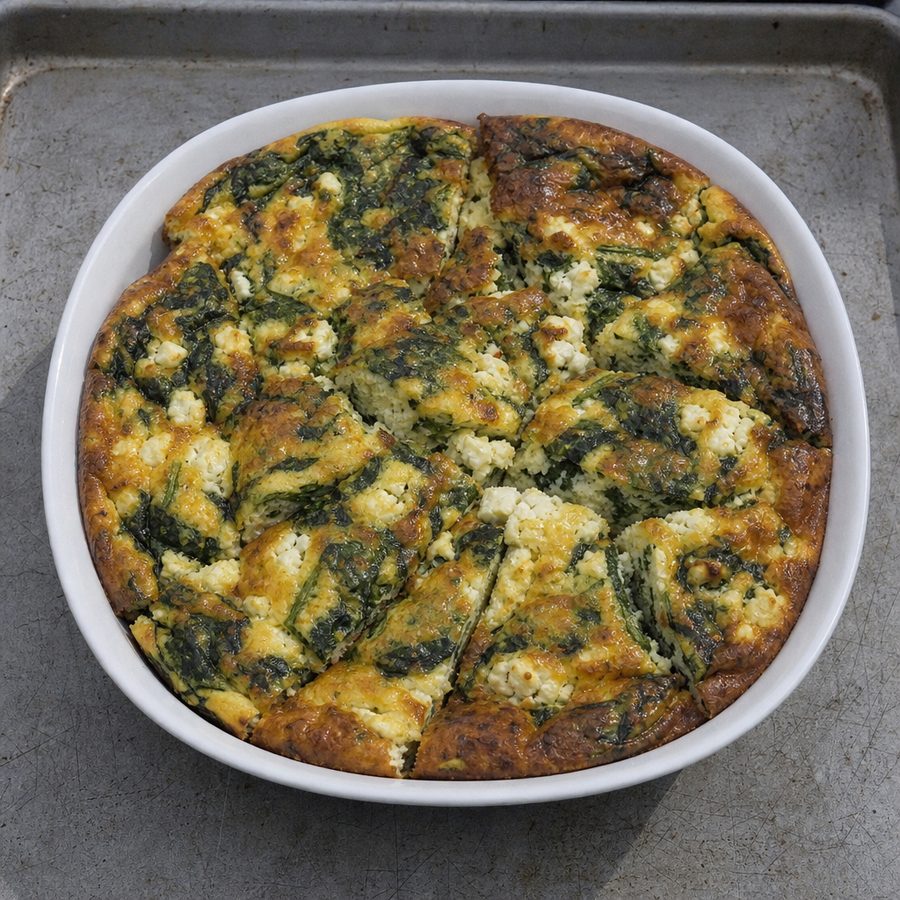
A fluffy baked egg frittata folded with wilted spinach, sweet softened onion, briny crumbled feta, and fresh dill, all set in a golden slab you can slice into wedges.
Why You'll Love This Recipe
This is a savory baked egg dish built for people who want a real, protein-forward breakfast without standing at the stove flipping anything. It comes together in one ovenproof skillet, holds well at room temperature, and works just as nicely as a light supper or a slice packed for lunch. If you like the flavors of spinach, feta, and dill together, this is a dependable way to eat them any day of the week.
Spinach wilted and onion softened, both before the eggs appear. Raw spinach carries a lot of water, and cooking it down first keeps that moisture from weeping into the custard and leaving you with a watery, loose frittata. Whisking the eggs until they are fully blended and slightly frothy incorporates air for a lighter set, and baking at a steady moderate heat lets the eggs firm up gently and evenly rather than puffing and collapsing. Folding most of the feta into the eggs seasons the whole thing from within, while the feta reserved for the top browns lightly for pockets of concentrated tang.
It is rich and fresh at the same time. Eggs and feta give it staying power and a creamy, substantial bite, so a wedge actually holds you until your next meal. The spinach adds earthiness and body, the softened onion brings a quiet sweetness, and the fresh dill lifts everything with a bright, grassy note that keeps the dish from feeling heavy. It is filling in the way a good breakfast should be, without needing anything else on the plate.
Ingredients
- 10 large eggs
- 6 cups fresh spinach
- 3/4 cup crumbled feta
- 1 small onion, diced
- 2 tbsp olive oil
- 3 tbsp chopped dill
- 1/2 tsp salt
Instructions
- Preheat the oven: Preheat the oven to 375°F (190°C) and position a rack in the center so the frittata cooks evenly.
- Prep the vegetables and dill: Peel and finely dice the onion. Rinse the spinach and spin or pat it dry. Finely chop the dill fronds and set aside.
- Wilt the greens: Heat the olive oil in an ovenproof skillet over medium heat. Add the onion and cook, stirring now and then, until soft and translucent, about 5 minutes. Add the spinach in handfuls, stirring, and cook just until fully wilted and any released water has cooked off, about 2 minutes. Spread the mixture into an even layer.
- Whisk the eggs: Crack the eggs into a bowl, add the salt and most of the chopped dill, and whisk until the yolks and whites are fully blended and slightly frothy. Stir in most of the crumbled feta, saving a little feta and dill for the top.
- Bake until set: Pour the egg mixture over the greens in the skillet and gently tilt the pan so it settles evenly. Sprinkle the reserved feta and dill over the top. Transfer to the oven and bake until the center is just set and no longer jiggles when you nudge the pan, about 15 minutes; the top should look puffed and pale gold.
- Rest and serve: Let the frittata rest in the pan for 5 minutes so it firms up and slices cleanly. Cut into wedges and serve warm or at room temperature.
Variations
- Sun-dried tomato: Stir in chopped oil-packed sun-dried tomatoes with the spinach for pockets of sweet-tart intensity that play well against the feta.
- Herb swap: Trade the dill for fresh mint or flat-leaf parsley for a different but equally bright, fresh finish.
- Roasted red pepper: Fold in chopped jarred roasted red peppers, drained well, for smoky sweetness and a pop of color throughout.
- Green onion and garlic: Add sliced green onions and a little minced garlic to the pan with the onion for a deeper, more savory base.
- Extra creamy: Whisk a splash of milk or plain yogurt into the eggs for a softer, more custardy set; note that this adds dairy.
Storage & Leftovers
Refrigerator: Once fully cooled, wrap the frittata or store the wedges in an airtight container in the refrigerator, where they keep well for up to four days. The flavor of the dill and feta actually deepens by the next day.
Reheat: Warm a wedge in a 300°F (150°C) oven or toaster oven for about 10 minutes to keep the texture tender, or microwave it in short bursts at reduced power so the eggs do not turn rubbery. It is also perfectly good cold or at room temperature straight from the fridge.
Make ahead: Bake it a day or two before you need it and refrigerate. You can also wilt the spinach and onion and chop the dill the night before, then whisk and bake in the morning for a hot breakfast with only a few minutes of hands-on work.
Notes & Tips
- Dry the spinach well: After rinsing, spin or pat the spinach as dry as you can, and cook it until the pan looks dry before adding eggs. Lingering water is the main reason a frittata turns out loose or weepy.
- Choose a block feta: Feta sold as a block in brine has more flavor and a creamier crumble than the pre-crumbled kind, which is often drier and dusted with anti-caking starch. Crumble it yourself for the best texture.
- Fresh dill over dried: Fresh dill gives the bright, grassy note this dish leans on. If you only have dried, use far less since it is more concentrated, and stir it into the eggs so it can soften.
- Use a well-seasoned or nonstick ovenproof pan: A cast-iron or nonstick ovenproof skillet releases the wedges cleanly. If your pan tends to stick, run a thin film of extra olive oil up the sides before adding the eggs.
- Do not overbake: Pull it when the center is just set and barely jiggles; residual heat finishes it as it rests. Overbaking is what turns eggs dry and spongy.
- Round out the plate: A wedge pairs well with sliced tomatoes, cucumbers, or a piece of whole-grain toast if you want to make it a fuller meal.
Nutrition & Mindful Eating
- Eggs, spinach and feta hold the frittata together while the dill sits on top of all of it. The eggs puff and set, the spinach runs through in ribbons, and the feta salts each bite from within.
- Fresh dill chopped in at the end keeps its anise sharpness through the bake rather than cooking away, and it is the first thing you taste. Herbs in this quantity stop being a garnish and start acting like a vegetable.
- Ten eggs baked slowly puff at the edges and stay creamy in the middle, and that gentle heat is what keeps them from turning tight and dry. Their protein and choline are why a wedge of this carries a whole lunch.
- Spinach wilted into the onion before the eggs go over loses its raw mineral edge and turns sweeter and softer, and it brings iron and folate into the middle of the pan.
- Feta softens but does not melt, so it stays in salty pockets you find one at a time, and the onion underneath has gone sweet in the olive oil, which is what balances all that salt.
- As you eat, catch the dill first, before the feta and the eggs, and notice how soft the middle stayed, and let this be a proper sit-down wedge rather than something eaten from the pan.
Frequently Asked Questions
Can I use frozen spinach instead of fresh?
Yes. Thaw it completely and squeeze out as much water as you can with your hands or a clean towel before it goes in the pan. Frozen spinach is already cooked down, so you are mainly warming it through with the onion rather than wilting it.
Why did my frittata turn out watery?
The usual culprit is moisture from the spinach. Make sure the greens are dried before cooking and that the pan looks dry with no pooled liquid before you pour in the eggs. Rushing the wilting step is the most common cause.
How do I know when it is done?
The center should look set and puffed and no longer jiggle like liquid when you gently nudge the pan. A knife slipped into the middle should come out clean. If the center still wobbles, give it a few more minutes.
Can I make this without the feta?
You can leave it out and the frittata will still hold together and taste good; you may want to add a little more salt since feta carries a lot of the seasoning. The dill and onion will come through more clearly.