
Tempeh Buddha Bowl with Tahini
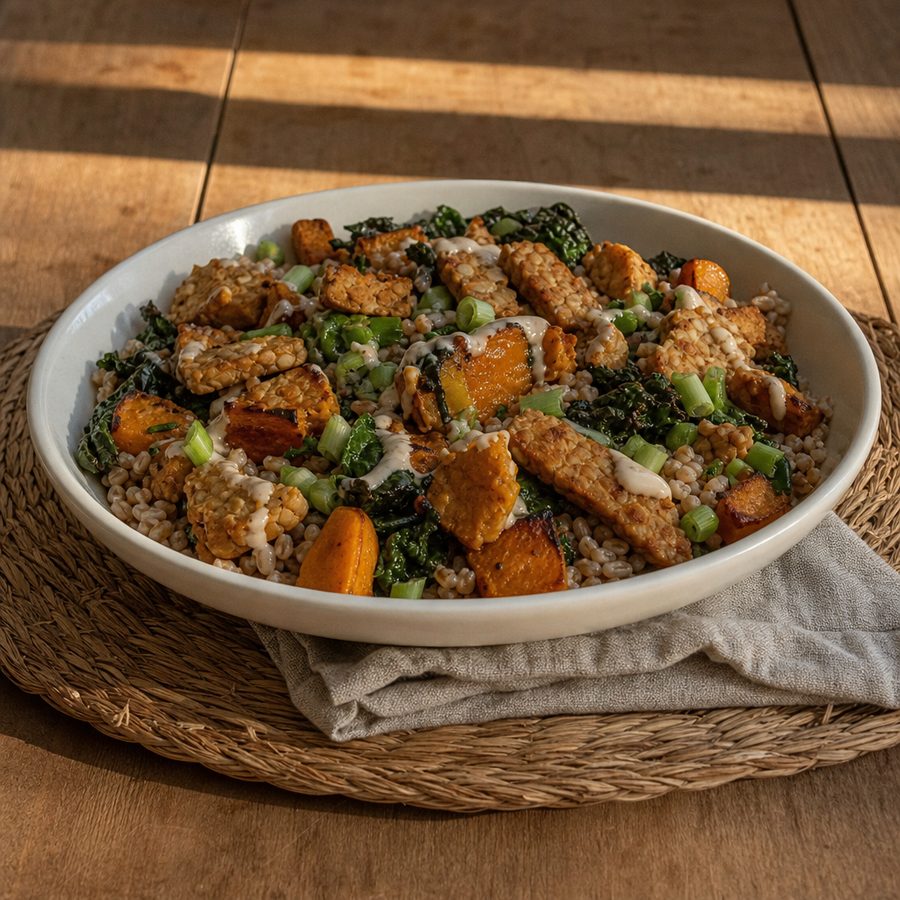
Roasted tempeh and butternut squash with crisped kale piled over tender farro, all finished with a lemony garlic-tahini drizzle and a handful of toasted pumpkin seeds.
Why You'll Love This Recipe
Roasted tempeh and butternut squash sit over a base of chewy farro in this hearty, plant-forward dinner bowl. It is for anyone who wants a filling, protein-rich meal that comes together on one sheet pan and holds up well as leftovers. The flavors lean warm and savory, with smoky paprika on the roasted pieces and a bright, garlicky tahini drizzle to pull it all together.
Tempeh and squash roast together at high heat, so the tempeh crisps at the edges while the squash caramelizes and turns silky inside. Tempeh has a firm, nutty character that soaks up the soy sauce and paprika as it roasts, and finishing the kale on the same hot pan crisps the leaves without another dish to wash. The tahini dressing is loosened with warm water and sharpened with lemon so it stays pourable and coats every component.
The farro and the tempeh give it real staying power, the squash adds the natural sweetness, and the kale and pumpkin seeds bring the texture and crunch. Substance and freshness in equal parts. It is rich in fiber and plant protein, generous with heart-friendly fats from olive oil and tahini, and full of the kind of slow-digesting carbohydrates that keep you full long after the bowl is empty.
Ingredients
- 20 oz tempeh, cubed
- 3 cups cubed butternut squash
- 4 cups chopped kale
- 3 1/2 cups cooked farro
- 4 tbsp tahini
- 2 tbsp lemon juice
- 3 cloves garlic, minced
- 2 tsp smoked paprika
- 4 tbsp olive oil
- 2 tbsp soy sauce
- 1/3 cup pumpkin seeds
- 1/2 tsp salt
Instructions
- Cook the farro: Rinse the farro under cool water in a fine-mesh strainer, then add it to a pot with plenty of water and a pinch of salt. Bring to a boil, lower to a steady simmer, and cook uncovered until the grains are tender but still chewy, about 25 to 30 minutes. Drain off any extra water and set the farro aside, since grains left standing in their cooking liquid keep swelling and go soft.
- Prep the tempeh and squash: Preheat the oven to 425°F (220°C). Cut the tempeh into bite-size cubes. Peel the butternut squash, scoop out any seeds, and cut it into cubes about the same size as the tempeh so that everything on the pan is done at the same moment.
- Roast: On a large rimmed baking sheet, toss the tempeh and squash with the olive oil, smoked paprika, and soy sauce until evenly coated. Spread into a single layer, because anything crowded steams in its own moisture and the tempeh will never crisp, and roast for 25 minutes, flipping everything once halfway through, until the squash is fork-tender and the tempeh edges are golden and crisp.
- Add the kale: While the pan roasts, remove the tough stems from the kale and roughly chop the leaves. In the last 5 minutes of roasting, scatter the kale over the hot pan and return it to the oven, since kale added at the start would be ash by the time the squash was tender.
- Make the tahini drizzle: Mince the garlic. In a small bowl, whisk together the tahini, lemon juice, garlic, and salt. Add warm water a little at a time, whisking, until the dressing is smooth and pourable; It will seize and thicken at first, which is what tahini always does when acid hits it and is not a sign anything went wrong.
- Toast the seeds and assemble: Toast the pumpkin seeds in a dry skillet over medium heat, shaking the pan often, until they puff and smell nutty, about 3 minutes. Divide the farro among bowls, top with the roasted tempeh, squash, and kale, drizzle generously with the tahini dressing, and sprinkle with the toasted pumpkin seeds.
Variations
- Swap the grain: Trade the farro for cooked quinoa or brown rice if you prefer; quinoa cooks faster and keeps the bowl gluten-free, while brown rice gives a softer, milder base.
- Change the roasting vegetable: Use cubed sweet potato or cauliflower in place of the butternut squash. Sweet potato roasts in about the same time; cut cauliflower into small florets so it crisps rather than steams.
- Warm and spicy: Whisk a spoonful of harissa or a pinch of cayenne into the tahini dressing, or toss the tempeh and squash with a little chili flake before roasting for gentle heat.
- Herb and citrus lift: Fold chopped fresh parsley or cilantro through the finished farro and add lemon zest to the dressing for a fresher, brighter bowl.
- Crunch swap: Replace the pumpkin seeds with toasted sunflower seeds or chopped walnuts (this adds tree nuts) for a different texture and a richer, toastier finish.
Storage & Leftovers
Stored in an airtight container in the refrigerator, the assembled components keep well for up to four days. Keep the tahini dressing in a separate small container so the farro and roasted pieces do not turn soggy.
To reheat, warm the tempeh, squash, and farro in a skillet over medium heat with a splash of water, or microwave in short bursts until hot through. Add the tahini drizzle after reheating, since it is best at room temperature and can turn pasty when heated. Refresh with a squeeze of extra lemon juice if it tastes flat.
For make-ahead, roast the tempeh and squash and cook the farro up to three days in advance, and whisk the dressing ahead too; it thickens in the fridge, so loosen it with a little warm water before serving. Assemble bowls fresh so the kale keeps its crisp edges.
Notes & Tips
- Pick fresh tempeh: Look for tempeh that is firm and evenly pale with only light gray or black spots, which are harmless. Avoid packages that smell strongly of ammonia or feel slimy. Steaming the cubes for a few minutes before roasting mellows any bitterness if your tempeh tastes sharp.
- Cut for even roasting: Keep the tempeh and squash cubes close to the same size so they finish together. If your squash pieces are large, give them a five-minute head start before adding the tempeh.
- Do not crowd the pan: Spread everything in a single layer with space between pieces so it roasts and browns instead of steaming. Use two sheet pans if you are scaling up for a bigger household.
- Fix a stiff dressing: Tahini thickens dramatically when the lemon juice hits it, then thins again as you whisk in warm water bit by bit. If it ever gets too loose, a little more tahini brings it back; too thick, more warm water.
- Season at the end: Soy sauce and tahini both carry salt, so taste before adding more. A final squeeze of lemon or a pinch of salt over the assembled bowl usually does more than seasoning each part heavily.
- Serve it warm or cold: This bowl is good hot from the oven or packed cold for lunch. If serving cold, let the roasted pieces cool before you add the dressing so it clings rather than slides off.
Nutrition & Mindful Eating
- The squash, the farro and the tempeh give this bowl its three textures. The squash goes soft and sweet, the farro stays chewy and nutty, the tempeh browns firm, and the tahini sauce is what ties the three of them into one dish.
- Butternut squash roasted until the edges caramelize turns deeper and sweeter than it is raw, and that strong orange color is beta-carotene, which your body converts into vitamin A.
- Farro holds its shape and gives every spoonful something to chew, with a faint wheaty sweetness that suits the roasted squash, and its fiber is part of why a bowl of vegetables sits this solidly.
- The tahini sauce is the piece people remember. Sesame paste loosened with lemon and garlic goes creamy and slightly bitter, and the paprika stirred through it adds a smoky warmth that finds the kale.
- Kale scattered over the hot pan for the last five minutes wilts into something you can genuinely chew, and pumpkin seeds scattered over the top give the bowl its sharpest crunch, bringing zinc and magnesium along with it.
- As you eat, find the moment where the sweet squash meets the smoky tahini, and let yourself linger over a bowl that took this long to build rather than clearing it in five minutes.
Frequently Asked Questions
My tempeh tastes bitter. How do I fix that?
Some brands of tempeh have a naturally bitter edge. Steaming the cubes for about ten minutes before tossing them with oil and seasoning opens the tempeh up, mellows the bitterness, and helps it absorb more of the smoky, savory marinade when it roasts.
Can I make this bowl gluten-free?
Farro contains gluten, so swap it for cooked quinoa or brown rice, and use a certified gluten-free tamari in place of the soy sauce. Everything else in the bowl is already gluten-free.
Why did my tahini dressing turn thick and clumpy?
That is normal. Tahini seizes when the acidic lemon juice first hits it, then smooths out as you whisk in warm water a little at a time. Keep whisking and adding water gradually until it becomes pourable.
Can I use frozen butternut squash?
Yes. Frozen cubed squash works well and skips the peeling. Do not thaw it first; roast straight from frozen, and expect it to need a few extra minutes and to brown a little less than fresh.