
Tempeh and Potato Breakfast Hash
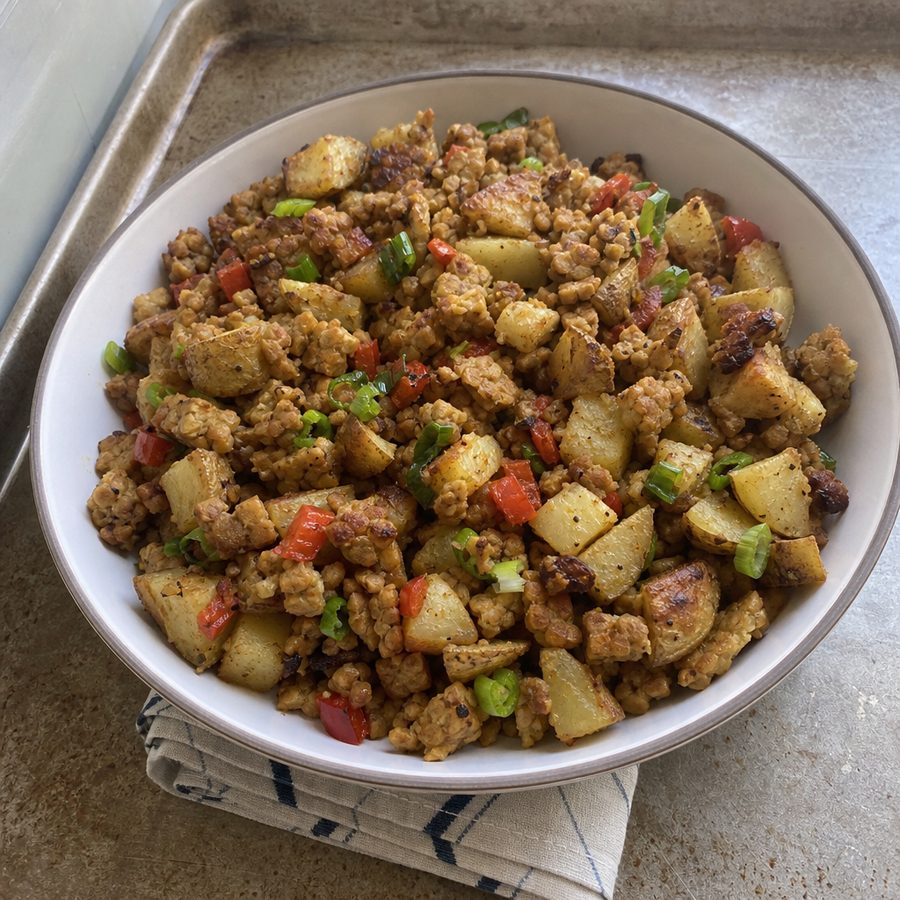
Crumbled tempeh browned with soy sauce and paprika, tossed with crisp diced potatoes, red bell pepper, onion, and fresh scallions for a savory, deeply satisfying breakfast hash.
Why You'll Love This Recipe
Crumbled tempeh and potatoes together give you all the comfort of a diner hash, with no meat and no eggs in it. It comes together in one skillet and eats like a full plate, so it suits both a slow weekend morning and a make-ahead breakfast you can reheat on a busy weekday. It is filling enough to carry you through a long stretch until your next meal.
The tempeh wants real time in the oil. Tempeh is nutty and firm, and giving it real time in the oil to turn deeply golden develops a savory, toasted crust that the soy sauce and paprika then cling to. Draining and steam-drying the boiled potatoes before they hit the pan is what lets them crisp instead of steam, and letting them sit undisturbed for a minute before stirring builds those crackly golden edges. The onion and bell pepper go in last so they soften and sweeten without turning to mush.
Crisp texture and savory depth on the surface, and real staying power sitting behind both of them. The tempeh and potatoes together bring a good amount of protein and fiber, so the plate is filling rather than just warm and starchy. Olive oil carries the flavor and rounds out the paprika, while the raw scallions on top add a fresh, sharp bite that keeps every forkful from feeling heavy.
Ingredients
- 2 1/2 cups crumbled tempeh
- 3 medium potatoes (about 480 g), diced
- 1 red bell pepper, diced
- 1 medium onion, diced
- 4 scallions, sliced
- 1 1/2 tbsp soy sauce
- 1 1/2 tsp paprika
- 3 tbsp olive oil
- 1/4 tsp salt
Instructions
- Prep the potatoes: Scrub the potatoes and cut them into small, even dice about half an inch across. Place them in a pot, cover with cold water, add a pinch of salt, and bring to a boil. Simmer until just fork-tender but not falling apart, about 10 minutes, then drain well and let them steam-dry in the colander for a few minutes, since a wet potato steams in the skillet and welds itself to the metal instead of crisping.
- Prep the remaining ingredients: While the potatoes cook, crumble the tempeh into rough pea-to-marble-sized pieces with your fingers. Dice the red bell pepper and the onion into small pieces, and thinly slice the scallions, keeping them separate for the finish, because they go on raw and they are the only sharp thing in an otherwise soft, savory pan.
- Crisp the tempeh: Heat most of the olive oil in a large skillet over medium heat. Add the crumbled tempeh in an even layer and cook, stirring occasionally, until deeply golden and browned on many sides, about 6 minutes. Add the soy sauce and paprika and stir for about 30 seconds until the tempeh is evenly coated and fragrant, and add them only once it has browned, since a wet pan at the start would have stopped it browning at all.
- Brown the potatoes: Push the tempeh to one side of the skillet and add the remaining olive oil to the cleared space. Add the drained potatoes in as flat a layer as you can and let them sit undisturbed for a minute or two before stirring, because every time you move them you interrupt the crust that is forming, cooking until they develop crisp golden edges, about 6 minutes.
- Add the vegetables: Stir the onion and red bell pepper into everything in the skillet and cook, stirring now and then, until softened and lightly browned, about 4 minutes. They go in last, since both give up water and would have kept the potatoes from crisping.
- Finish and serve: Season with the salt, taste and adjust, then remove from the heat. Sprinkle the sliced scallions over the top and serve hot.
Variations
- Smoky and spicy: Swap the paprika for smoked paprika and add a pinch of cayenne or a diced fresh chili with the onion for a warmer, smokier hash with real heat.
- Sweet potato version: Use diced sweet potato in place of the regular potato for a sweeter, softer hash; it browns a little faster, so watch the edges and keep the pieces small.
- Greens folded in: Stir a big handful of chopped spinach or kale in during the last minute of cooking, letting it wilt into the hash for extra color and a mild, earthy note.
- Garlic and herb: Add minced garlic to the skillet when you add the onion, and finish with chopped fresh parsley or cilantro alongside the scallions for a brighter, more aromatic plate.
- Extra savory glaze: Add a splash more soy sauce along with a squeeze of lime at the finish for a deeper, tangier savory edge; taste before adding the salt so it does not turn too salty.
Storage & Leftovers
Cooled leftovers keep well in an airtight container in the refrigerator for up to four days. Let the hash come to room temperature before sealing it so condensation does not collect and soften the potatoes.
To reheat and bring back some crispness, warm the hash in a skillet over medium heat with a small drizzle of olive oil, spreading it flat and letting it sit before stirring. A microwave works in a pinch but leaves everything soft, so the skillet is worth the few extra minutes if you want the crust back.
For make-ahead, you can boil and dice the potatoes and crumble the tempeh a day in advance, storing each in the refrigerator, so the morning cook is just browning and combining. The fully cooked hash also holds up as batch-cooked breakfast for the week.
Notes & Tips
- Dry potatoes crisp best: After boiling, let the potatoes sit in the colander to steam off surface moisture for a few minutes. Wet potatoes steam in the pan and never brown, so this pause is the single biggest factor in crispness.
- Do not crowd the skillet: Give the tempeh and potatoes room in the pan so they brown instead of steam. If your skillet feels packed, cook in two batches and combine at the end.
- Steaming the tempeh first: If your tempeh tastes slightly bitter to you, steam the block over simmering water for about ten minutes before crumbling; it mellows the flavor and helps it soak up the soy sauce and paprika.
- Season the potato water: Salting the water the potatoes boil in seasons them from the inside, so the finished hash tastes fuller even with the modest amount of salt added at the end.
- Adjust the salt at the finish: Soy sauce brands vary a lot in saltiness, so taste after the tempeh is coated and before you add the final salt. You may need less than you think.
- Serve it alongside something fresh: A wedge of avocado, a spoonful of salsa, or a simple sliced tomato on the side brightens the plate and balances the savory, browned flavors of the hash.
Nutrition & Mindful Eating
- Potato, tempeh, onion and pepper all cook in the same pan and all take something from it. The potato crusts, the tempeh browns, the onion sweetens into the fond, and the soy sauce at the end pulls the four of them into one flavor.
- Potatoes are the reason to make a hash at all. Cut small and pressed into a hot pan, they go glassy inside and hard-crusted outside, and they bring potassium and slow-releasing starch to a breakfast that has to last.
- Tempeh takes to browning the way a potato does, going crisp on the flat sides and staying firm in the middle, and because it is made from whole cultured soybeans its protein arrives with the fiber of the bean.
- Onion and bell pepper soften and sweeten as they cook down, and the smoked paprika going over them is what makes the whole pan smell like a diner at eight in the morning.
- Scallions scattered over at the end stay raw and sharp against everything browned. A plate of this holds you well past midmorning, with the tempeh and the potatoes each doing a different half of that work.
- As you eat, listen for the crackle when your fork breaks through a crusted potato, and give the plate ten unhurried minutes rather than eating it standing at the stove.
Frequently Asked Questions
My tempeh tastes a little bitter. How do I fix that?
A slight bitterness is natural to tempeh and usually fades once it is browned and seasoned. If it bothers you, steam the block over simmering water for about ten minutes before crumbling, which mellows the flavor and helps it absorb the soy sauce and paprika.
Why won't my potatoes get crispy?
The most common cause is moisture. Drain the boiled potatoes thoroughly and let them steam-dry in the colander before they go in the pan, use enough oil, and let them sit undisturbed for a minute or two before stirring so a crust can form.
Can I use raw potatoes instead of boiling them first?
You can dice them very small and cook them longer over lower heat until tender and browned, but par-boiling first is more reliable for getting them cooked through and crisp on the outside without burning.
What should I serve with this hash?
It stands on its own as a full breakfast, but it pairs well with sliced avocado, salsa, hot sauce, toast, or a piece of fresh fruit for a lighter, brighter contrast to the savory skillet.