
Tempeh Tikka Masala
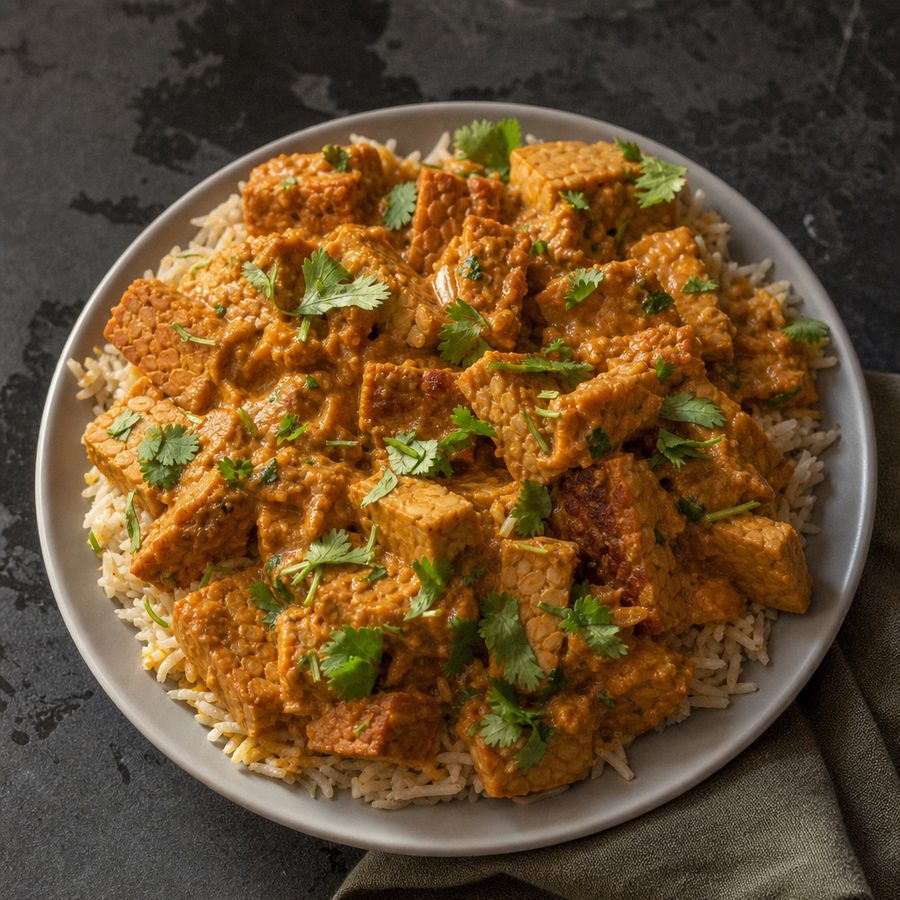
Golden-seared tempeh cubes simmered in a creamy tomato-coconut masala warm with turmeric, cumin, paprika, coriander, garlic, and ginger, spooned over fluffy basmati rice and finished with fresh cilantro.
Why You'll Love This Recipe
This is a hearty, comforting dinner for anyone who wants the deep, layered warmth of a classic tikka masala without any animal products, and who likes a plate that fills them up. Tempeh stands in for the usual protein, soaking up the spiced tomato sauce while holding its own firm, satisfying bite. It suits a weeknight when you want something nourishing and a little special, and it reheats beautifully for lunch the next day.
The flavor comes from two moves that matter. First, searing the tempeh until it is golden on all sides builds a nutty, browned surface that adds depth and a firmer texture before it ever meets the sauce. Second, toasting the turmeric, cumin, paprika, and coriander in the hot oil with the onion, garlic, and ginger before the tomatoes go in wakes up their aromatic oils, so the masala tastes round and developed rather than raw. Simmering the crushed tomatoes down and then finishing with coconut milk gives the sauce its signature creamy body without any dairy.
Tempeh brings a substantial dose of plant protein and fiber, basmati rice adds a fragrant, tender base, and coconut milk lends a richness that makes the whole bowl feel indulgent. The spices are not just for taste; turmeric and ginger bring an anti-inflammatory character, and the fiber from tempeh and the tomato-based sauce helps the meal sit steady and keep you full. It is the kind of dinner that tastes like a treat while quietly doing you good.
Ingredients
- 21 oz tempeh, cubed
- 1 3/4 cups crushed tomatoes
- 3/4 cup plus coconut milk
- 1 large onion, diced
- 5 cloves garlic, minced
- 1 1/2 tbsp grated ginger
- 1 tsp turmeric
- 2 tsp cumin
- 3 tsp paprika
- 1 1/2 tsp coriander
- 3 tbsp olive oil
- 3 1/2 cups cooked basmati rice
- 1/2 cup cilantro
- 1/2 tsp salt
Instructions
- Cook the rice: Rinse the basmati rice under cool running water until the water runs mostly clear, then simmer in water until the grains are tender and the liquid is absorbed, about 12 to 15 minutes. Fluff with a fork and set aside covered to keep warm, since a cold bed of rice pulls the heat straight out of everything you spoon over it.
- Prep the aromatics: Cut the tempeh into evenly sized cubes, so that they all reach the same brown at the same moment in the pan. Dice the onion, mince the garlic, grate the ginger, and roughly chop the cilantro, keeping each ready in its own pile.
- Sear the tempeh: Heat the olive oil in a large skillet over medium-high heat. Add the tempeh cubes in a single layer and brown on all sides until deeply golden, about 6 to 8 minutes, turning as each face colors. Remove the tempeh to a plate and set aside, because anything left in the pan through the next twenty minutes would give back every bit of crust it just earned.
- Build the masala: In the same skillet over medium heat, saute the onion until soft and translucent, about 5 minutes. Add the garlic and ginger and cook until fragrant, about 1 minute, then stir in the turmeric, cumin, paprika, and coriander and toast for 30 seconds, since ground spices taste chalky until they have had a moment in hot oil and the tomatoes are about to make the pan wet.
- Simmer the sauce: Pour in the crushed tomatoes, stir to combine, and let the sauce simmer for about 8 minutes so it deepens in color and loses its raw edge, stirring now and then to keep it from catching.
- Finish the dish: Return the seared tempeh to the skillet, stir in the coconut milk and a splash of water, and simmer for about 12 minutes until the sauce is thick and glossy and clings to the tempeh. Season with the salt, taste, and adjust.
- Serve: Spoon the tempeh and masala over the warm basmati rice and garnish with the chopped cilantro, adding it off the heat, because cilantro stirred into a simmering pan loses its perfume within a minute.
Variations
- Extra-creamy: Stir in a little more coconut milk at the end for a silkier, milder sauce that tames the spice.
- Spinach masala: Wilt a few handfuls of fresh spinach into the sauce in the last couple of minutes for extra greens and color.
- Smoky and hot: Add a pinch of cayenne or a chopped fresh chili with the other spices for real heat, and lean on the paprika for a deeper, smoky background.
- Chickpea boost: Fold in drained, rinsed canned chickpeas along with the tempeh for even more protein and a second texture.
- Cauliflower and tempeh: Add small cauliflower florets when the tomatoes go in so they simmer tender in the sauce, stretching the dish with a mild, absorbent vegetable.
Storage & Leftovers
Cooled leftovers keep well in an airtight container in the refrigerator for up to four days. Store the masala and rice separately if you can, so the rice does not soften into the sauce.
Reheat the tempeh masala gently in a saucepan over medium-low heat, adding a splash of water to loosen the sauce, which thickens as it sits. Warm until steaming throughout, stirring occasionally; the microwave works too, covered and heated in short bursts with a stir between them.
To get ahead, make the masala a day or two in advance and keep it chilled; the flavors deepen overnight. Cook fresh rice and add the cilantro just before serving so both stay bright.
Notes & Tips
- Steam the tempeh first if it tastes bitter: Some tempeh has a slightly bitter edge. If yours does, steam the cubes for about ten minutes before searing; it mellows the flavor and helps them drink up the sauce.
- Use full-fat coconut milk: For that rich, restaurant-style creaminess, reach for canned full-fat coconut milk rather than the thin carton kind, which can leave the sauce watery.
- Toast the spices, do not burn them: The spices only need about thirty seconds in the hot oil to bloom. Keep them moving and pull back the heat if they darken fast, since scorched spices turn bitter.
- Adjust the heat to taste: The paprika here is for color and gentle warmth, not fire. If you want a spicier bowl, add cayenne or fresh chili; if cooking for kids, keep it as written and it stays mild.
- Sear in a single layer: Give the tempeh room in the pan so each cube touches the surface and browns rather than steams. Work in batches if your skillet is crowded.
- Serve with something to scoop: Warm flatbread on the side is lovely for mopping up the sauce, and a squeeze of lemon or a spoon of dairy-free yogurt brightens each bowl.
Nutrition & Mindful Eating
- The tomatoes, the coconut milk and the spices are the sauce, and the tempeh is what carries it. Tomato brings the acidity, coconut milk rounds it out, and the tempeh sits in the pan long enough to take the whole thing on.
- Tempeh has a slightly porous surface that drinks up sauce, which is why it works here where softer things would go to pieces, and it holds complete plant protein and the fiber of the whole soybean.
- Crushed tomatoes cooked down in oil lose their raw edge and turn sweet and deep, and that long simmer in fat also makes the lycopene in them easier for the body to take up.
- Cumin, coriander, turmeric and paprika bloomed in hot oil are where the smell comes from. The turmeric turns everything gold, the coriander sits citrusy underneath, and the kitchen changes the moment they hit the pan.
- Coconut milk gives the sauce its weight, and the fat in it is what carries the spice compounds across every bite, while the basmati rice underneath stays fluffy and soaks up whatever is left in the bowl.
- As you eat, follow the way the coconut milk softens the spice a beat after the heat arrives, and let the bowl slow you down rather than eating it with one eye on something else.
Frequently Asked Questions
Can I make this without a lot of heat for kids?
Yes. As written the dish is mild and warmly spiced rather than hot, since the paprika is there for color and gentle flavor. Leave out any added chili or cayenne and it is very family-friendly.
My tempeh tastes a little bitter. What can I do?
That bitterness is natural to some tempeh. Steaming the cubes for about ten minutes before searing softens it, and the deep browning plus the tangy tomato-coconut sauce cover most of what remains.
Why did my sauce turn out thin?
Usually it is the coconut milk. Canned full-fat coconut milk gives the sauce its body; the thin carton style will not thicken the same way. Letting it simmer the full time also concentrates it nicely.
Can I use a different grain instead of basmati rice?
Yes. The masala is happy over most tender grains, so brown rice, jasmine rice, or even a scoop of quinoa all work; just cook the grain until tender before spooning the sauce over it.