
Teriyaki Mackerel Rice Bowl
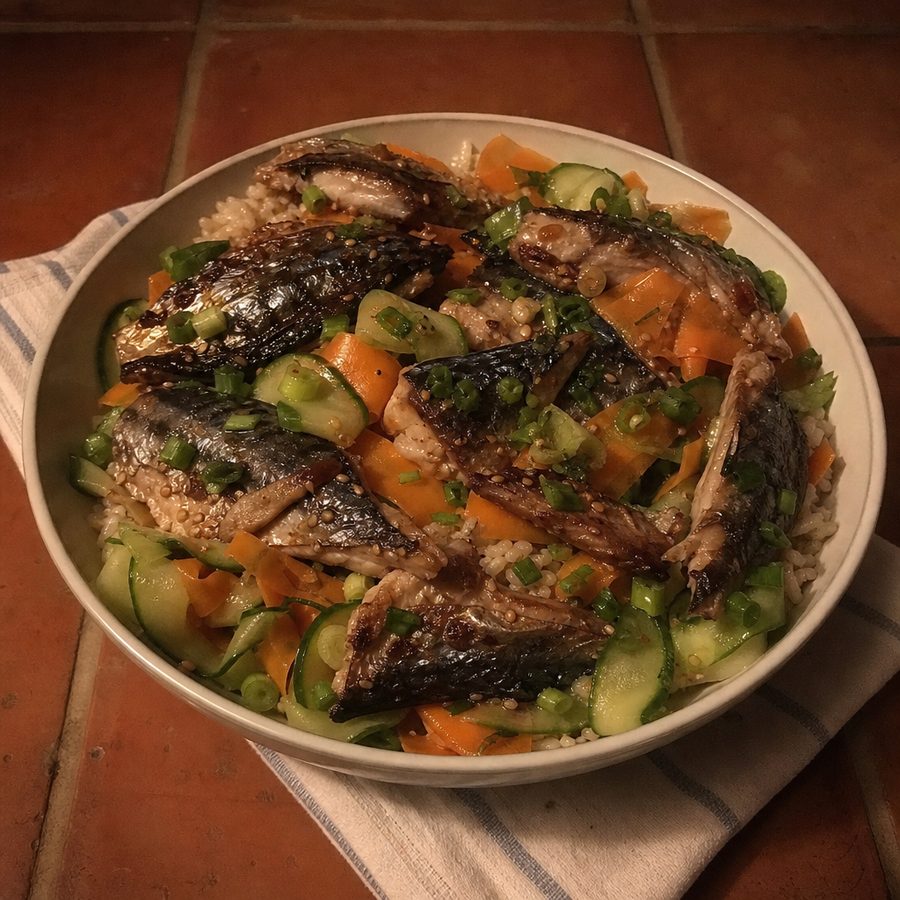
Seared mackerel fillets glazed in a quick sauce of soy, coconut aminos, ginger, and garlic, spooned over brown rice with crisp cucumber, shredded carrot, and scallions and finished with a squeeze of lime.
Why You'll Love This Recipe
This is a fast, savory bowl for anyone who wants a satisfying midday meal built around oily fish. Mackerel is inexpensive, rich, and full of flavor, and here it sits on nutty brown rice with cool cucumber and sweet shredded carrot for a plate that feels both hearty and fresh. It comes together in about the time it takes the rice to finish, which makes it a realistic option for a weekday lunch you actually look forward to.
Two stages of cooking, and both count. Searing the mackerel skin-side down in hot oil, undisturbed, renders the skin crisp and browns the surface for deep flavor. Then the heat comes down and the soy sauce, coconut aminos, ginger, and garlic go straight into the same pan, so the fish bastes in a glaze built on its own browned drippings. Spooning that bubbling sauce over the fillet as it reduces gives you gloss and concentrated flavor, and the lime squeezed on at the end cuts the richness so each bite stays bright.
The mackerel and the rice each pull their weight. Mackerel is one of the richest sources of long-chain omega-3 fats and delivers a generous amount of protein, while the brown rice adds whole-grain fiber and steady carbohydrate to keep you full. The raw cucumber and carrot bring crunch, water, and color, and the ginger, garlic, and scallions layer in aroma and plant compounds. It eats like comfort food but leaves you satisfied rather than heavy.
Ingredients
- 560 g mackerel fillets
- 2 1/2 cups cooked brown rice
- 1 cucumber, thinly sliced
- 2 carrots, shredded
- 3 scallions, sliced
- 3 tbsp soy sauce
- 2 tbsp coconut aminos
- 1 tbsp fresh ginger, grated
- 2 cloves garlic, minced
- 1 tbsp avocado oil
- 1 tbsp lime juice
Instructions
- Cook the rice: Rinse the brown rice under cold water until it runs clear, then simmer it in plain water until the grains are tender and the water is absorbed, about 40 to 45 minutes. Fluff with a fork and set aside, keeping it warm, since a cold bed of rice pulls the heat straight out of everything you set on it.
- Prep the vegetables and aromatics: While the rice cooks, thinly slice the cucumber, shred the carrots on the large holes of a box grater, and slice the scallions. Peel and finely grate the ginger, and mince the garlic, because both go into the pan late and there is no time to be grating once the glaze is going. Set everything within reach of the stove.
- Pat and sear the mackerel: Pat the mackerel fillets very dry with paper towels so the skin will crisp. Heat the avocado oil in a large skillet over medium-high until it shimmers, then lay the fillets in skin-side down. Press each one flat with a spatula for the first few seconds so the skin stays in full contact with the pan, and sear undisturbed until the skin is crisp and browned, about 4 minutes. Flip and cook the second side until the flesh is opaque and flakes easily, about 2 minutes more.
- Build the glaze: Lower the heat to medium. Pour the soy sauce and coconut aminos into the pan, then add the grated ginger and minced garlic. Let the sauce bubble and thicken slightly while you spoon it over the fillets, basting continuously, so that the tops take on the glaze without your having to turn the fish and break it, until it turns glossy and coats the fish, about 2 minutes.
- Assemble the bowls: Divide the warm brown rice among bowls and arrange the sliced cucumber and shredded carrot alongside it, keeping the raw vegetables in their own corner, since the cool crunch against the warm glazed fish is the whole point of the bowl.
- Finish and serve: Set a glazed fillet on each bowl, drizzle with the pan sauce, squeeze the lime juice over the top, and garnish with the sliced scallions. Serve right away while the skin is still crisp.
Variations
- Swap the protein: Trade the mackerel for salmon or trout fillets, which take to the same sear-and-glaze method and have a similar richness. Cook to the point where the flesh flakes easily.
- Change the grain: Serve the fish and vegetables over short-grain white rice, quinoa, or soba noodles instead of brown rice for a different texture. Soba noodles are made from buckwheat; check the label if you are avoiding gluten, since many blends also contain wheat.
- Add more vegetables: Pile on quick-pickled radish, steamed edamame, or a handful of baby spinach wilted in the warm pan sauce to bulk up the bowl and add color.
- Turn up the heat: Stir a spoonful of chili-garlic paste or a pinch of red pepper flakes into the glaze, or finish the bowl with a drizzle of chili oil for a warming kick.
- Make it a hand roll: Skip the bowl and tuck the flaked glazed fish, cucumber, carrot, and rice into sheets of toasted nori for a hand-held version. Nori adds sea vegetable flavor and a bit of chew.
Storage & Leftovers
Store leftovers in an airtight container in the refrigerator for up to two days. Because mackerel is an oily fish, it is best eaten soon after cooking, and its aroma will grow stronger the longer it sits, so keep it tightly covered and separate from the rest of the fridge.
Reheat the fish gently to avoid drying it out. Warm the fillet in a skillet over medium-low, or in a low oven, just until heated through; a microwave works but tends to soften the crisp skin. Reheat the rice separately with a splash of water to bring back its moisture, then add the cucumber and carrot fresh so they stay crisp.
To get ahead, cook the brown rice and shred the carrot up to three days in advance and keep them refrigerated. Slice the cucumber and mix the glaze ingredients the night before, then all that is left at mealtime is searing the fish and glazing it, which takes only a few minutes.
Notes & Tips
- Dry skin is crisp skin: The single biggest factor in getting crackly mackerel skin is a dry surface. Pat the fillets thoroughly with paper towels right before they hit the oil, and don't crowd the pan, or the fish will steam instead of sear.
- Choose the freshest fish you can: Mackerel is oily and delicate, so buy it from a source with good turnover. Look for firm, shiny flesh and a clean sea smell rather than a strong fishy odor. If fresh is hard to find, good-quality frozen fillets thawed overnight in the fridge work well.
- Watch the glaze closely: Soy sauce and coconut aminos reduce fast once the pan is hot. Keep the heat at medium and pull the pan off the flame the moment the sauce turns glossy and clings to the fish, so it thickens rather than scorches.
- Know when the fish is done: Mackerel is cooked when the flesh turns opaque and separates into flakes at a gentle nudge from a fork. It cooks quickly, so check early; a moment too long and oily fish can dry out.
- Keep the vegetables raw and cold: The cool, crunchy cucumber and carrot are the counterpoint to the rich fish, so add them fresh and keep them out of the hot pan. Shredding the carrot finely and slicing the cucumber thin lets them fold into each bite.
- Adjust the salt at the end: The soy sauce carries most of the seasoning, so taste before adding more. If the glaze tastes too salty, a little extra lime juice or a splash of water in the pan will soften it; if it needs more depth, a few extra minutes of reducing concentrates the flavor.
Nutrition & Mindful Eating
- Mackerel, rice and the raw vegetables balance one another here. The fish is rich and strongly flavored, the brown rice is plain and chewy underneath it, and the cucumber and carrot arrive cold and crunchy to reset your mouth between bites.
- Mackerel is an oily fish with dark, full-flavored flesh that flakes into big soft pieces, and that oil is where its long-chain omega-3 fats sit, which is why a small piece tastes like so much.
- The glaze is soy sauce and coconut aminos reduced with ginger and garlic until it clings, and it caramelizes against the hot fish into something sweet, savory and slightly scorched at the edges.
- Carrot cut thin stays sweet and snappy and cucumber stays watery and cool, and the strong orange in the carrot is beta-carotene, which the body turns into vitamin A.
- Lime squeezed over at the end cuts straight through the oil in the fish, and the brown rice underneath, chewy and full of bran fiber, is part of why a modest fillet makes a bowl that holds you all afternoon.
- As you eat, catch the moment the lime cuts through the richness of the fish, and take the bowl slowly enough that you feel it settle rather than pushing straight through to the bottom.
Frequently Asked Questions
My mackerel tastes very strong and fishy. Is that normal?
Mackerel is an oily fish with a naturally bold flavor, and that intensity is part of what makes it satisfying here. The ginger, garlic, soy glaze, and fresh lime are all chosen to balance it. If the flavor is too much, start with the freshest fillets you can find, since strength grows with age, and be generous with the lime at the end.
Can I use canned mackerel instead of fresh fillets?
You can, though the dish changes character. Canned mackerel is already cooked and soft, so you would skip the sear and instead warm it briefly in the glaze, then flake it over the rice and vegetables. You lose the crisp skin, but it makes for an even faster bowl.
Why won't my fish skin get crisp?
Crisp skin comes down to three things: dry fillets, a properly hot pan, and leaving the fish undisturbed. Pat the skin very dry before it goes in, wait until the oil shimmers, and resist the urge to move the fillet while the first side sears. Pressing it flat for the first few seconds also keeps the skin in full contact with the pan.
Can I serve this cold or make it into a meal-prep bowl?
Yes. The rice, cucumber, and carrot are all good cold, and the glazed mackerel can be eaten chilled or at room temperature, much like it would be in a packed lunch. Keep the fish tightly covered since its aroma is strong, and add the lime and scallions just before eating for the freshest taste.